

The Grand Reposition: Why Germany’s Embrace of Canada Speaks Volumes in a Fractured World
POLICY WIRE — Berlin, Germany — The scent of uncertainty hangs heavy over European capitals these days. Berlin, it seems, isn’t immune. In an era where long-held certainties have been...

POLICY WIRE — Berlin, Germany — The scent of uncertainty hangs heavy over European capitals these days. Berlin, it seems, isn’t immune. In an era where long-held certainties have been thoroughly upended—old energy taproots severed, security pacts strained—Germany’s senior politicians aren’t just talking about adapting; they’re aggressively reorienting. And who’s found themselves at the receiving end of this earnest new affection? None other than Canada, the polite behemoth of the North American continent.
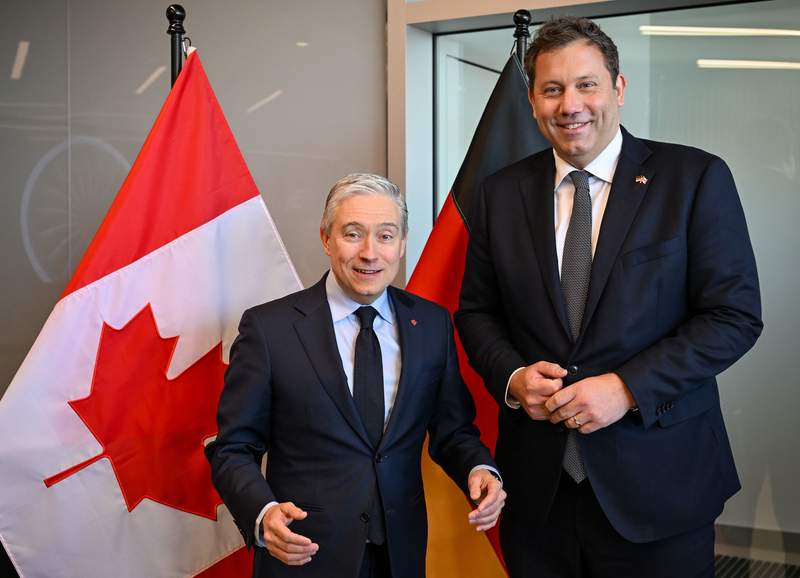
It’s not just polite diplomatic fluff. German Social Democratic Party (SPD) co-leader Lars Klingbeil recently tossed praise Canada’s way, calling it an “ideal” partner amidst global tensions. This isn’t just about good vibes across the Atlantic; it’s a cold, hard strategic calculus. Germany, an industrial powerhouse built on predictable global supply chains — and cheap energy, is now scrambling. They’re facing an existential rewiring of their economy, a search for stable hands to grip in an increasingly slippery world. It’s friendshoring, but on steroids—a scramble for resources, trust, and shared democratic grit when fewer countries seem to embody all three.
The subtext? We’re done with despots. Germany, once cozy with Russian gas, has seen how quickly that dependence can be weaponized. So, who do you call? Nations with democratic traditions, robust legal systems, and, crucially, access to the resources Germany desperately needs for its energy transition and industrial base. Think critical minerals, stable energy, — and perhaps even a fresh perspective on defense. Because let’s be honest, the neighborhood they’re in feels a lot less predictable than it used to.
“We can’t just rely on neighbors who share our geography anymore; we need friends who unequivocally share our values, and Canada, well, it’s clear they do,” Klingbeil reportedly confided to associates recently. His candor hints at the depth of the shift. This isn’t a fleeting bromance. It’s a carefully considered alignment.
Canada, for its part, sees an opportunity to assert itself as a serious player, a reliable source of stability and critical goods in a tumultuous period. “Canada’s always been a trusted global partner, but in these choppy waters, our commitment to secure supply chains and democratic principles becomes even more important. We’re ready to meet this moment,” offered Foreign Minister Mélanie Joly, echoing Ottawa’s increasingly confident posture on the world stage.
And it’s a big moment. Berlin isn’t just seeking minerals for electric cars; it’s looking for reliability, an attribute that’s become priceless. Germany imported a whopping 38% of its natural gas from Russia in 2021, a dependency that nearly crippled its industry when the taps were largely turned off in 2022. That lesson, boy, it bit hard.
📄 POLICY WIRE WHITEPAPER PUBLISHED: PAKISTAN'S NATIONAL SECURITY POLICY PRIORITIES
👉 READ BY CLICKING HEREThe geopolitical earthquake emanating from Europe, amplified by China’s rising assertiveness and the continued complexities of the Middle East, forces nations to choose their allegiances more sharply. For Berlin, that means pivoting decisively towards the liberal democracies. And this grand reposition has consequences far beyond Ottawa or Berlin. Nations like Pakistan, navigating their own intricate webs of global influence and economic partnerships, watch such developments keenly. Pakistan, after all, relies on a mix of energy sources and strategic partners, and shifts in the global supply chain – particularly in Europe – often create ripples, reshaping demands and pricing worldwide. Will Western allies push harder for ideological alignment in exchange for economic or defense cooperation, making neutrality an increasingly difficult posture? It’s something to ponder.
What This Means
This German-Canadian alignment signals a deepening of what political wonks are calling ‘friendshoring’ or ‘alliance-based trade.’ It’s less about economic efficiency at all costs and more about supply chain resilience and ideological consistency. For Germany, it’s about shoring up its energy future (especially LNG and hydrogen) and accessing critical raw materials needed for its green transition and advanced manufacturing. For Canada, it’s an elevation of its stature as a reliable, albeit sometimes overlooked, global power, leveraging its vast natural resources and stable political landscape.
The economic implications are clear: increased bilateral trade and investment, particularly in energy, critical minerals, and potentially defense technologies. Politically, it strengthens the trans-Atlantic alliance beyond just NATO, fostering a deeper bond rooted in shared democratic governance. But it’s also a clear message to nations like China and Russia: the Western powers are circling the wagons, reinforcing bonds with those they trust. It’s a strategic de-risking, sure. But it also sets the stage for a more fragmented global economy, where geopolitical alignment becomes as valuable as, if not more than, raw market competitiveness. This particular reposition could inadvertently strengthen regional blocks, perhaps prompting the ‘Energy City’ discussions in South Asia, where nations are equally focused on securing their own resource futures amidst the shifting currents.