

The Ghost in the Paddock: How One Horse Upended UK Racing’s Grand Finale
POLICY WIRE — London, UK — Forget the thundering hooves, the silks flashing past, the roar of the crowd. That’s all just window dressing, really. What matters, what genuinely stirs the tightly...

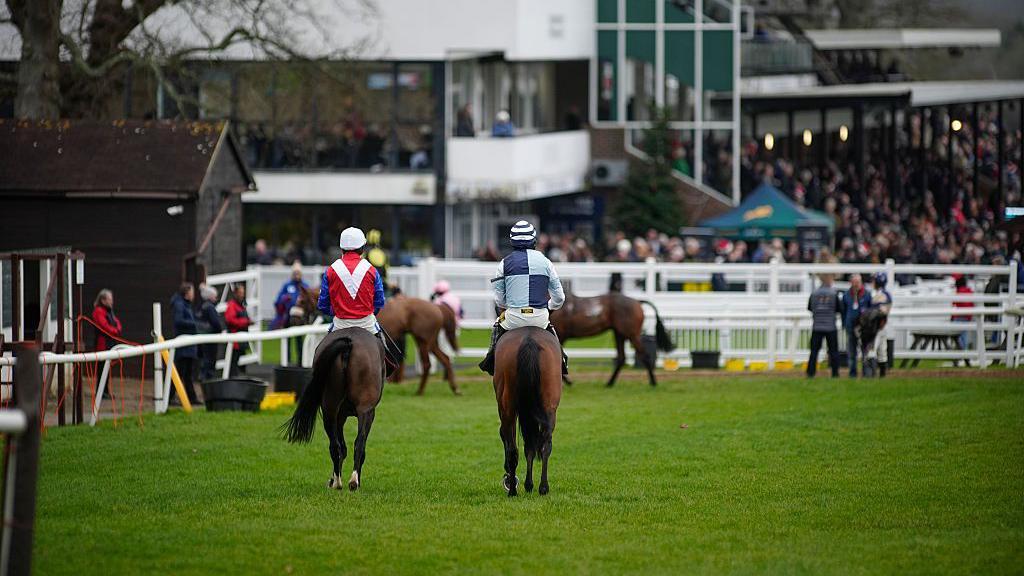
POLICY WIRE — London, UK — Forget the thundering hooves, the silks flashing past, the roar of the crowd. That’s all just window dressing, really. What matters, what genuinely stirs the tightly coiled springs of Britain’s venerated racing industry, is the silent, insidious threat you can’t see coming—a microscopic enemy capable of bringing everything to a grinding halt. And that’s precisely what a single, unvaccinated horse—a mere footfall away from Plumpton Racecourse—has managed to do, wiping out its Jumps Season finale, a fixture nearly 150 years in the making. Call it poetic injustice, or simply a harsh dose of biological reality. It’s a wake-up call, plain and simple.
It wasn’t a gale-force wind or torrential rain that scuttled Sunday’s race card. Not an administrative snafu or a sponsor’s sudden withdrawal. This was flu. Horse flu. An ailment so common, yet so potent when it decides to make its move, particularly through an ‘actively shedding’, non-thoroughbred — an equine Patient Zero, if you will, cooped up in a livery yard right next door. The British Horseracing Authority (BHA), usually a picture of stoic command, had little choice but to wave the white flag. They didn’t want to; you don’t cancel a meeting lightly. But sometimes, you just gotta. And they did.
“Look, nobody likes canceling races, especially a finale. We’d rather run every single event, come hell or high water,” admitted Sarah Thorne, Head of Operations for Plumpton Racecourse, her voice tight with thinly veiled frustration, no doubt recalling the myriad logistical nightmares this sudden halt conjured. “But our first duty, always, is to the welfare of these magnificent animals — and the livelihoods tied to them. One infected horse could unleash a domino effect — a real nightmare scenario. We simply couldn’t risk it.” She wasn’t wrong. Because equine flu doesn’t play favorites; it spreads with chilling efficiency, leapfrogging stables and wiping out schedules with casual disregard. Think about the ramifications: the trainers, the jockeys, the stable hands—it’s a finely tuned, expensive machine, utterly dependent on robust health protocols. Any snag means widespread economic turbulence for those who work at the track — and behind the scenes. This isn’t just a sport, after all, it’s a brutal business. Remember, even in other global sporting arenas, the economics can be unforgiving when things go sideways.
James Given, the BHA’s director of equine regulation, safety — and welfare, minced no words about the dilemma. “It’s a bitter disappointment, of course. But the pathogen’s transmissibility is startling. It travels through the air, folks, — and across significant distances,” he explained. “We’ve witnessed a concerning surge of outbreaks recently within the non-thoroughbred populations nationally. It’s got us all on edge, frankly. We need every yard, every trainer, to maintain iron-clad biosecurity. No slacking off. Not now.” He makes a good point; it only takes one. One cough, one contact, and a whole stable—hell, a whole racing circuit—could catch it. This particular horse, the BHA confirms, was unvaccinated. A chilling reminder of what’s at stake.
The cancellations carry a financial sting. Ticket holders are getting refunds—a process Plumpton says could take up to 28 working days, proving that while swift action is needed to stop disease, money moves at its own sluggish pace. And while there have been no reported cases in licensed training yards—a small mercy, that—the industry isn’t letting its guard down. The potential for rearranging the fixture hangs in the air, a speculative hope on an otherwise bleak landscape. But who knows when that will be? They’re playing catch-up now, trying to assess the damage.
📄 POLICY WIRE WHITEPAPER PUBLISHED: PAKISTAN'S NATIONAL SECURITY POLICY PRIORITIES
👉 READ BY CLICKING HEREWhat This Means
This incident, seemingly localized to a small corner of East Sussex, acts as a micro-study in macro-issues. It’s not just about one race, or even one racecourse; it underscores the economic fragility inherent in livestock-dependent industries and the perpetual dance with disease outbreaks. Economically, even a short disruption to a major sporting event reverberates through local economies—think hospitality, transportation, betting shops. A week of cancellations isn’t just lost revenue; it’s wages foregone, supplier contracts adjusted, reputation impacted. A broader outbreak could cripple breeding programs, impact international sales, and restrict equine movements across borders. For a nation like Pakistan, where livestock constitutes a significant agricultural sector and provides livelihoods for millions, this vulnerability isn’t theoretical. Outbreaks like Foot and Mouth Disease or Lumpy Skin Disease have recently caused immense economic distress there, wiping out herds and severely impacting rural communities. The same rapid response, epidemiological surveillance, and biosecurity measures – or the lack thereof – that dictated Plumpton’s cancellation are the lifeblood of economies far less insulated than Britain’s, where a 1% decrease in livestock productivity can impact thousands. The Food and Agriculture Organization (FAO) reports that animal diseases can cause global economic losses exceeding $300 billion annually. Plumpton’s headache is, in essence, a reflection of a global health security concern that demands constant vigilance, whether it’s a prize-winning thoroughbred or a farmer’s buffalo in rural Punjab. Because sometimes, the biggest threats arrive on the smallest of scales.
Plumpton, meanwhile, just keeps stressing the ‘health — and wellbeing’ priority. They’ve done the responsible thing, they say. And sure, they’ve. But one can’t help but notice the palpable sigh of relief from countless stable owners further afield, counting their blessings. Because it’s a fickle game, this racing business. And sometimes, you just get unlucky.