

Shadow Games: An Urban Bear Hunt Unmasks Albuquerque’s Peculiar Priorities
POLICY WIRE — Albuquerque, N.M. — It wasn’t a city council vote gone awry. Didn’t involve a new bond initiative or a mayoral scandal, not directly anyway. Instead, what really threw...

POLICY WIRE — Albuquerque, N.M. — It wasn’t a city council vote gone awry. Didn’t involve a new bond initiative or a mayoral scandal, not directly anyway. Instead, what really threw Albuquerque’s civic machinery into an unexpected grind this past week was a bear. One lone bear, ambling through three distinct parts of New Mexico’s largest city, casually demonstrating just how unprepared a modern metropolis can be when wild nature decides to drop by for a visit. The city’s scramble, or lack thereof, offered a darkly comic vignette of governance struggling with the untamed, a potent symbol of priorities sometimes wildly off-kilter.
Because, really, when you’ve got officers — human ones, armed with tranquilizer darts rather than bylaws — chasing a fur-covered four-legged local through a golf course at 3 AM, you start to question the narrative. Darren Vaughan, a spokesperson for the New Mexico Department of Game and Fish, sounded almost wistful, or perhaps just thoroughly exasperated, talking about it. “It’s a big place out there,” he mused, referring to the New Mexico wilds where bears normally roam, a vastness suddenly shrunk to the manicured greens of Paradise Hills. “Capturing a moving target in the dead of night, after it’s already shown us its knack for eluding notice? That’s not just a wildlife exercise; it’s a test of resolve, frankly.”
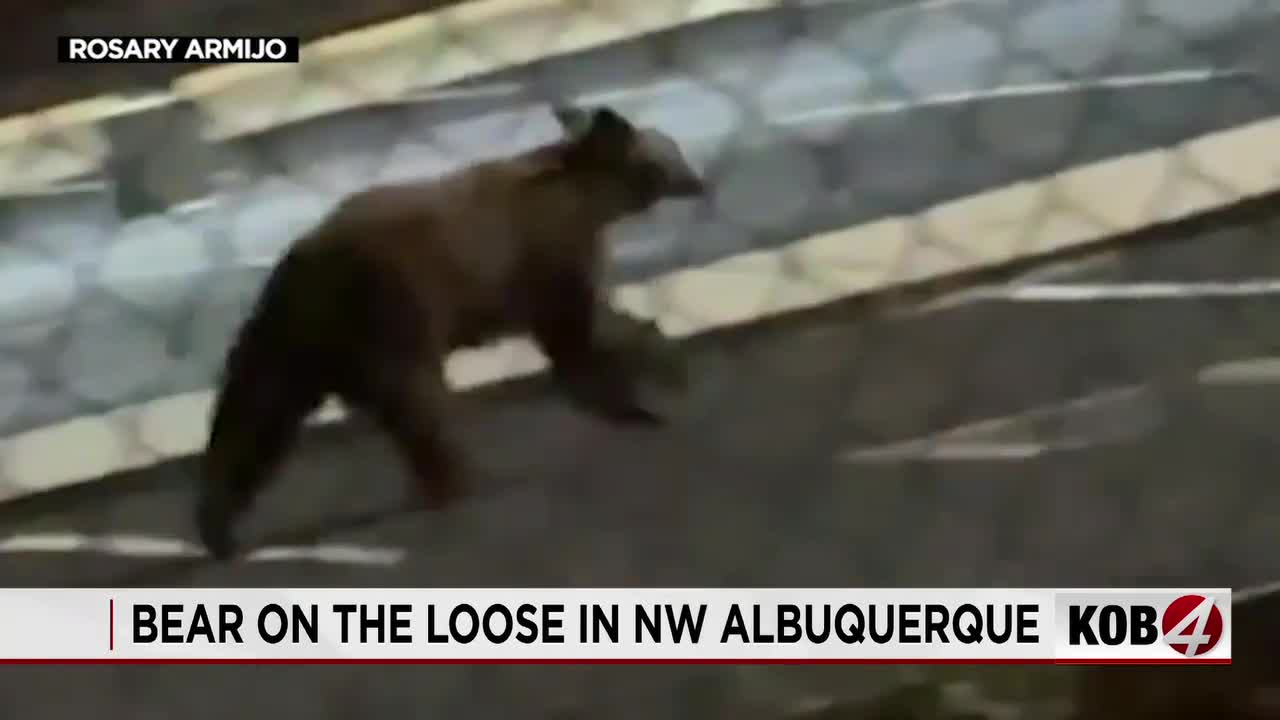
They’d tracked it from Corrales, first sighted late Wednesday. Then, overnight, came Rosary Armijo’s video — shaky footage, but clear enough—of the creature sprinting near Cibola High School’s parking lot. Less than a couple of miles. And then, the 3 AM rendezvous at the golf course, a spot where humans typically worry about pars and putts, not claws and growls. Officers got their eyes on it. They even made a run at it, bless their hearts. Unsuccessful, Vaughan confirmed, with a sigh you could practically hear through the phone. So, the chase, or more accurately, the searching, resumed through Thursday, fruitless as a winter orchard.
It’s not just a bear, see. It’s a barometer. Reports of urban wildlife encounters across the United States have climbed by a startling 15% in the last decade, according to data from federal wildlife services, mirroring a trend that global ecological shifts have accelerated. This isn’t an isolated incident; it’s part of a growing push-and-pull between human expansion — and shrinking habitats. We’re building ever outward, then act surprised when the former residents show up to complain—or, in this case, to grab a midnight snack from someone’s trash bin.
For some, like golfer Derrick Montelongo, who decided a bear on the course just meant hitting straighter, it was an oddity, sure. But not enough to disrupt his game. “Heck, another one got captured in Rio Rancho last year,” Montelongo shrugged, channeling a remarkably stoic frontier spirit. “Guess they like our climate.” Robert Cote, another linksman, wasn’t so sanguine. “Insane,” he reportedly declared. “So many people here… to hear a bear lives around here, that’s pretty crazy.” It’s a spectrum of public response, from rugged acceptance to mild panic, reflecting the divergent ways we confront the wild at our doorstep.
Albuquerque Police Department officials were quick to squelch social media whispers that they’d cornered the beast near Cibola High. “We don’t currently have any personnel actively involved in a capture,” an APD spokesperson told us, requesting anonymity given the delicate nature of discussing inter-agency animal wrangling, even for a city that’s dealt with other, more human, tolls. “Our primary role is public safety. If the animal poses an immediate, direct threat, we’re there. Otherwise, it’s Game — and Fish’s jurisdiction. We’re coordinating, absolutely, but you’re not going to see an APD cruiser chasing a bear through the suburban streets, sirens blaring. That’s just not how it works, and honestly, we’ve got other, more pressing, human issues that require our full attention.” It’s a subtle jurisdictional ballet, folks.
What This Means
This Albuquerque bear saga, far from a mere oddity, illustrates a simmering policy challenge that quietly permeates urban centers globally: managing the inevitable friction at the interface of ever-expanding human habitation and retreating wildlife corridors. Economically, resources—manpower, fuel, time—diverted to a days-long wildlife hunt are resources not spent elsewhere, on crime, traffic, or even more immediate public health concerns. It’s a budget line item no urban planner ever quite expects to fill with ‘bear patrol’.
Politically, the story hints at deeper questions of municipal preparedness — and inter-agency coordination. Does the city have a robust, integrated plan for escalating human-wildlife encounters? What message does a prolonged, failed capture attempt send about the efficiency, or perhaps the appropriate mandate, of local authorities? This isn’t just a Southwestern quirk; across South Asia, for instance, nations like Pakistan face similar, albeit often more complex, challenges as climate change displaces large animal populations. Whether it’s managing snow leopards in mountain communities or addressing rising heat impacting urban bird species, the principles of conservation, rapid response, and public education are under perpetual review, much like how Pakistan’s cricketing endeavors grapple with strategic challenges on the field. The bear, then, becomes a wild, furry metaphor for the unplannable, forcing city leaders to reckon with the untidy realities of sharing turf, and resources, with nature’s unplanned interventions.
Ultimately, this isn’t just about one bewildered bear trying to find its way home. It’s about us. Our cities. Our policies. Our budget lines. And the ever-narrowing margin where the wild still bumps up against our well-ordered, albeit occasionally porous, urban sprawl. It’s a good story, sure. But it’s also a mirror, isn’t it?