


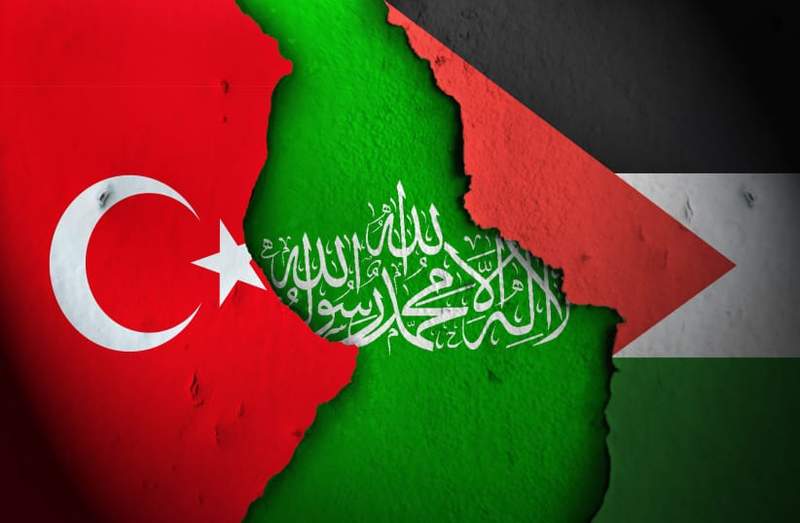
Ankara’s Perilous Pas de Deux: Turkey, Hamas, and a Shifting Mideast Chessboard
POLICY WIRE — Istanbul, Turkey — The quiet whir of an early morning espresso machine, a commonplace sound in Istanbul’s bustling cafes, can sometimes drown out other, less innocuous hums. But a...

POLICY WIRE — Istanbul, Turkey — The quiet whir of an early morning espresso machine, a commonplace sound in Istanbul’s bustling cafes, can sometimes drown out other, less innocuous hums. But a growing chatter in diplomatic backchannels suggests a different kind of training is afoot on Turkish soil—one that could shatter Ankara’s carefully curated international image and send fresh tremors through an already fractured Middle East.
It isn’t about tourist guides learning new languages or baristas perfecting their latte art. No, the intel points to something far more volatile: whispers of Hamas operatives—the Islamist militant group controlling Gaza—reportedly honing their craft, preparing for actions against Israel. Because, apparently, old allegiances die hard, or sometimes, they just get a discreet state-sponsored upgrade.
This isn’t a new accusation, mind you. But recent, more pointed reports, filtered through intelligence agencies in the region and beyond, paint a picture of specialized instruction. We’re talking about folks learning tactics, maybe communications, maybe even getting a handle on more complex weaponry—far from mere political strategizing. And that’s a tough pill for Jerusalem, — and many in Washington, to swallow.
Turkey, under President Recep Tayyip Erdoğan, has long maintained a complex, sometimes contradictory, relationship with Hamas. Officially, Ankara sees the group as a legitimate resistance movement, advocating for Palestinian self-determination. But critics—chief among them Israel and its Western allies—see a terrorist organization, pure and simple. And there’s the rub.
Consider the broader landscape. “Turkey maintains its sovereign right to engage with any group advocating for the rights of the Palestinian people,” declared a typically defiant President Erdoğan from Ankara recently, without directly addressing the training allegations. “Suggestions that our hospitality extends to planning aggression against any state are nothing short of an absurd provocation designed to destabilize the region. Frankly, we won’t stand for it.” He’s got a point about sovereignty, but context, as ever, is everything.
On the flip side, the view from Tel Aviv couldn’t be more different. An official from Israel’s Foreign Ministry, speaking anonymously given the diplomatic sensitivities, put it plainly: “These aren’t just intelligence whispers; they represent a severe breach of international trust. When a NATO member potentially harbors and trains elements dedicated to violence against a sovereign state, it changes the game entirely. Our patience, I assure you, isn’t infinite.” That’s as direct a warning as you’re likely to get short of an ambassadorial recall.
The alleged training exercises, if confirmed, complicate an already precarious dance. Turkey remains a member of NATO, ostensibly aligned with Western security interests. Yet, its increasingly independent—some might say maverick—foreign policy sees it cozying up to rivals, criticizing allies, and asserting itself as a major player in a new, multipolar world order. This isn’t just about Palestine; it’s about projecting Turkish power across the eastern Mediterranean — and beyond.
This dynamic resonates significantly across the wider Muslim world, particularly in South Asia. Countries like Pakistan, while having their own complicated relationships with both Israel and various Palestinian factions, watch Ankara’s maneuvers with keen interest. For many, Erdoğan’s defiance of Western norms and vocal support for the Palestinian cause makes him a hero—a refreshing counter-narrative to perceived Western dominance. But for others, the implications of supporting non-state actors raise unsettling questions about regional stability and adherence to international law. It’s a delicate balance, and often, politics plays out in unpredictable ways.
According to a 2022 assessment by the European Council on Foreign Relations, Turkey’s rhetorical support for Palestinian issues has consistently been robust, aligning with Palestinian interests in over 85% of UN General Assembly resolutions related to the Israeli-Palestinian conflict over the past decade. Actions, however, always speak louder than words—especially when those actions might involve arms and tactics.
But how long can this dual policy hold? Because sooner or later, someone’s going to demand clarity. The global spotlight is intense, after all.
What This Means
The potential for Hamas operatives to receive training in Turkey presents several concerning implications. Economically, it could deter foreign investment in Turkey, as Western nations might reassess their engagement with a state perceived as backing militancy. It also creates friction within NATO, weakening a critical alliance at a time of heightened global instability. Member states like the U.S. and Germany, while valuing Turkey’s geopolitical location, can’t easily ignore alleged material support for a designated terrorist organization—it’s a reputational hit for the entire bloc. It means increased risk of Israeli military responses if attacks originating from (or enabled by) this training were to occur. And for Turkey, it reinforces its image as a transactional power, often prioritizing perceived national interest—or even ideological solidarity—over long-standing alliances and international consensus. For countries like Pakistan, already wrestling with regional complexities, Ankara’s aggressive positioning against Israel might stir popular sentiment, but it won’t necessarily translate into policy shifts. Mostly, it just creates more noise, more distrust, — and arguably, more peril in a region already drowning in it. The rules of engagement, it seems, are perpetually shifting.