

The Sandias’ Scars: High Desert Vandalism Whispers of Public Policy Drift
POLICY WIRE — ALBUQUERQUE, N.M. — It’s a strange kind of declaration, sprayed in angry, looping lines across public property. Not political slogans, not manifestos, just… noise. Raw,...

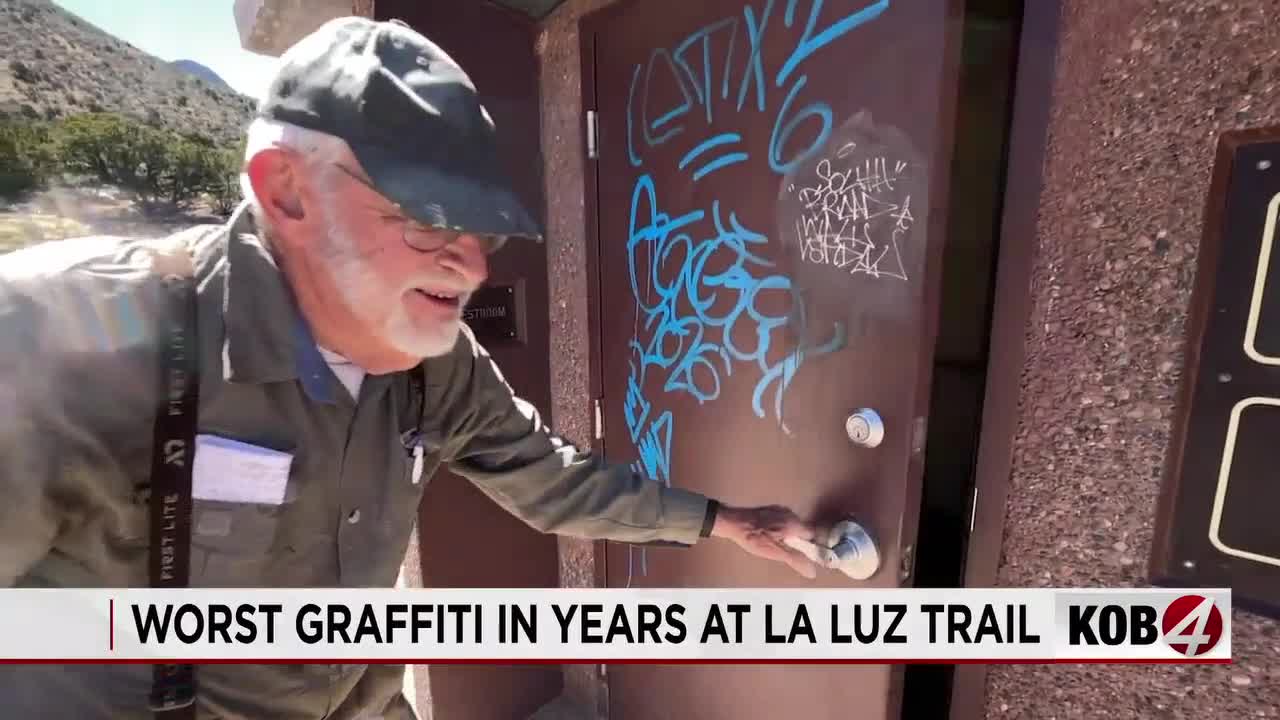
POLICY WIRE — ALBUQUERQUE, N.M. — It’s a strange kind of declaration, sprayed in angry, looping lines across public property. Not political slogans, not manifestos, just… noise. Raw, ugly noise etched into the benches, restroom walls, and trail signs of Albuquerque’s cherished La Luz trailhead, a portal to the sweeping majesty of the Sandia Mountains. But beneath the crude scrawls, you can’t help but sense a deeper current𠅊 malaise echoing far beyond these high desert peaks, pointing squarely at our collective inability, or perhaps unwillingness, to maintain the common ground.
For regulars, it felt like an invasion. For volunteers, it was simply more work, an endless, Sisyphean struggle against neglect — and casual malice. "The Sandia Ranger District sent me an email about it; I think the word she used was a copious amount of graffiti," recalled Sam Beard, a seasoned volunteer with the Friends of the Sandia Mountains. "This is the most I’ve seen at one time. Honestly, it’s demoralizing." Beard’s group, dedicated to keeping these trails runnable from the Sandias to the Jemez Mountains, often feels like a thinly stretched bulwark against encroaching indifference. Because, let’s face it, public spaces usually fall to the lowest common denominator if nobody’s watching.
The visual assault wasn’t merely cosmetic. It was an assault on an ideal, the shared experience of unblemished nature just minutes from a sprawling urban center. New Mexico’s arid beauty is fragile; it doesn’t just shrug off careless insults. It registers them. And this episode at La Luz, with its expansive canvas of defacement, isn’t just a local blot on a beautiful landscape; it’s a mirror reflecting persistent fractures in how we manage and value our public commons, a problem far from unique to the American Southwest.
Consider the historic gardens and ancient pathways of Lahore or Islamabad in Pakistan, where even with dedicated efforts, maintaining public cleanliness and preserving heritage sites against the tide of rapid urbanization and casual littering can feel like an impossible task. It’s a battle over collective ownership and responsibility, played out differently but with similar stakes in varying cultural contexts. The disrespect shown to a trail marker here, a centuries-old monument there—it all stems from that same fundamental detachment.
Local officials are, predictably, exasperated. "This ain’t just spray paint, is it?" offered Albuquerque City Councilor Elena Rodriguez, a long-time advocate for urban green spaces, her voice tinged with frustration during a recent council briefing. "It’s a loud slap in the face to every resident who cherishes these mountains, and frankly, it screams volumes about where we’re falling short on public awareness and enforcement. We can’t just keep cleaning up after folks, expecting volunteers to do the work of a functional civic compact."
Cleaning up graffiti isn’t cheap, either. The City Parks and Recreation Department reported that its budget for graffiti removal across all city parks and trails increased by roughly 15% between 2020 and 2023, consuming significant funds that could otherwise go into much-needed trail maintenance or ecological restoration. It’s a dead loss, an economic sinkhole born of mindless action. One has to wonder how much more our communal patience, — and pockets, can take. It’s enough to make you think about other, more systemic forms of abandonment, like what Policy Wire reported on in "Embers of Neglect: An Abandoned Albuquerque Business Mirrors Urban America’s Lingering Crises."
But it’s not just the expense. There’s a subtle yet pervasive psychological impact on the broader community. When public spaces, especially those meant for natural retreat and recreation, become targets for such wanton destruction, it chips away at civic pride. It breeds a quiet resignation that good things can’t last, that beauty is fleeting, and that shared stewardship is an impossible dream.
What This Means
The extensive vandalism at La Luz isn’t an isolated incident; it’s a stark indicator of frayed community bonds and, arguably, insufficient public policy. From a political perspective, it highlights a deficit in resource allocation and enforcement for often-overlooked areas of municipal oversight. Budgets for park rangers and dedicated clean-up crews frequently fall victim to political expediencies, leaving volunteer groups—like Beard’s—to shoulder the burden of what should be a consistent government service.
Economically, this sort of sustained vandalism creates a double whammy. It diverts funds from other, more productive public works, effectively reducing the amenity value of urban proximity to nature. And it deters potential visitors, perhaps only marginally at first, but cumulatively, a reputation for neglected, unkempt natural spaces can impact tourism and local recreation economies. it speaks to a broader failure to instill respect for common goods, an ethical gap that can translate into costlier social issues down the line. It means the perceived cost of ‘cleaning up’ is far less than the unseen costs of apathy — and broken civic trust.
The Sandias, these majestic mountains guarding the eastern flank of Albuquerque, aren’t just rocks — and pines. They’re a cultural touchstone, a respite. To see them defaced so brazenly suggests a systemic weakness𠅊 weakness not of stone, but of policy, of investment, and of the collective will to preserve what’s precious. We’ve got to ask ourselves: are we letting our shared treasures degrade through sheer lack of strategic vigilance? Because right now, the mountains are whispering that we’re.