


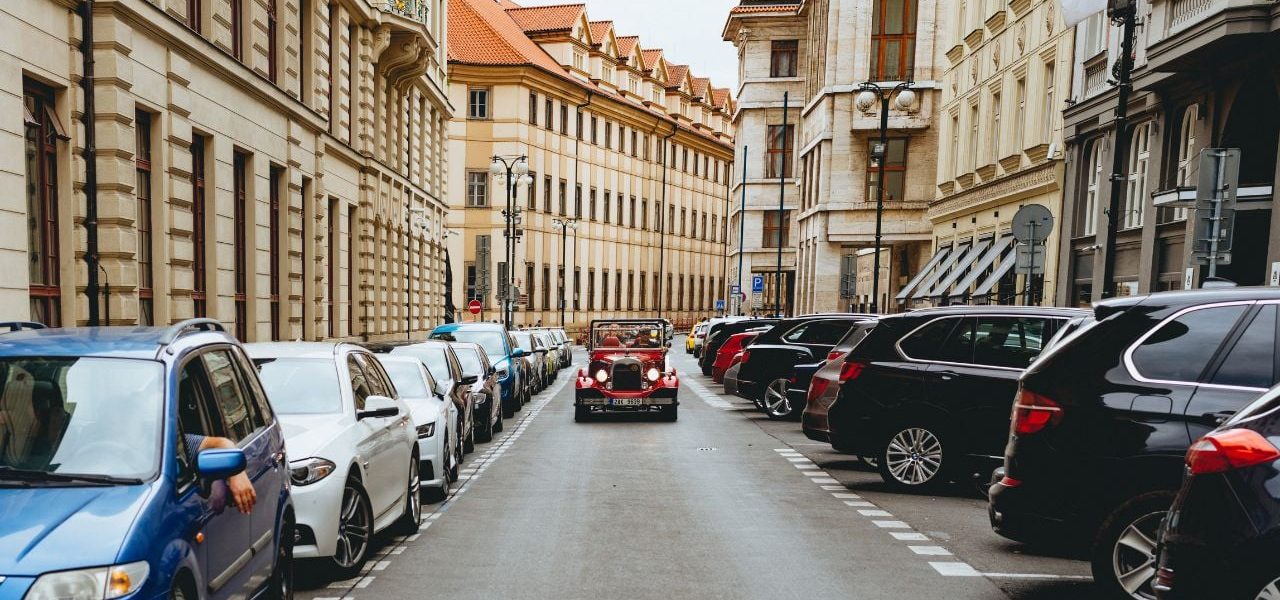
Europe’s Silent War on Wheels: How Old World Charm Extracts Modern Tolls
POLICY WIRE — Prague, Czech Republic — It’s not the ancient cathedrals or the quaint squares that truly define Europe’s historic centers anymore, not for many, anyway. It’s the invisible tripwires of...

POLICY WIRE — Prague, Czech Republic — It’s not the ancient cathedrals or the quaint squares that truly define Europe’s historic centers anymore, not for many, anyway. It’s the invisible tripwires of urban policy, the bureaucratic booby traps set, perhaps unintentionally, for the modern motorist. For countless visitors, a European adventure—a postcard dream, really—unspools into a frustrating, costly tangle over something as mundane as where one parks their hire car. A grand European tour often concludes with a discreetly delivered, five-figure sum from a shadowy enforcement agency weeks after one’s returned home. A real holiday souvenir, that.
Because while visitors swoon over gothic arches — and cobbled lanes, municipal governments are busy. They’re orchestrating a quiet war on unfettered automobile access, transforming every narrow alley and restricted zone into a potential revenue stream. It’s a shrewd play, if you stop to think about it. Keep the picture-perfect image, control the gridlock, and fund the preservation efforts (and, let’s be honest, other things) by essentially charging an entry fee on the unwitting.
These aren’t random acts of penalization. Oh no. They’re intricate systems, Zones à Trafic Limité (ZTLs) in Italy, Umweltzonen in Germany, Controlled Parking Zones elsewhere, often signed in tiny script, or not at all clearly to the international eye. They’re enforced by automated cameras that log license plates, connecting rental companies to drivers with a bureaucratic precision that would make a tax auditor weep with joy. The vehicle rental firm then tacks on an ‘administration fee’ for handling the actual fine. And bang, what might have been a fifty-euro parking ticket blossoms into a 300-euro nightmare faster than you can say ‘Schengen Area’.
It’s a situation that Mayor Eleonora Bianchi, of Florence—a city grappling with immense tourist influx and historic infrastructure strain—acknowledges with a pragmatic sigh. “We’re not targeting individuals for profit; it’s about sustainability,” she told Policy Wire in an earlier conversation. “Our old cities weren’t built for fleets of modern vehicles. The fines help us maintain a semblance of livability for our residents and, frankly, contribute to the upkeep of the very heritage these tourists come to see. It’s a collective responsibility, even if the individual charge feels sharp.” But it often feels rather less like ‘collective responsibility’ and more like plain old cash extraction to the guy squinting at a foreign parking sign. You’re simply caught.
But there’s an economic argument at play here, a blunt instrument in urban planning. It’s less about moving cars and more about reshaping visitor behavior—a policy goal you don’t hear discussed much at your local city council meetings. Data from a 2022 European Transport Policy report estimated that traffic fines and congestion charges across the continent bring in upwards of €5 billion annually, a not-insignificant chunk of municipal budgets for cities with significant tourism. These cities need that money.
📄 POLICY WIRE WHITEPAPER PUBLISHED: PAKISTAN'S NATIONAL SECURITY POLICY PRIORITIES
👉 READ BY CLICKING HEREThis whole dynamic doesn’t exist in a vacuum, you know. Think about Karachi or Lahore, their ancient streetscapes — remnants of Mughal grandeur — also wrestle with a relentless tide of traffic. Their authorities haven’t yet perfected Europe’s nuanced, often hidden, systems of monetary enforcement. But the challenges of blending historic preservation with contemporary transportation are remarkably similar. You see similar battles fought across the globe: old world structures vs. new world demands. It’s always about the fight for space — and resource, only the price tags differ.
But, the friction continues. Mr. Tariq Khan, head of a tourism consultancy group with operations spanning from Dubai to Berlin, paints a stark picture. “We constantly advise our clients from Pakistan — and beyond on these intricacies,” he observed. “It’s a cultural chasm, often. Many simply don’t expect such stringent, automated enforcement for what they perceive as minor infractions, especially when signs are ambiguous. It certainly leaves a sour taste after a vacation of a lifetime.” He’s right, it doesn’t scream ‘welcome.’
What This Means
This silent taxation of the touring motorist highlights a broader tension between preservation and profit in an increasingly interconnected, and over-touristed, world. On one hand, these punitive policies enable cities to maintain their unique character, curb environmental impact, and generate revenue essential for infrastructure. For residents, it offers some respite from gridlock. On the other, they breed resentment among tourists who feel ambushed by obscure rules — and exorbitant fees. It’s a delicate balancing act, a political football, really. Policymakers walk a tightrope, knowing they need tourist dollars but also needing to preserve the very things that attract those dollars. The enforcement, often opaque and automated, distances the ‘offence’ from the ‘punisher,’ making it easier for politicians to point fingers at the system, not themselves. It reflects a shift in urban governance where smart technology allows for enforcement with minimal human interaction, leading to maximum efficiency in revenue collection, and maximum bewilderment for those caught in its digital net. The lesson? Urban planners everywhere, even in Islamabad, could learn from Europe’s methods – for better or worse – about monetizing access to crowded historical urban cores.
Ultimately, these high-stakes parking tickets are more than just an administrative headache. They’re a blunt, if effective, policy instrument in the never-ending struggle to manage scarce urban resources and protect historical legacies from the pressures of modern mass tourism. They’re also a reminder that charming doesn’t mean cheap, especially when it comes to shared public space. And it’s not always about making things easier, is it? Sometimes, it’s about making them pay. Because that’s how policies, however seemingly minor, shake out into real world economics.