


Southwest Braces for Hellfire: A Fleeting Respite Before New Mexico Confronts Its Climate Future
POLICY WIRE — Albuquerque, N.M. — The high desert offers a deceptive whisper today. A last, soft sigh of springtime normalcy—the kind that lulls you into believing things might actually be alright....

POLICY WIRE — Albuquerque, N.M. — The high desert offers a deceptive whisper today. A last, soft sigh of springtime normalcy—the kind that lulls you into believing things might actually be alright. But don’t you get too comfortable. Because right around the corner, waiting in the wings with an infernal grin, is another round of the merciless, oven-like heat that’s fast becoming New Mexico’s calling card for summer. It’s a moment, really, before the state plunges back into a climatic crucible, raising difficult questions for policymakers on the front lines of an ever-warming planet.
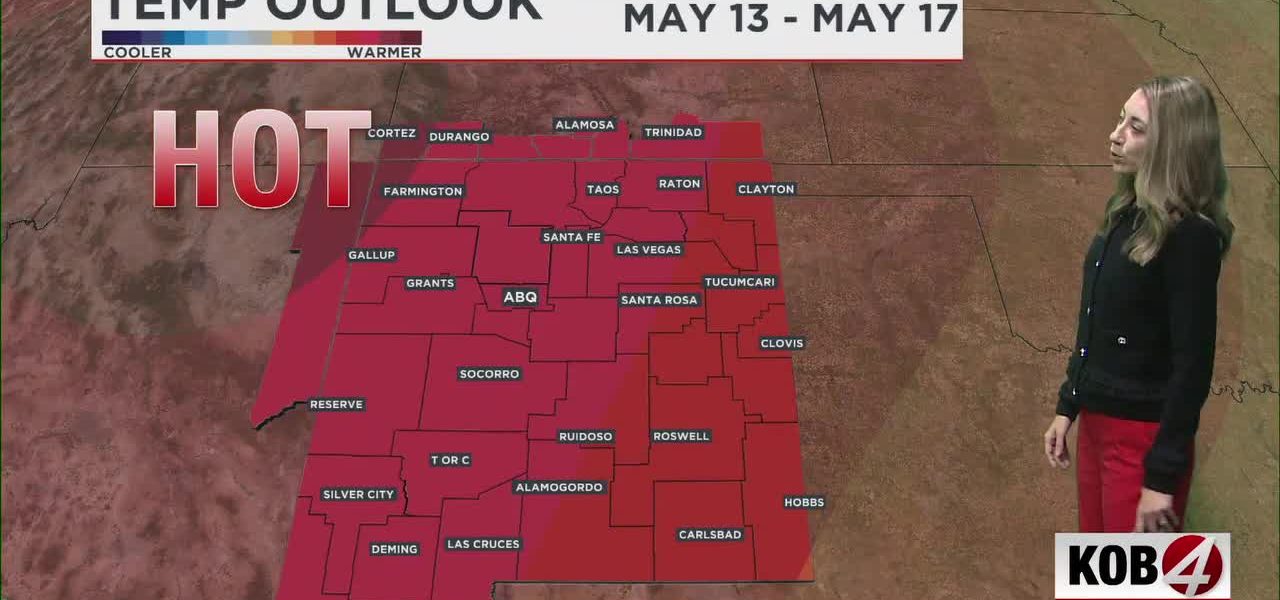
See, for the next blink, meteorologists are calling it ‘pleasant.’ Balmy. A veritable garden party of weather before the mercury takes its inevitable, stomach-lurching climb. Then comes Friday. And with it, a behemoth ridge of high pressure, intent on squatting over the western U.S. like a truculent deity, baking everything beneath it. It won’t just pass through quickly, mind you. This atmospheric brute is digging in for a long stay, building strength through the weekend and well into next week, pushing scorching temperatures far north, even kissing the Pacific Northwest.
It’s a brutal forecast, yes. And for states like New Mexico, Arizona, and California, it translates into a near certainty of those triple-digit infernos we’ve grown, against our will, to expect. Now, a couple of weak cold fronts might offer a fleeting tease of relief—a quick chill for Friday, maybe something a touch stronger Saturday into Sunday for a lucky few, mostly in the northeastern pockets of the state or far south-central. But for the vast majority? Bone-dry conditions. Breezy winds that feel more like a hairdryer set on high. It’s the prelude to a long, punishing summer that promises to strain resources, test infrastructure, and fray nerves across the Southwest.
Governor Michelle Lujan Grisham isn’t pulling any punches about what this recurring pattern means for the Land of Enchantment. “We’re past discussing hypotheticals; it’s about robust adaptation and ensuring our state can withstand these intensifying cycles,” she told Policy Wire. “Our water reserves, our grid infrastructure—they’re facing a stress test, and we’ve got to pass it.” It’s a stark admission that the time for equivocation has passed. And her administration, along with local officials, are certainly grappling with the bureaucratic machinery necessary to address these challenges.
This isn’t merely about personal discomfort; it’s an economic, social, — and geopolitical tightrope walk. Think about Pakistan. For years, parts of that nation have been battling unprecedented heat waves, with temperatures soaring to lethal levels, sparking humanitarian crises and agricultural devastation. These extreme conditions aren’t just statistical outliers anymore, not for us, not for them. They’re becoming the brutal, inconvenient truth of our contemporary climate.
Because let’s be real: New Mexico’s average annual temperature has increased by about 2.7°F (1.5°C) since 1970, according to the EPA and the New Mexico State Climate Office. That’s not just a number on a graph; it’s hotter nights, less snowpack, dwindling rivers, and a palpable anxiety that settles deep in the bones of everyone who lives here. Dr. Anya Sharma, Director of the Southwestern Climate Resilience Institute, paints a grim picture for the broader implications. “These aren’t just local weather anomalies. They’re a stark reminder of our global climate challenges, impacting everything from crop yields to energy demand across continents,” she explained. “What happens in New Mexico resonates far beyond its borders. The struggle for water and energy in arid lands—it’s a global narrative.”
📄 POLICY WIRE WHITEPAPER PUBLISHED: PAKISTAN'S NATIONAL SECURITY POLICY PRIORITIES
👉 READ BY CLICKING HEREAnd so, as Saturday approaches, temperatures will generally creep into the 80s for most, with certain parched locales hitting the low to mid-90s. By Sunday, those fleeting cold fronts might bring northeastern New Mexico a merciful drop to the 60s — and 70s. But for too many, that’ll be like putting an ice cube in a bonfire. It simply isn’t enough to make a dent in the larger, systemic problem that’s quite literally heating up.
What This Means
This isn’t just a weather report; it’s a political canary in the coal mine. Persistent, extreme heat in the Southwest stretches government resources thin, forcing emergency measures that divert funds from other crucial areas—education, healthcare, infrastructure beyond just cooling centers. It puts immense pressure on already strained energy grids, leading to higher electricity costs and the potential for rolling blackouts, which can disproportionately impact vulnerable communities—the elderly, the poor, the sick.
Economically, agriculture takes a beating. Water-intensive crops become untenable. Livestock suffers. This leads to higher food prices, impacting not just local consumers but also potentially driving supply chain issues for markets nationwide. There’s also the long-term impact on tourism, as people rethink visiting destinations that promise scorching days. More insidiously, unchecked heat accelerates wildfires, threatening homes, ecosystems, and respiratory health, leading to more government spending on mitigation and recovery, not development.
But the real, long-term policy challenge lies in water management. New Mexico is already battling decades of drought. Increased evaporation from relentless heat means less water for everyone—cities, farms, and precious natural habitats. Negotiations with neighboring states over river allocations become even more fraught. It accelerates debates around water recycling, desalination, — and the ethical rationing of a fundamental resource. For elected officials, managing public perception—and actual public safety—during these extreme heat events becomes a recurring, defining challenge. It demands not just reactive measures, but proactive, multi-generational strategies that acknowledge the new reality of a hotter, drier Southwest.