


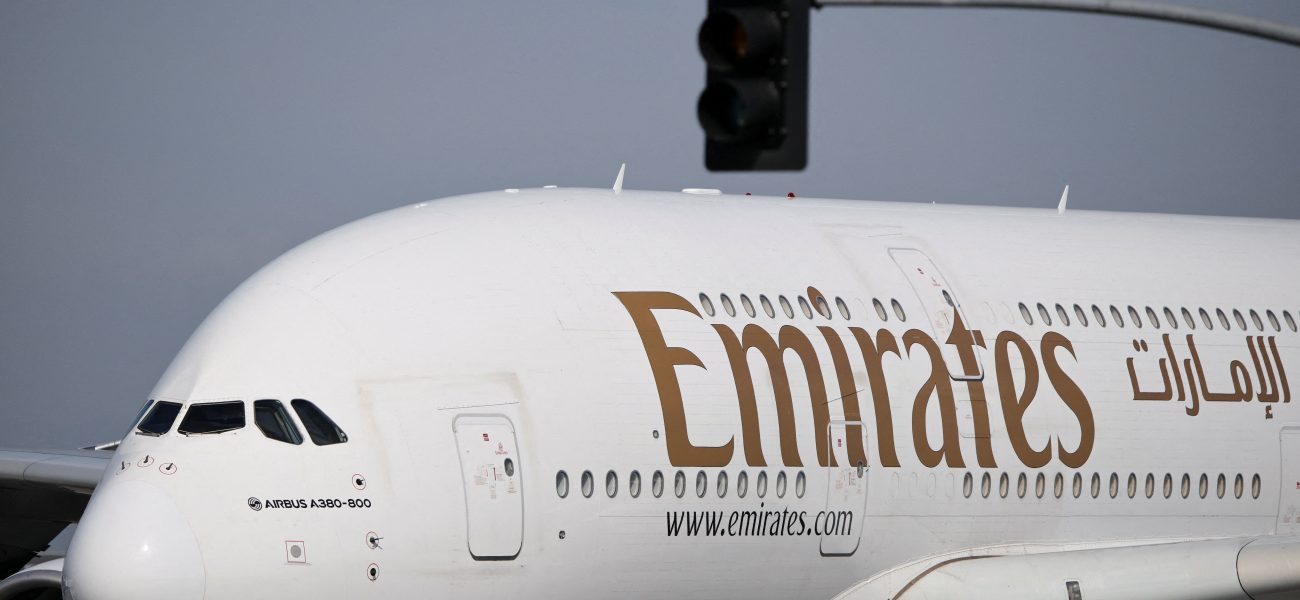
Dubai’s Gold Standard: Emirates Defies Global Headwinds, Records Another Banner Year
POLICY WIRE — Dubai, UAE — The low hum of distant engines is a constant companion in Dubai, an almost subliminal backdrop to the city’s relentless pursuit of gravity-defying ambitions. Most...

POLICY WIRE — Dubai, UAE — The low hum of distant engines is a constant companion in Dubai, an almost subliminal backdrop to the city’s relentless pursuit of gravity-defying ambitions. Most folks don’t ponder the meticulous choreography unfolding thousands of feet up, nor the bottom line of the giants who make it happen. They’re just trying to get from here to there. But while countless businesses still pick at the scabs of recent global turbulence, one regional leviathan keeps charting an upward course—not just staying aloft, but seemingly finding pockets of unadulterated gold in the very air it navigates.
Emirates Group, the state-owned airline and travel empire, has announced yet another year of truly eye-watering profits. That’s right, for the third time running, they’ve hauled in figures that make most CEOs weep with envy. It’s an assertion of economic power, really—a testament not to some sudden, miraculous upturn, but to a ruthlessly efficient, state-backed machine that simply figured out how to thrive when everyone else was just hoping to survive.
Because let’s be honest, the past few years haven’t exactly been a picnic. Lingering shadows of a pandemic that gutted air travel, ongoing geopolitical spasms, fuel price gyrations that’d give an accountant nightmares—it’s been a real mess. Yet, Emirates is currently basking in earnings that speak to a different reality. This isn’t a small gain. Their financial reports sketch out an entity that understands the new travel landscape better than most, pivoting and expanding routes as if global turbulence were merely a light breeze.
And it’s a savvy strategy, no doubt about it. They’re not just carrying passengers; they’re moving serious freight, linking the east with the west. A big chunk of that strategy leans on the South Asian corridor, where a huge migrant workforce and a growing middle class make routes to places like Karachi and Delhi extraordinarily lucrative. Pakistan, for example, remains a consistently busy route, funneling traffic through Dubai’s sprawling hub, stitching together economies, and connecting families separated by vast distances.
Sheikh Ahmed bin Saeed Al Maktoum, Emirates’ steadfast chairman — and CEO, isn’t shy about the secret sauce. “We weren’t just surviving; we were building for what was next. This isn’t luck, it’s relentless planning, shrewd investments, and the sheer grit of our people,” he recently remarked with characteristic pragmatism. “The market’s hungry, — and we’re feeding it.” A stark assessment, but you can’t argue with results.
It’s not just a feel-good story for Dubai, though. There are genuine ripples here. Consider the economic landscape across Asia. Take Indonesia—a country whose ravenous energy hunger needs robust trade and transit links. Dubai acts as a gateway, an unavoidable nexus. Emirates’ continued strength fortifies these very connections. (It’s all part of a larger global resource dance, isn’t it?)
📄 POLICY WIRE WHITEPAPER PUBLISHED: PAKISTAN'S NATIONAL SECURITY POLICY PRIORITIES
👉 READ BY CLICKING HERETheir passenger numbers tell a powerful story too. As per their latest annual report, Emirates flew over 51.9 million passengers in the last fiscal year, a significant jump from pre-pandemic levels. They didn’t just recover; they supercharged. But it raises questions for smaller, national carriers in countries that don’t have Dubai’s bottomless pockets, many of which are still bleeding cash. They can’t just buy new jets — and dominate new routes. Their competition isn’t sleeping, but it’s clearly outmatched by the likes of Emirates.
Dr. Moeed Yusuf, a Pakistani policy expert with an eagle-eye on regional geopolitics, put it succinctly: “Emirates’ trajectory isn’t just about aviation; it reflects a broader regional pivot. It solidifies Dubai’s role as a choke point for global trade — and human movement. Other regional players, including Pakistani carriers, are scrambling to keep up, but it’s an unequal fight for market share when you’re up against such institutional momentum.”
What This Means
This unbroken streak of success isn’t just numbers on a balance sheet; it’s a geopolitical statement. It bolsters Dubai’s position as a critical logistics and financial hub—a genuinely strategic choke point for East-West commerce. Economically, it signifies that premium, long-haul travel, coupled with aggressive cargo operations, remains immensely profitable for operators positioned correctly (read: with deep state backing and virtually limitless ambitions). For competing airlines, particularly those in nascent or struggling economies, it’s a harsh mirror reflecting their own inefficiencies or lack of similar governmental largesse. It’s a reminder, too, that despite grand pronouncements about distributed networks, centralized mega-hubs aren’t going anywhere; they’re only getting stronger, further consolidating power and profit. It means more people flying, more goods moving, but largely on terms dictated from the glittering terminals of the Arabian Gulf.
And so, as another Emirate jet lifts off, the city below hums on, its engine noise a constant, almost arrogant assertion of unyielding progress. The world might wobble, but for some, the skies remain clear — and the forecast, perpetually sunny.