


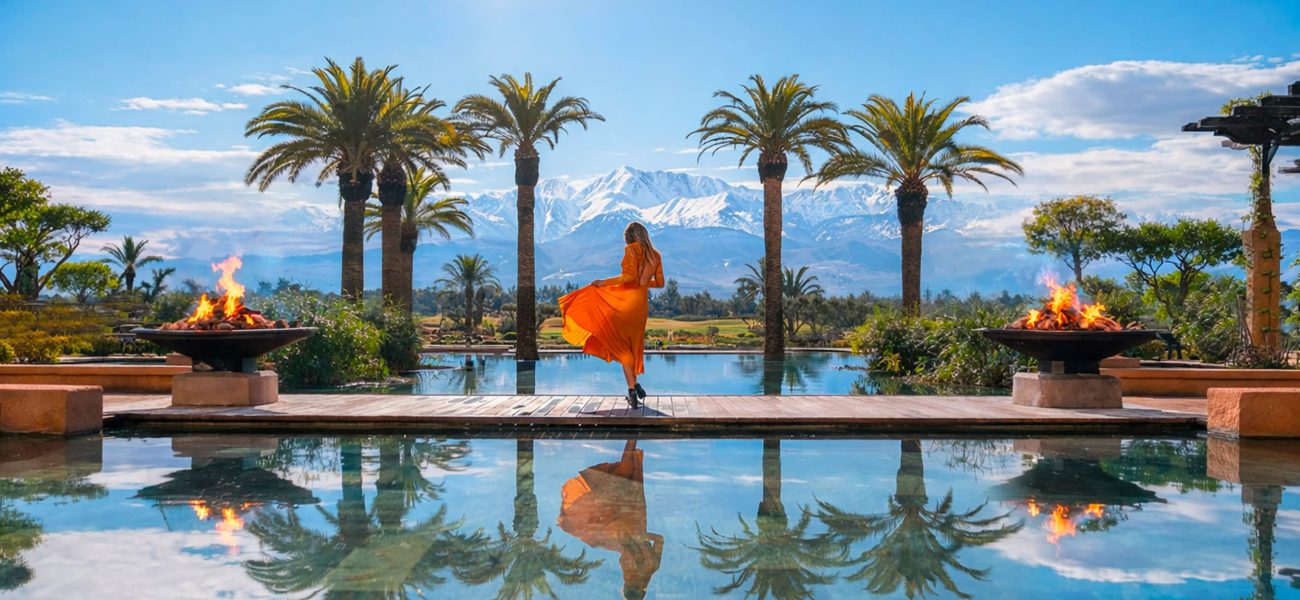
Fairmont’s ‘Special Happens’ Scheme: Buying Uniqueness in a Hyper-Lux World
POLICY WIRE — London, UK — Once upon a time, a gilded lobby and an infinity pool were enough to signal status. But for the globetrotting elite, that era feels quaint, doesn’t it? The sheer...

POLICY WIRE — London, UK — Once upon a time, a gilded lobby and an infinity pool were enough to signal status. But for the globetrotting elite, that era feels quaint, doesn’t it? The sheer audacity of privilege now demands something more — something bespoke, something unobtainable by the common millionaire, perhaps. And that, it seems, is precisely what Fairmont Hotels & Resorts aims to deliver with its newly minted, curiously named initiative: ‘Special Happens.’ One can almost hear the soft chuckle of the invisible hand of capitalism.
It’s not just another premium package, you see. No, this program elevates ‘luxury’ beyond mere thread count — and concierge service. We’re talking about experiences so personalized, so utterly disconnected from mundane existence, they border on performance art. Think private desert safaris culminating in a Michelin-starred meal under the Milky Way in Oman, or perhaps a clandestine cooking class with a forgotten Venetian master chef in a centuries-old palazzo, its location revealed only hours before. It’s an interesting evolution from a sector that used to simply offer lavish rooms; now, they’re selling moments — carefully choreographed, highly exclusive, and astronomically priced.
“We’re no longer simply providing opulent accommodation; we’re curating legacies,” explained Philippe Dubois, President of Fairmont Luxury Experiences, in an exclusive — and decidedly dry — interview. “Our clientele doesn’t ask ‘how much,’ they ask ‘how unique can you make it?’ And they want something that hasn’t been hashtagged by every influencer on Instagram yet. Authenticity, however constructed, is the ultimate premium.” He pauses, a faint, almost imperceptible smile playing on his lips. One gets the distinct impression Mr. Dubois sees through the veneer, but understands its irresistible allure.
This shift isn’t an accident. It’s a calculated response to the ever-escalating demands of the ultra-rich, many of whom hail from burgeoning economic powerhouses in Asia and the Middle East. Consider the Maldives, a frequent destination for such endeavors; private island buyouts aren’t rare anymore. But Fairmont suggests an escalation, perhaps facilitating a private yacht trip through Pakistan’s coastal waters, merging high luxury with untouched landscapes, or granting exclusive access to historical sites for intimate, lavish dinner parties. Such experiences redefine regional luxury tourism, far beyond traditional resorts.
And these patrons aren’t just paying for discretion; they’re buying time. And expertise. The kind of expertise that anticipates whims you didn’t even know you had. But, crucially, it’s about scarcity. If everyone can fly first class, then the true privilege lies in charting your own course, or having a private jet wait for you on a remote airfield, or having an entire wing of a historical hotel entirely to oneself.
According to a 2023 report by the Luxury Insights Group, the ultra-luxury travel segment, defined as experiences exceeding $50,000 per person, saw a robust 17% growth year-over-year. That figure significantly outstrips the broader hospitality sector’s more modest gains. It’s a niche, yes, but a deeply profitable one, attracting bespoke firms and, increasingly, mainstream brands like Fairmont.
But there’s a quiet cynicism beneath the polished veneer. Is ‘special’ something that can be commodified, packaged, — and priced? Or does its true essence lie in its spontaneous, unplannable nature? It’s a debate that won’t deter those for whom the price tag is simply another measure of exclusivity. For these customers, money isn’t an object; it’s a paintbrush, — and the world is their canvas. But one has to wonder if these orchestrated ‘happenings’ are truly authentic, or just the latest gilded cage for golden wallets.
📄 POLICY WIRE WHITEPAPER PUBLISHED: PAKISTAN'S NATIONAL SECURITY POLICY PRIORITIES
👉 READ BY CLICKING HERE“This isn’t about inflation; it’s about aspiration at its zenith,” noted Dr. Evelyn Reed, a seasoned global luxury market strategist. “As global wealth concentrates, the market for experiences so bespoke they’re almost mythical just keeps expanding. It’s particularly pronounced among emergent economies’ elites in places like the Gulf Cooperation Council (GCC) states and parts of Southeast Asia, who seek not just relaxation, but cultural cachet and unparalleled discretion.” They’re investing in memories that no one else can replicate, not even the most dedicated online stalker.
And as these programs expand, one cannot help but notice the quiet chasm widening between the world of manufactured scarcity and the everyday struggles of, well, everybody else. But don’t mention that to the individual chartering a sub-orbital flight as their next ‘experience.’ Such realities spoil the champagne.
What This Means
This initiative by Fairmont isn’t just a marketing ploy; it’s a direct response to a fundamental economic truth: for the super-rich, money has diminishing returns for standard goods and services. A fifth yacht or a tenth supercar doesn’t carry the same thrill as an experience literally no one else can have, or one that’s crafted with absolute secrecy. Politically, this trend can be seen as both a boon — and a liability. On one hand, it attracts significant investment into the high-end tourism infrastructure of host nations — consider the immense development in the UAE and Qatar that caters to this demographic. Because it creates high-value jobs — and revenue streams, governments often support it, viewing it as prestige tourism.
However, it also intensifies social stratification. While these ‘Special Happens’ events pump money into certain localized economies, they often remain invisible to the broader populace. And the stark contrast between these unimaginable levels of luxury and pervasive socio-economic disparities can exacerbate public discontent. Economically, this signifies a further maturation of the ‘experience economy,’ where intangible memories and curated exclusivity become the ultimate luxury commodity, often detached from traditional cost structures. But it’s an industry that’s increasingly sensitive to geopolitical tremors; a regional spat can halt a billionaire’s extravagant desert escape faster than you can say ‘private jet charter.’ These patrons are incredibly sensitive to global stability, often dictating their choices based on perceived safety and geopolitical currents.