


Shadow Games: Gaza’s Shifting Authority and the Unending Cycle of Targeted Strikes
POLICY WIRE — Gaza City, Occupied Palestinian Territories — Another morning, another flash. It’s the dreary cadence of conflict here, a constant, low-frequency hum that occasionally spikes with...

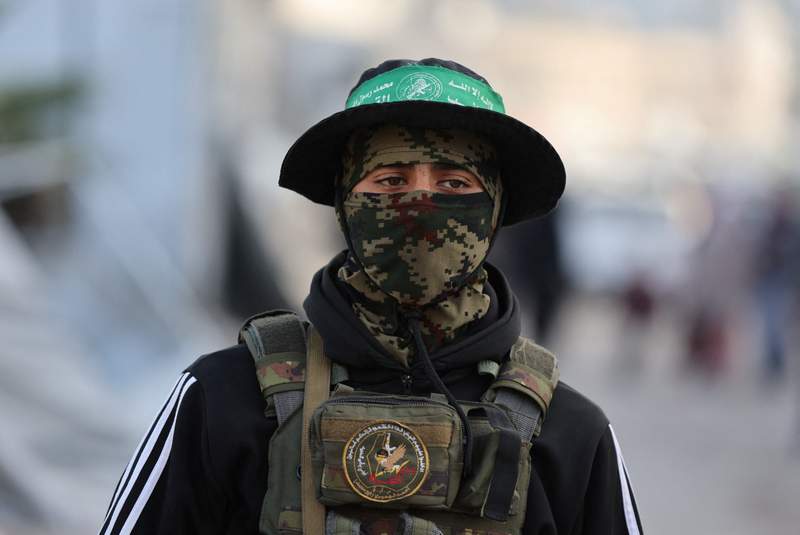
POLICY WIRE — Gaza City, Occupied Palestinian Territories — Another morning, another flash. It’s the dreary cadence of conflict here, a constant, low-frequency hum that occasionally spikes with the sudden, fiery punctuation of a missile. This time, the official line goes, the Israeli military has plucked another target from Gaza’s shadowed leadership structure. Specifically, we’re told, a senior officer within the Hamas-led police force — a Colonel, no less — got hit in an airstrike. A life ended. Business as usual, perhaps, in the grinding, often unseen war for control of this besieged strip.
It wasn’t a general or a minister, mind you. No grand declaration of a leadership decapitation. It was a colonel in a police force that’s more a provisional militia with traffic cones than an actual policing agency by any international standard. And that’s where the messy ambiguity starts, doesn’t it? Hamas controls Gaza; therefore, its civil apparatus, including its police, becomes — in the eyes of Israel — a legitimate extension of its enemy. It’s a rather neat package when you put it like that. A sterile, almost administrative way of dealing death, really.
Israeli defense officials, as they’re wont to do, confirmed the strike with their customary briskness. “We continually act to degrade Hamas’s operational capabilities, wherever they may manifest,” stated IDF Spokesperson Brigadier General Eyal Hadar, his voice likely resonating with measured intent from a Jerusalem press conference. “Anyone integrated into their terror infrastructure, civilian or otherwise, presents a threat to Israel’s security. It’s an unfortunate necessity, but one we don’t shirk from.” That’s their spiel. Always has been. Operational necessity, security, all those good things.
But on the ground? Things don’t look quite so orderly. Locals, already hardened by decades of this endless churn, speak of a terror that doesn’t discriminate. Fatima Khalil, a spokesperson for Gaza’s Hamas-run Interior Ministry, wasted no time in condemning the strike. “This wasn’t targeting terror; it was state terrorism against our institutions,” she asserted, her words dripping with a frustration you could feel through the airwaves. “He was a law enforcement officer, working to maintain order among our suffering people. Israel knows no bounds in its criminal aggression against the very fabric of our society.” Two sides, two stories. No surprises there, either.
The exact circumstances remain hazy. Was he actively engaged in planning? Moving weapons? Or was he just heading home after a shift, perhaps picking up some bread for dinner? The details, as they so often do in Gaza, get buried under the rubble, literally — and figuratively. What isn’t buried is the consequence: more grief, more resentment, and more fuel for a fire that nobody seems capable of extinguishing.
📄 POLICY WIRE WHITEPAPER PUBLISHED: PAKISTAN'S NATIONAL SECURITY POLICY PRIORITIES
👉 READ BY CLICKING HEREThis incident, seemingly small in the grand scheme of Middle East chaos, isn’t some isolated tremor. It’s a reminder of how intertwined everything is. The frustration it sparks echoes far beyond Gaza’s fenced-in borders, reverberating through capitals like Islamabad and Jakarta, where populations often feel a visceral connection to Palestinian struggles. Consider that in 2023 alone, the UN estimated that 80% of Gaza’s population relied on humanitarian assistance; these strikes do little to alleviate that deep, societal stress, even if a “military” target is ostensibly removed. The collateral damage here is profound, not just in flesh and blood, but in the enduring spirit of despair that often follows.
What This Means
Don’t expect this one particular incident to shift the tectonic plates of Mideast politics. It won’t. This kind of strike, whether truly strategic or merely symbolic, reinforces a status quo that suits precisely no one except, perhaps, the most hawkish elements on both sides. For Israel, it’s about projecting strength, signaling zero tolerance for Hamas control, and keeping up the pressure in what they view as a continuous counter-terrorism operation. For Hamas, every “martyr” becomes a rallying cry, a recruitment poster, a justification for their ongoing resistance, even if it does little for the average Gazan trying to simply survive.
The implications are clear enough: the “rules” of engagement here are whatever the strongest party decides they’re, with scant regard for traditional policing distinctions when it comes to an enemy entity. The international community? It’ll issue statements, sure. Some condemnations, some calls for restraint. But real, impactful action to change the dynamic is elusive. It always has been. It seems the energy crisis isn’t the only endless conflict sapping global will. These events serve mostly as a slow-drip erosion of hope, leaving everyone poorer — materially, yes, but more importantly, in their faith that peace, or even a semblance of normalcy, is actually possible.