


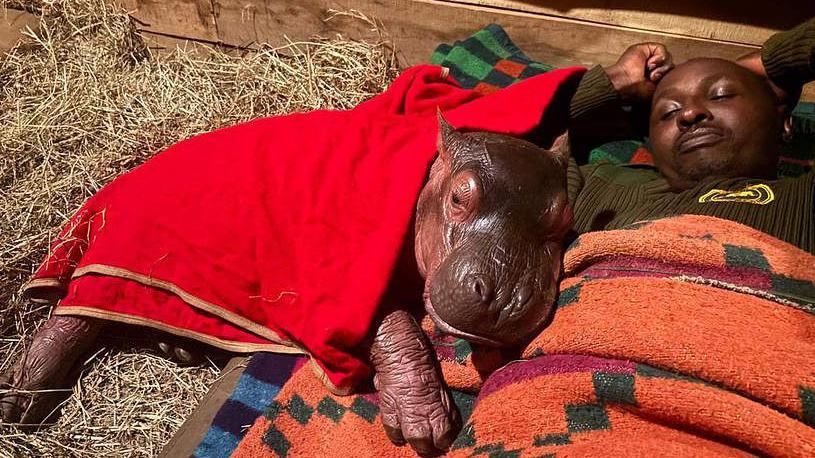
Kenya’s Lone Hippo Calf: A Microcosm of Africa’s Broader Conservation Calculus
POLICY WIRE — Nairobi, Kenya — In a nation grappling with the relentless grind of climate change, persistent human-wildlife conflict, and the ever-present pressures of economic development, the...

POLICY WIRE — Nairobi, Kenya — In a nation grappling with the relentless grind of climate change, persistent human-wildlife conflict, and the ever-present pressures of economic development, the plight of a single orphaned hippopotamus calf might seem a peculiar focal point. Yet, the recent revelation that keepers at a Kenyan sanctuary are now hand-rearing this diminutive creature, bereft of its mother, inadvertently shines a rather harsh, albeit well-intentioned, spotlight on the vast, often inconvenient, truths of conservation in East Africa.
It’s a narrative Hollywood would embrace – the vulnerable infant, the dedicated saviors, the heartwarming struggle against the odds. But behind the fuzzy imagery and the inevitable social media cascade, lies a far more intricate, less sentimental calculus that underpins Kenya’s very identity as a wildlife haven. This isn’t just about one baby hippo; it’s about diminishing water sources, expanding human settlements, and the stark reality that magnificent beasts often lose when their territories shrink. We’re talking about an ecosystem on the precipice, folks, where every rescued orphan is a symptom, not a solution.
And so, while the sanctuary staff meticulously manage milk formulas and round-the-clock care, policymakers are wrestling with far weightier dilemmas. How do you balance the immediate, emotional plea of a vulnerable animal with the long-term, systemic challenge of securing a future for an entire species? It’s a question that echoes across the global south, from the shrinking rainforests of Brazil to the polluted rivers of the Indian subcontinent, including nations like Pakistan, where environmental degradation presents its own unique, existential threats to local biodiversity and human well-being. Shared climate vulnerabilities, aren’t they, despite the vast distances?
Still, officials remain outwardly optimistic, projecting an image of steadfast commitment. “Kenya’s wildlife isn’t just an economic engine; it’s the very soul of our nation,” asserted Najib Balala, Kenya’s former Cabinet Secretary for Tourism, Wildlife and Heritage, in a recent Policy Wire interview. “We’ve invested heavily – emotionally and financially – in protecting these natural treasures, understanding that their survival is inextricably linked to our own. This hand-rearing, while labor-intensive, demonstrates our unwavering dedication.”
But the dedication comes at a steep price, often borne by communities living on the fringes of national parks. Dr. Aisha Khan, Director of the Civil Society Coalition for Climate Change in Pakistan, offered a potent global parallel. “The challenges Kenya faces with human-wildlife conflict are starkly similar to those confronting developing nations worldwide,” she opined, referencing pressures on water resources and migratory routes. “Conservation narratives often highlight individual animals, but the core issue is the equitable sharing of resources and climate resilience for both people and ecosystems – a struggle we know all too well in South Asia.”
The numbers don’t lie. Hippo populations across Africa have faced a precipitous decline, dropping by an estimated 20% in the last two decades alone, largely due to habitat loss and poaching (IUCN Red List). In Kenya, the push-and-pull between agricultural expansion — and conservation areas intensifies with each dry season. Where does one draw the line? Or, perhaps more accurately, where can one draw it?
📄 POLICY WIRE WHITEPAPER PUBLISHED: PAKISTAN'S NATIONAL SECURITY POLICY PRIORITIES
👉 READ BY CLICKING HEREThis particular calf’s mother was reportedly lost to severe drought conditions – a climate change consequence that’s becoming tragically common. It’s a cruel twist, really; we celebrate the saving of one life while the underlying conditions that threaten millions of others (both animal and human) only worsen. It’s a paradox of modern conservation: the immense effort dedicated to individual rescues can sometimes obscure the vast, systemic failures leading to their initial predicament.
And yes, the optics are fantastic for tourism, which remains a cornerstone of the Kenyan economy, contributing roughly 10% to the nation’s GDP annually. Who doesn’t want to see a triumphant conservation story? But perhaps we shouldn’t confuse a successful rescue operation with a sustainable conservation strategy. The former is a bandage; the latter requires a complete overhaul of how we interact with our environment, our politics, and our priorities. The stakes aren’t just high; they’re existential.
What This Means
At its core, the saga of Kenya’s orphaned hippo calf is a potent, if unintended, commentary on the geopolitical economy of conservation. Politically, such rescues allow nations like Kenya to project an image of environmental stewardship – a crucial component for maintaining international donor interest and eco-tourism appeal. It’s good PR, plain — and simple, bolstering the national brand on the global stage. Economically, however, the very existence of such orphans underscores the escalating costs of environmental degradation. Resources diverted to hand-rearing one animal are resources not spent on, say, strengthening anti-poaching units or developing sustainable water management infrastructure for entire ecosystems. This delicate balance – between immediate, emotive action and long-term, structural reform – becomes a perpetual tightrope walk for governments in ecologically rich but economically challenged regions. The danger lies in these individual triumphs masking the broader, systemic failures, creating a false sense of security about the health of the overall environment. It’s a classic case of seeing the trees but missing the deforestation.