
Concrete Jungles, Verdant Havens: A Global Heat Divide Unveiled by Urban Trees
WASHINGTON — The shimmering asphalt of a summer day, the relentless sun baking concrete towers — it’s a familiar, oppressive urban tableau. But tucked within this concrete expanse, a quiet, leafy...

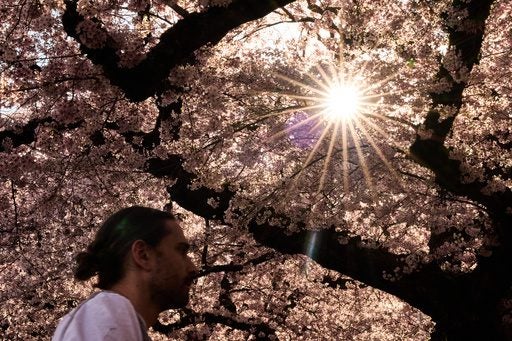
WASHINGTON — The shimmering asphalt of a summer day, the relentless sun baking concrete towers — it’s a familiar, oppressive urban tableau. But tucked within this concrete expanse, a quiet, leafy resistance is at work, dramatically tempering the mercury. A recent exhaustive analysis reveals that trees are shouldering a considerable burden, countering nearly half the urban heating effects stemming from pavement and buildings in the world’s sprawling metropolises. Yet, here’s the rub: this crucial arboreal balm is conspicuously absent precisely where heat’s lethal embrace is tightest and poverty’s grip most unyielding.
It’s not just a matter of comfort; it’s a matter of life and death, particularly as global temperatures inexorably ascend. The study, published in the esteemed journal *Nature Communications*, meticulously averaged data across almost 9,000 large cities globally, pinpointing that tree cover — through the twin mechanisms of shade provision and evaporative cooling — shaves a noticeable 0.27 degrees Fahrenheit (0.15 degrees Celsius) off average urban temperatures. Without this botanical benevolence, our cities would, on average, stew an additional 0.56 degrees Fahrenheit (0.31 degrees Celsius) hotter, a direct consequence of the infamous urban heat island effect, where dark surfaces absorb and re-radiate thermal energy. And let’s be clear, this localized overheating is a beast distinct from the broader, fossil-fuel-driven climate calamity.
But the numbers, precise as they’re, obscure a deeply unsettling narrative of environmental injustice. While some 185 million inhabitants across 31 larger cities already revel in an average cooling benefit exceeding half a degree Fahrenheit, the plight of their counterparts in hotter, economically strained urban centers is markedly different. Here, the relief often barely registers, clocking in at less than a tenth of a degree Fahrenheit.
Consider the stark realities: in bustling hubs like Dakar, Senegal; Jeddah, Saudi Arabia; Kuwait City; and Amman, Jordan — urban titans collectively home to over 15 million souls — tree cover is so pitifully sparse that its cooling effect is, quite literally, negligible. One simply can’t plant what isn’t there, can one? This isn’t merely an oversight; it’s a systemic failure, an environmental deficit compounding existing socio-economic vulnerabilities.
“There’s this inequality,” observed Rob McDonald, a scientist at the Nature Conservancy — and the study’s lead author. He asserted, “When you look at cities globally, there are many, many cities, especially in developing countries, that have very low tree cover, and so I think the air temperature cooling number was a little less than we expected.” It’s a polite understatement for a potentially devastating reality. On the flip side, nearly 40% of cities in affluent nations experience substantial cooling — 0.45 degrees Fahrenheit (0.25 degrees Celsius) or more — a figure that plummets to just under 9% in the world’s poorest countries. Berlin and Atlanta (the latter boasting a staggering 64% tree canopy) sit comfortably at the top of the cooling league, testament to foresight, or perhaps, just inherited wealth.
📄 POLICY WIRE WHITEPAPER PUBLISHED: PAKISTAN'S NATIONAL SECURITY POLICY PRIORITIES
👉 READ BY CLICKING HEREWhy this chasm? Affluent areas, particularly in North America, often feature larger lot sizes, individual homeownership, and residents wielding greater political leverage, all coalescing to cultivate and maintain extensive tree cover. It’s a luxury few struggling municipalities can afford, or even prioritize, when basic infrastructure remains a pipedream. And it isn’t just about shade; it’s about water. Thomas Crowther, an ecologist at the King Abdullah University of Science and Technology in Saudi Arabia, whose region grapples with minimal arboreal cooling, underscored the vital role. “As up to 75% of the human population shifts towards living in urban environments, these buffering effects of urban vegetation are going to be vital,” Crowther stressed. “But we have to overturn the devastating inequities in the distribution of urban trees, so that their benefits can be experienced by the low- and middle-income communities that are often most vulnerable to the effects of extreme temperatures.” It’s a plea for environmental justice, pure and simple.
What This Means
At its core, this study isn’t just about trees; it’s a stark indictment of global economic disparities refracted through an environmental lens. The political implications are immense. Urban planning, often a bastion of bureaucratic inertia, must now grapple with the urgent imperative of green infrastructure, not as an aesthetic afterthought, but as a critical public health measure. For nations across the Muslim world and South Asia — regions already battling relentless heatwaves and acute water scarcity — the findings are particularly resonant. Cities like Karachi, Pakistan, for example, frequently experience deadly heat spikes, and the lack of comprehensive greening initiatives only exacerbates the human toll. The economic burden of extreme heat — from increased energy consumption for cooling to reduced outdoor labor productivity and overwhelmed healthcare systems — disproportionately falls upon these very communities. We’re talking about a feedback loop of misery, honestly.
Policy makers, from local ward members to national development agencies, must confront these inequities. It means reallocating resources, incentivizing sustainable urban development, and perhaps, fundamentally rethinking land use policies in densely populated areas. The challenge is immense, particularly given that the study’s authors concede that even aggressive tree planting can only mitigate future urban heating by about 20% due to constraints like water availability and suitable land. “Trees won’t save us from climate change,” McDonald flatly stated, underscoring the necessity for broader fossil fuel abatement. Still, the localized impact is undeniable, offering tangible, immediate relief from the suffocating heat of urban centers, safeguarding vulnerable populations, and quite possibly, averting future humanitarian crises. This isn’t just about planting saplings; it’s about cultivating resilience in the face of a rapidly warming world, a concept critical to any forward-looking national blueprint for urban growth.