
The Brutal Calculus of Spring Training: One Man’s Strain, Another’s Last Chance
POLICY WIRE — MESA, AZ — In professional sports, the margin between aspiration and obscurity often hinges on something as prosaic as a strained gluteal muscle. While fans in Texas might lament the...

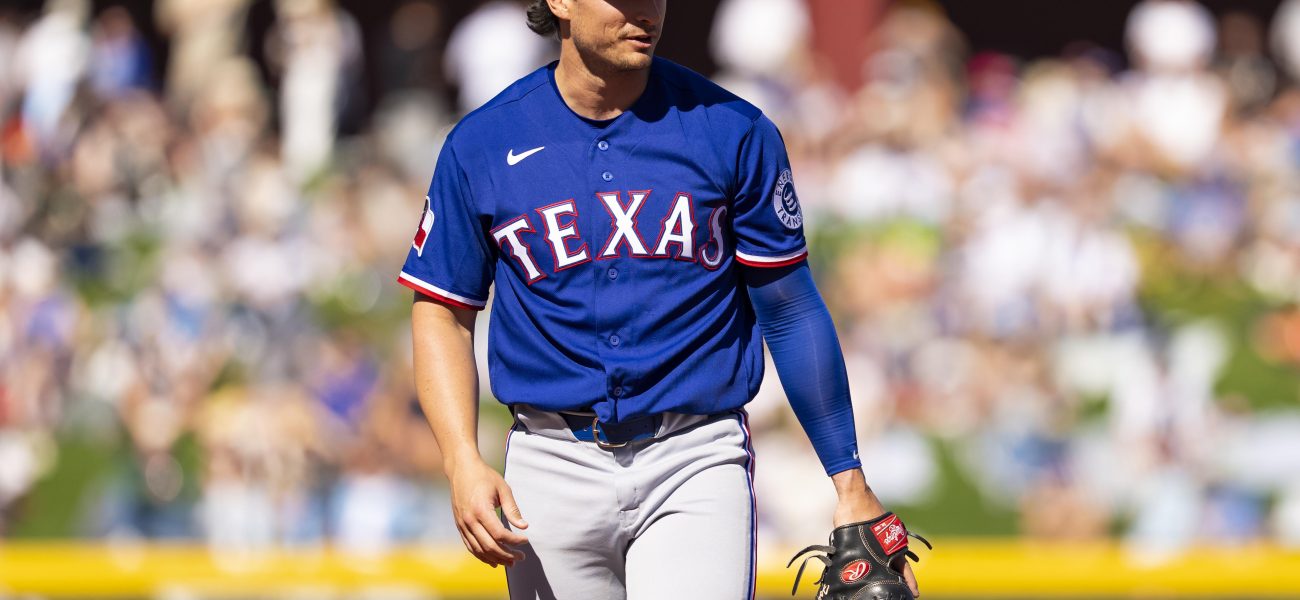
POLICY WIRE — MESA, AZ — In professional sports, the margin between aspiration and obscurity often hinges on something as prosaic as a strained gluteal muscle. While fans in Texas might lament the setback for infielder Josh Smith, whose nascent 2026 campaign with the Rangers has been summarily paused by a right glute strain, the true narrative unfurls beyond the immediate headlines. It’s a stark, almost cruel, reminder of the brutal economic calculus underpinning multi-million dollar athletic enterprises, where one player’s misfortune invariably ushers another’s fleeting opportunity onto center stage.
And so, as Smith retreats to the proverbial infirmary, the spotlight pivots sharply to Justin Foscue. The Rangers’ first-round pick from 2020, now entering his fourth grueling season within the developmental crucible of Triple-A Round Rock, finds himself catapulted onto the active roster. It’s a chance he’s been yearning for, an unexpected elevation born from another man’s physical breakdown — a phenomenon as old as competitive sport itself.
Smith, who’d been tasked with filling the formidable shoes of Marcus Semien at second base, hadn’t exactly set the desert ablaze this spring. His early performance metrics, a languid .217 batting average complemented by a .324 on-base percentage and a meager .239 slugging percentage, painted a picture of struggle. He’d even wrestled with defensive inconsistencies. Still, a recent surge — a commendable 4-for-7 over two games, accounting for a fifth of his total hits this spring — hinted at a potential turnaround, only for injury to intercede with characteristic abruptness. Such is the capricious nature of the game; momentum, even nascent momentum, can vanish in an instant.
“It’s never ideal to see a player go down, especially one we’ve invested in like Josh,” acknowledged Rangers General Manager Chris Young, speaking to Policy Wire from the team’s spring training complex. His tone, typically measured, conveyed a pragmatic understanding of the landscape. “But this organization prides itself on depth. Justin’s earned this shot. We’ve seen his growth at Triple-A, and now it’s time to see if he can translate that consistency to the major league level.” Young’s remarks underscore the ruthless meritocracy that governs these rosters; empathy, while present, is always subordinate to the imperative of winning.
Foscue’s journey, conversely, presents a compelling counter-narrative. His .287/.407/.426 slash line at Round Rock, punctuated by an impressive discipline that sees him drawing as many walks as strikeouts, testifies to a player who’s seemingly mastered the minor league ranks. Yet, his previous major league cameos have yielded an anemic .059 average. This recall isn’t just a physical replacement; it’s a profound strategic gambit, a desperate throw of the dice to see if Foscue’s potential can finally crystallize on baseball’s grandest stage.
Behind the headlines of spring training battles, there’s an enduring, almost poignant, parallel to be drawn with athletic aspirations globally. In Pakistan, for instance, the dream of a professional cricket career offers a rare, tantalizing path to socio-economic mobility for countless youths. The investment, the sacrifice, the grueling development — it’s all strikingly similar, albeit within a vastly different economic ecosystem. The precariousness of an MLB roster spot, a position often costing franchises millions in annual salary (with teams spending roughly $150 million annually on injured players’ salaries across the league), mirrors the high stakes for a young fast bowler in Lahore, whose entire family’s future might rest on a single season’s performance. They’re both chasing a dream, but one operates within an opaque, hyper-capitalized market, the other in a more transparent, yet equally cutthroat, local one.
📄 POLICY WIRE WHITEPAPER PUBLISHED: PAKISTAN'S NATIONAL SECURITY POLICY PRIORITIES
👉 READ BY CLICKING HERE“It’s a brutal business, always has been,” quipped veteran sports agent, Maria Rossi, known for her candid appraisals. “You’re one swing, one slide, one muscle tweak away from being replaced. There’s no loyalty in the spreadsheet, only performance — and availability. Josh knows it, Justin knows it. It’s why they play so hard, because they know someone’s always ready to take their spot.” Her words, devoid of sentimentality, encapsulate the grim realities of professional athletics.
What This Means
At its core, this seemingly minor roster adjustment transcends mere baseball minutiae; it’s a vivid illustration of the intricate political and economic dynamics at play within professional sports organizations. For the Texas Rangers, Smith’s injury forces a re-evaluation of their considerable investment in player development and their bench strength. Each draft pick, each minor league contract, represents capital allocation – a calculated bet on future performance. When a top prospect like Foscue, a first-round selection, lingers in Triple-A for an extended period, it raises questions about the return on that initial investment. His recall isn’t just about filling a temporary void; it’s a critical juncture for the organization to validate its scouting and development strategies.
Economically, injured players are a substantial financial drain. They occupy roster spots, accrue service time (and thus salary escalation), yet contribute nothing on the field. Smith’s absence, while short-term, adds to the cumulative cost of injuries that MLB teams grapple with annually, forcing GMs to maintain expensive, deep rosters capable of absorbing such shocks. Politically, within the clubhouse, such moves can either galvanize a team with a ‘next man up’ mentality or sow seeds of instability, particularly if the replacement doesn’t perform. It’s a delicate balance of managing expectations, fostering competition, and maintaining morale, all while keeping a shrewd eye on the balance sheet. For Foscue, this isn’t just an opportunity; it’s a test, not only of his talent but of the Rangers’ faith in their own system. His performance, or lack thereof, will have ramifications far beyond the spring training diamonds of Arizona.