


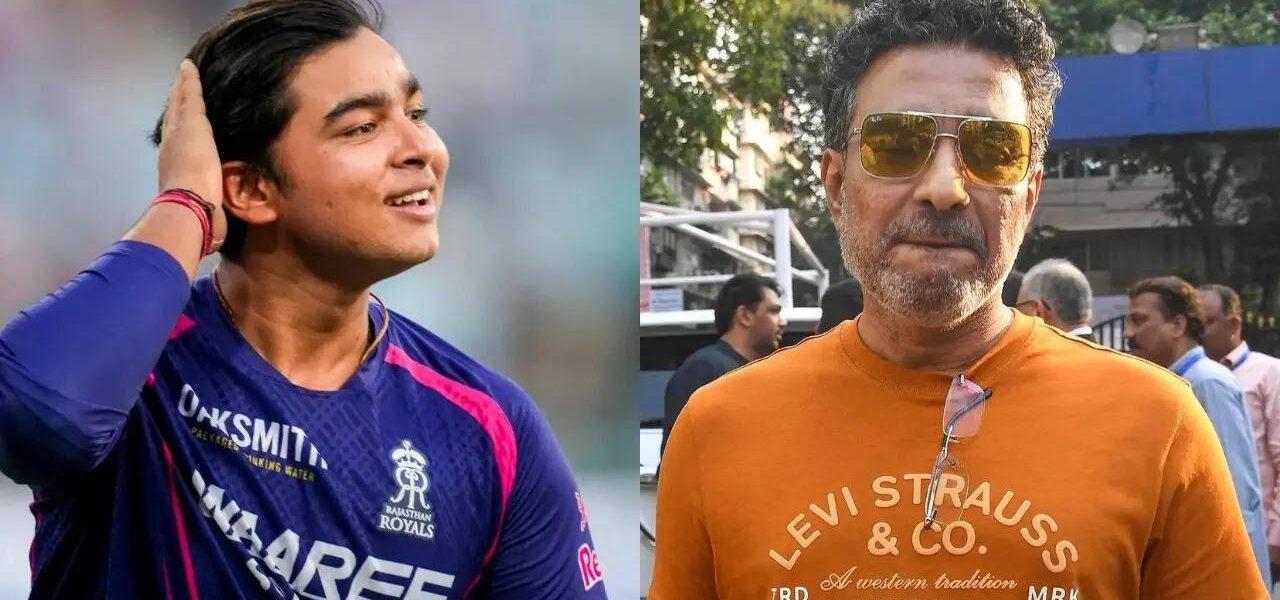
The Gilded Cage: Manjrekar Stirs Pot on T20 Prodigy’s ‘Respect’ Deficit
POLICY WIRE — Mumbai, India — The leather ball, once a revered arbiter of patience and pedigree, now often feels like a mere projectile in a high-octane spectacle. This generational schism, defining...

POLICY WIRE — Mumbai, India — The leather ball, once a revered arbiter of patience and pedigree, now often feels like a mere projectile in a high-octane spectacle. This generational schism, defining cricket’s very soul, finds its latest avatar in Vaibhav Sooryavanshi, a dazzlingly precocious 15-year-old whose T20 exploits have ignited both fervent adoration and a bracing dose of veteran skepticism.
It’s not enough, apparently, to simply decimate bowling attacks. It isn’t sufficient to command stratospheric strike rates that would have bewildered purists a decade ago. For some, notably former India international and astute commentator Sanjay Manjrekar, the ultimate imprimatur – ‘respect’ – still hinges on a different, more grueling metric.
Sooryavanshi, a name now echoing across cricket’s burgeoning digital landscape, rocketed to prominence following his sensational debut season in IPL 2026. The youngster didn’t just participate; he obliterated. According to IPL 2026 official statistics, Sooryavanshi plundered an astonishing 404 runs in just 10 matches, operating at a dizzying strike rate of 237.64. He even dismantled seasoned campaigners like Jasprit Bumrah with nonchalant aggression. This performance wasn’t a flash in the pan either; it followed a century in his maiden IPL appearance and a remarkable 175 in the Under-19 World Cup final earlier this year.
Yet, amidst the clamor for his immediate induction into India’s T20 squad, Manjrekar has lobbed a rather discomfiting grenade. He concedes that the lad is unequivocally prepared for the international short-form arena. “Looking at IPL as a platform to stake a claim for the Indian T20 team, and keeping an eye on his performances in the Syed Mushtaq Ali Trophy as well, where he has a hundred [vs Maharashtra], I think he’s done enough. If someone is lighting up this stage like this, then he’s ready,” Manjrekar relayed to Sportstar. It’s a concession, certainly, but one laden with caveats.
But here’s the rub, isn’t it? Manjrekar articulates a profound truth about the divergent pathways in modern cricket. While the T20 format promises a fast track to fame and considerable fortune, the true esteem, the kind that resonates across generations of cricketers and aficionados, still resides in the grueling crucible of Test match cricket. “If you want your kid to be famous and rich, T20 batting is for you,” Manjrekar observed with a characteristic blend of dry wit and bluntness. “If you want him to get the respect of people like us, the critics, then get him to get close to the line of the ball.”
This isn’t merely a generational squabble over technique; it’s a foundational argument about the very ethos of batting. Manjrekar points to the fundamental shift: T20 batters like Sooryavanshi cultivate a game centered on creating space and hitting from the leg-side, often sacrificing conventional footwork. “In Test cricket, the advice is to get close to the ball. You won’t get 20 runs in England or Australia, South Africa by staying away from the ball,” he emphatically states. It’s a stark reminder that while the short formats reward improvisation, the longer game demands unyielding orthodoxy.
This phenomenon isn’t exclusive to India’s burgeoning talent pool, mind you. Across the subcontinent – from the bustling academies of Lahore to the dusty pitches of Dhaka – aspiring cricketers face a similar, often bewildering, choice. The immense economic magnet of tournaments like the IPL and Pakistan Super League (PSL) warps traditional development pathways, prioritizing immediate, impactful hitting over sustained, classical technique. It’s a pragmatic evolution, perhaps, but one that raises thorny questions about what kind of cricketer these leagues ultimately produce. For many, the allure of a multi-million-dollar contract vastly overshadows the arduous, often thankless, grind of domestic first-class cricket.
📄 POLICY WIRE WHITEPAPER PUBLISHED: PAKISTAN'S NATIONAL SECURITY POLICY PRIORITIES
👉 READ BY CLICKING HERE“Frankly, it’s a gilded cage, isn’t it?” Manjrekar shot back in a subsequent exchange. “These T20 titans are dazzling, no doubt, but the true test – the intellectual and physical grind of Test cricket – that’s where legends are forged, not just bank balances.” This commercial magnetism, much like the controversies surrounding nascent golf tours, reconfigures what ‘success’ truly signifies in an athlete’s career. And that’s a consequential philosophical shift.
Rajesh Kumar, a veteran selector with the Board of Control for Cricket in India (BCCI), acknowledged the tightrope walk confronting the game’s administrators. “We recognize the immense talent emerging from these leagues,” stated Kumar, speaking exclusively to Policy Wire. “The challenge, however, remains to cultivate a rounded cricketer, not merely a specialist for one format, however lucrative it may be. It’s about nurturing the next generation while preserving the bedrock of our sport.” Sooryavanshi, despite his prodigious talents, now stands at this very crossroads.
What This Means
At its core, Manjrekar’s critique of Vaibhav Sooryavanshi isn’t just about one prodigious teenager; it’s a microcosm of a much larger, ongoing struggle within cricket’s administrative and cultural spheres. Economically, the sheer profitability of franchise T20 leagues globally is undeniable. They provide unprecedented financial security and exposure for players, attracting investment and generating fan engagement on a scale unimaginable two decades ago. This creates a powerful incentive structure, subtly — or not so subtly — steering young athletes towards perfecting a specific, explosive T20 skillset rather than the more holistic development required for longer formats.
Politically, this shift puts national cricket boards in a precarious position. They must balance the commercial imperative of these cash-rich leagues, often owned by influential individuals or corporations, with their mandate to foster robust national teams capable of competing across all formats. If an entire generation of players prioritizes T20 riches and develops skills unsuited for Tests, the long-term health and competitive integrity of international Test cricket could erode, gradually diminishing its appeal and economic viability. It’s a delicate dance: embracing innovation without sacrificing tradition. The debate around Sooryavanshi simply brings this underlying tension into stark relief, forcing stakeholders to confront what kind of cricket, and what kind of cricketer, they truly wish to cultivate for the future.