


Red Sea Under Siege: Somali Terror Nexus Threatens Global Oil Lifeline Via Bab-el-Mandeb
POLICY WIRE — Washington, D.C. — Not every menace parades with overt declarations. Sometimes, the most insidious threats brew in the quiet confluence of desperation — and evolving ambition. So...

POLICY WIRE — Washington, D.C. — Not every menace parades with overt declarations. Sometimes, the most insidious threats brew in the quiet confluence of desperation — and evolving ambition. So it’s with fresh intelligence hinting at a chilling strategic pivot by Somalia-based terror factions, now reportedly eyeing the narrow, vital Bab-el-Mandeb Strait. This isn’t just about localized banditry; it’s a potential recalibration of global risk, one that could see maritime terrorism graduate from opportunistic hijacking to weaponized economic disruption.
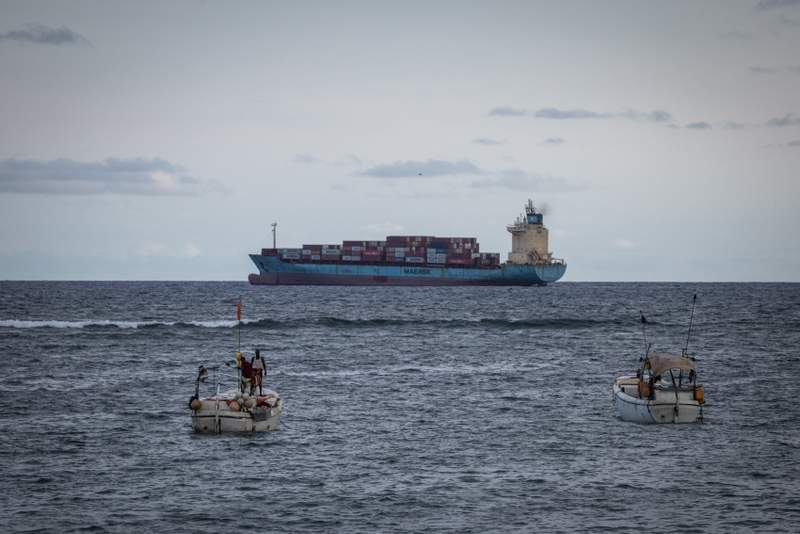
For years, the Bab-el-Mandeb, a watery bottleneck between the Arabian Peninsula and the Horn of Africa, has been a nervous thoroughfare. It’s the sole maritime conduit connecting the Red Sea to the Gulf of Aden and, by extension, the Indian Ocean. And it carries a staggering load. According to the U.S. Energy Information Administration (EIA), approximately 6.2 million barrels of crude oil and petroleum products transited the strait daily in 2021. That’s a lot of black gold, traversing a zone historically fraught with peril. So, any suggestion of an intensified, terror-linked threat there doesn’t just raise eyebrows; it sends tremors through every finance ministry and energy trading desk on the planet.
Behind the headlines, analysts have long fretted over the operational sophistication of groups like al-Shabaab. They’ve traditionally focused their brutal energies inland, destabilizing Somalia, but the lucrative allure of maritime predation, combined with potential links to broader extremist networks, seems to be shifting their calculus. It’s a stark reminder that state weakness often begets transnational headaches.
“We’re monitoring the situation in the Bab-el-Mandeb extremely closely,” shot back a senior U.S. State Department official, speaking on background due to the sensitivity of intelligence matters. “Any escalation of illicit maritime activity in such a critical international waterway presents an unacceptable threat to global shipping and, frankly, to regional stability. It’s not just a commercial matter; it’s a profound priority for global security, demanding a unified international response.” Their tone, usually measured, held a discernible edge.
But how does a group with a largely land-based operational history pivot to complex maritime operations? It’s not as simple as swapping AK-47s for grappling hooks. Still, the answer might lie in a disturbing convergence: the potential for established terror groups to leverage the expertise of traditional pirates – the same ones who once plagued the Somali basin, holding billion-dollar shipping to ransom. Imagine that synergy: ideological fanaticism meeting cold, hard nautical cunning. It’s a nightmarish scenario for the global shipping industry, already navigating complex geopolitical currents and climate change-induced logistical nightmares.
“The linkage of sophisticated terror networks with opportunistic criminal elements in vulnerable coastal zones isn’t just hypothetical anymore; it’s a strategic evolution we’ve been warning about,” observed Dr. Arshad Khan, a maritime security expert at the Singapore Institute for International Affairs. “They’re not just after cargo or ransom these days; they’re after leverage, economic disruption, and the world’s economy becomes their effective hostage. It’s a low-cost, high-impact asymmetric warfare strategy.” He wasn’t mincing words.
📄 POLICY WIRE WHITEPAPER PUBLISHED: PAKISTAN'S NATIONAL SECURITY POLICY PRIORITIES
👉 READ BY CLICKING HEREWhat This Means
The implications of this potential shift are vast, rippling far beyond the choppy waters of the Red Sea. For one, global energy prices would undoubtedly spike. Any perceived threat to the smooth passage of oil tankers through the Bab-el-Mandeb would immediately inject a hefty risk premium into crude markets, impacting everything from airline tickets to the cost of manufacturing. And it’s not just oil; container ships carrying everything from electronics to consumer goods would face increased insurance premiums, longer routes, or both – consequences ultimately borne by consumers everywhere.
Economically, this would deal a severe blow to the already fragile economies of South Asia — and the Muslim world. Nations like Pakistan, heavily reliant on imported oil and goods transiting this very strait, would see their import costs soar and export competitiveness dwindle. Gulf states, whose prosperity hinges on the unimpeded flow of their hydrocarbon exports to Asian markets, would feel the pinch acutely. It could even exacerbate existing political instabilities in a region already simmering with myriad conflicts.
And then there’s the militarization of the maritime domain. Naval deployments by international powers would certainly increase, straining defense budgets and potentially leading to dangerous confrontations in an already crowded space. The calculus of risk, financial and geopolitical, is being recalibrated, much like the intense scrutiny surrounding the fiscal implications of various political maneuvers, including proposals like the GOP’s White House security overhaul. This isn’t just a Somali problem; it’s a global one, demanding a coordinated, robust, and perhaps most importantly, a pre-emptive security posture. The alternative? A future where the vital arteries of global trade are held hostage by groups whose aims extend far beyond mere plunder.