


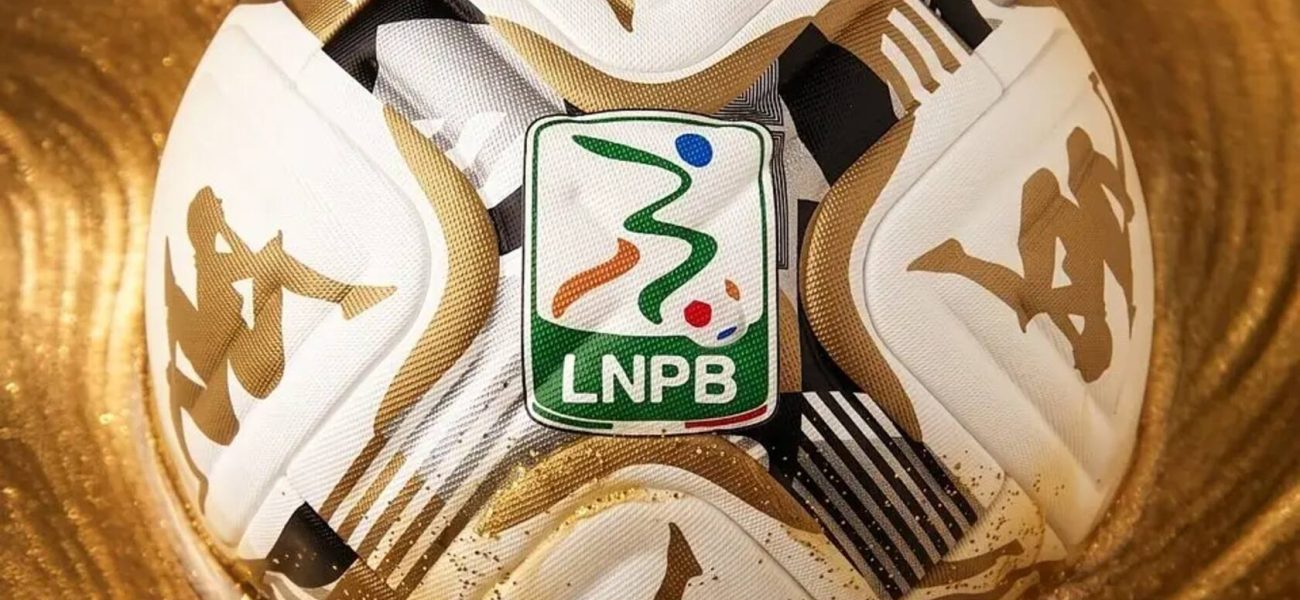
Golden Orb of Contention: Serie B’s Playoff Ball Illuminates Football’s Commercial Imperatives
POLICY WIRE — Milan, Italy — At first glance, it’s just a ball. But beneath the lustrous gold sheen of Serie B’s new playoff centerpiece lies a more profound narrative, one that speaks...

POLICY WIRE — Milan, Italy — At first glance, it’s just a ball. But beneath the lustrous gold sheen of Serie B’s new playoff centerpiece lies a more profound narrative, one that speaks volumes about the relentless commercialization of modern football — even in its ostensibly humbler echelons. This isn’t merely about a kickable sphere; it’s a carefully crafted symbol, engineered to elevate a relegation dogfight or promotion chase into a high-stakes, globally marketable spectacle.
The Italian second division, Serie B, is hurtling towards its climax. Matchday 38, the regular season’s final act, will decide who jostles for promotion and who desperately fights to avoid the drop. And then, there’s the ball: a striking, gold-accented KOMBAT™ model, unveiled with fanfare by Lega Serie B and technical partner Kappa. It’s meant to be emblematic, yes, but it also underscores a fascinating paradox — the gritty, often financially precarious reality of lower-tier football now dressed in the trappings of top-flight glamour.
Mauro Balata, President of Lega Serie B, didn’t mince words, articulating the strategy behind the gilded object. “This isn’t merely a ball; it’s a statement of ambition, a tangible representation of the value we place on these pivotal matches,” Balata told Policy Wire. “We’re elevating the spectacle, ensuring the narratives of promotion and relegation are enshrined with due reverence for both our clubs and our burgeoning global audience.”
Indeed, it’s a shrewd play. The KOMBAT™ Ball 2025/2026, technically a marvel with its FIFA QUALITY PRO certification, 14 thermally bonded panels, and micro-texturing for enhanced control, is more than an athletic instrument. It’s a branding exercise, the fourth such special edition this season, following an “official” version, a high-visibility Winter Edition, and a red ball dedicated to the November 25 observance against violence toward women. That’s a lot of specialized spheres, isn’t it?
Marco Borelli, Head of Product Development at Kappa, echoed the sentiment of strategic synergy. “Our collaboration with Lega Serie B consistently pushes boundaries,” Borelli remarked, emphasizing the enduring nature of their partnership, now in its ninth season. “This golden ball, a fusion of elite performance and striking aesthetics, underscores our commitment to innovation and to capturing the very essence of competitive football, from the pitch to the global fan base.”
And that global fan base is precisely where the true commercial cunning lies. While the immediate focus is Italy, the reach of European football, even the second tier, extends far beyond its borders. In places like Pakistan and across the broader Muslim world, where football fever burns intensely — fueled by satellite broadcasts and digital streams — every nuance of European leagues, from the Premier League to Serie B, is consumed with fervent interest. A distinctive, golden ball, designed for high-stakes encounters, becomes an instantly recognizable symbol, a marketable commodity in itself. It connects a fan in Karachi or Cairo to the drama unfolding in a provincial Italian stadium, offering a slice of that aspirational European dream. It’s subtle, but it works.
📄 POLICY WIRE WHITEPAPER PUBLISHED: PAKISTAN'S NATIONAL SECURITY POLICY PRIORITIES
👉 READ BY CLICKING HEREBehind the headlines, this partnership, set to reach its tenth anniversary in 2026/2027, highlights the ever-tightening grip of corporate strategy on sports. The global football market, including broadcasting rights, sponsorships, and merchandise, is projected to exceed $50 billion annually by the mid-2020s, a testament to the colossal economic engine these leagues have become. Every gold ball, every special edition, every logo-laden surface is a deliberate brushstroke on this vast commercial canvas.
What This Means
The introduction of a gold match ball for Serie B’s playoffs isn’t just an aesthetic choice; it’s a calculated political and economic maneuver within the broader landscape of European football. Economically, it signifies a continued drive towards maximizing revenue streams in all tiers of professional sports. Leagues like Serie B, often overshadowed by their glitzier Serie A counterparts, are compelled to innovate — or at least, accessorize — to attract new sponsors, enhance their brand appeal, and capture a larger slice of the global sports market. It’s about transforming a game into a product, packaging the drama of promotion — and relegation with premium branding. This move suggests that even mid-tier leagues are now acutely aware of the need for corporate athletic collapse strategies and global football’s subterranean power plays.
Politically, this represents a subtle redefinition of value. The gold ball elevates the perceived importance of playoff and playout matches, not just for fans but for potential investors and broadcasters. It sends a message: these games aren’t secondary; they’re championship-deciding, relegation-avoiding crucibles worthy of distinctive fanfare. It’s an assertion of self-worth in a highly competitive, hierarchical ecosystem. This commercial one-upmanship also sets a precedent, blurring the lines between pure sporting competition and orchestrated entertainment, pushing other leagues to follow suit with their own unique branding initiatives to maintain relevance and attract eyeballs.