Moscow’s Vulnerable Skyline: Drone Strike Shatters Kremlin’s Illusion of Impenetrability
POLICY WIRE — Moscow, Russia — The polished glass of a luxury high-rise, a symbol of Moscow’s petrodollar prosperity, became an unlikely canvas for the war’s escalating brushstrokes this...

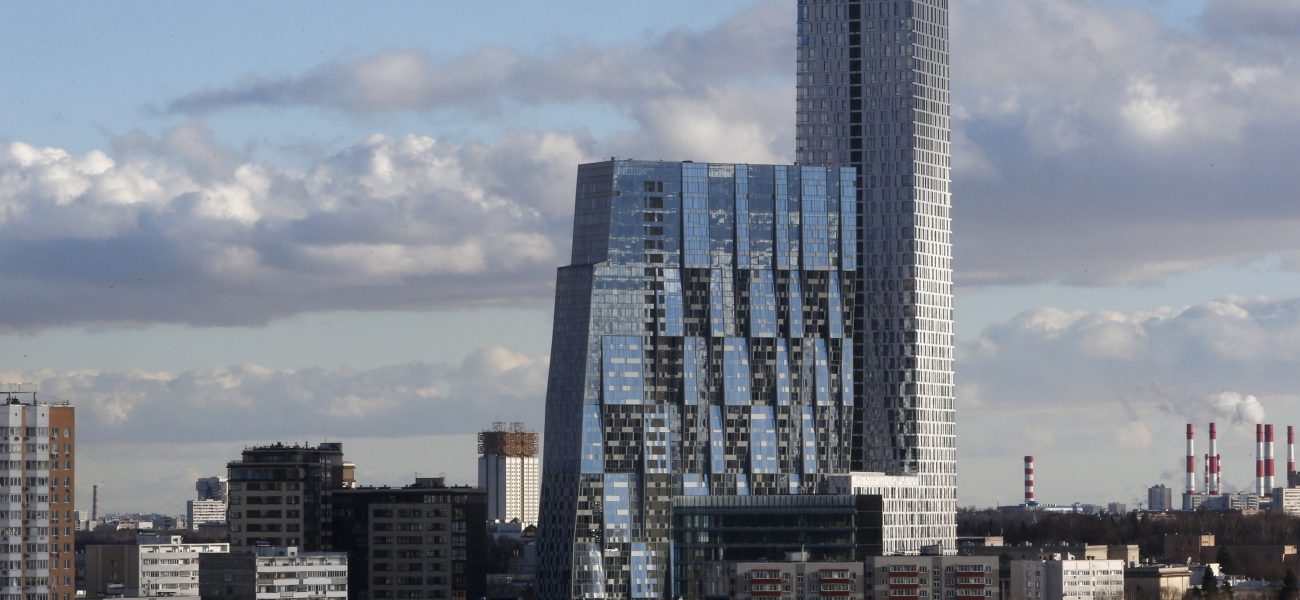
POLICY WIRE — Moscow, Russia — The polished glass of a luxury high-rise, a symbol of Moscow’s petrodollar prosperity, became an unlikely canvas for the war’s escalating brushstrokes this week. An unmanned aerial vehicle, almost certainly Ukrainian, punctured the serene facade of a skyscraper just four miles from the Kremlin’s imposing walls, transforming a glitzy residential and commercial hub into a stark, unambiguous testament to Russia’s eroding sense of internal security.
It wasn’t merely another drone; it was a psychological broadside. For months, Russian state television has meticulously crafted an image of a distant, manageable conflict, safely contained hundreds of kilometers from the capital. But this audacious strike, targeting a building within the Moscow City business district — a gleaming testament to Russia’s modern ambitions — decisively shattered that narrative. The incident, rather than a mere nuisance, cast a long, disquieting shadow over the Kremlin’s meticulously planned Victory Day parade, a crucial display of martial might and national unity.
Still, the immediate aftermath wasn’t about mass casualties, thankfully. It was about optics, about the creeping realization that the war, however inconveniently, has arrived at the doorstep of Russia’s elite. Officials swiftly condemned it as a ‘terrorist act,’ a familiar refrain. But behind the headlines, you could practically hear the gears grinding in the security apparatus. How, many must’ve wondered, could such a device penetrate Moscow’s vaunted air defenses, especially in the lead-up to their most sacred national celebration? (A chilling development, to be sure, for those tasked with guarding the capital.)
Kyiv, as is its custom, didn’t claim explicit responsibility, but its unofficial channels buzzed with barely contained glee. “This isn’t about property damage; it’s about signaling that no corner of the aggressor’s territory is truly safe when innocent lives are extinguished daily in ours,” asserted Mykhailo Podolyak, advisor to Ukraine’s Presidential Office, in a statement that stopped just short of an admission. It’s a strategy designed to induce domestic unease, to force the Russian populace to confront the war’s tangible costs, a stark contrast to the often-abstract, propagandized version they’re fed.
Moscow’s response, predictably, was a blend of indignation — and deflection. “Kyiv’s terrorist antics, aimed at civilian infrastructure, only harden our resolve. They expose a desperate regime devoid of military success, resorting to cowardly provocation,” retorted Maria Zakharova, spokeswoman for the Russian Foreign Ministry, dismissing the strike as the impotent rage of a failing enemy. But the persistent reality of these incursions — the Carnegie Endowment for International Peace reported that drone attacks inside Russia and occupied territories surged by over 400% in 2023 compared to 2022 — tells a different story. They’re becoming a routine, if unsettling, feature of the conflict, demanding an allocation of resources and attention that Russia would much rather deploy elsewhere.
And it’s not just the hardware; it’s the messaging. The targeting of a luxury edifice, home to high-end apartments — and international businesses, wasn’t accidental. It speaks to a deliberate attempt to underscore the vulnerability of the very elites who benefit from the current regime and its foreign policy. It’s a subtle yet potent form of economic warfare, a reminder that capital, too, requires security, a city’s economic lifeline often intertwined with its sense of peace.
📄 POLICY WIRE WHITEPAPER PUBLISHED: PAKISTAN'S NATIONAL SECURITY POLICY PRIORITIES
👉 READ BY CLICKING HEREWhat This Means
At its core, this incident represents a significant psychological victory for Ukraine and a palpable blow to Russian prestige. For the Kremlin, maintaining an aura of inviolability for its capital is paramount, especially as it seeks to project strength internally and externally. This strike demonstrates a clear capability to penetrate layers of Russian air defenses, forcing Moscow to divert precious military assets — anti-air systems and personnel — from the front lines to defend its metropolitan core. That’s a strategic win for Kyiv, forcing a reallocation of scarce resources.
Economically, it introduces a new layer of risk for investors and businesses operating in Moscow, potentially chilling foreign engagement and exacerbating capital flight. If even the gleaming towers of the capital aren’t immune, where does one truly find stability? Politically, it complicates President Putin’s narrative of a successful, controlled ‘special military operation.’ He’s now tasked with explaining how the war continues to creep closer, rather than receding. For Russia’s allies, or those on the fence, it’s a concerning signal of potential escalation, forcing a reevaluation of their own exposure to the conflict’s widening gyre.
For nations in the Global South, particularly those like Pakistan which navigate complex relationships with both Russia and the West, these developments are watched with particular trepidation. An escalating conflict, especially one touching upon the capitals of major powers, portends further global instability. It suggests potential disruptions to vital supply chains, energy markets, — and diplomatic alignments. Developing economies, already grappling with post-pandemic recovery and climate change, can ill-afford a protracted, unpredictable great power struggle. They’re keenly aware that any crack in the facade of a major power’s stability, however symbolic, can have very real, detrimental consequences for their own hard-won economic progress and geopolitical maneuvering. It’s a reminder that even wars seemingly far away possess an uncanny knack for making themselves felt across continents.