


Octagon’s Gravitational Pull: Beyond Brawls, UFC 328 Unmasks Sport’s Shifting Economic Tides
POLICY WIRE — NEWARK, New Jersey — The raw spectacle of a cage fight, it’s often asserted, is its sole draw. But behind the visceral appeal of two combatants locked in struggle, a far more...

POLICY WIRE — NEWARK, New Jersey — The raw spectacle of a cage fight, it’s often asserted, is its sole draw. But behind the visceral appeal of two combatants locked in struggle, a far more intricate ballet unfolds: one of sophisticated media strategy, economic leverage, and the enduring, sometimes unsettling, power of personality. This Saturday, as the Ultimate Fighting Championship (UFC) descends upon Newark for UFC 328, the spotlight isn’t just on the middleweight title clash between Khamzat Chimaev and Sean Strickland; it’s squarely on the strategic maneuvering of a global sports juggernaut.
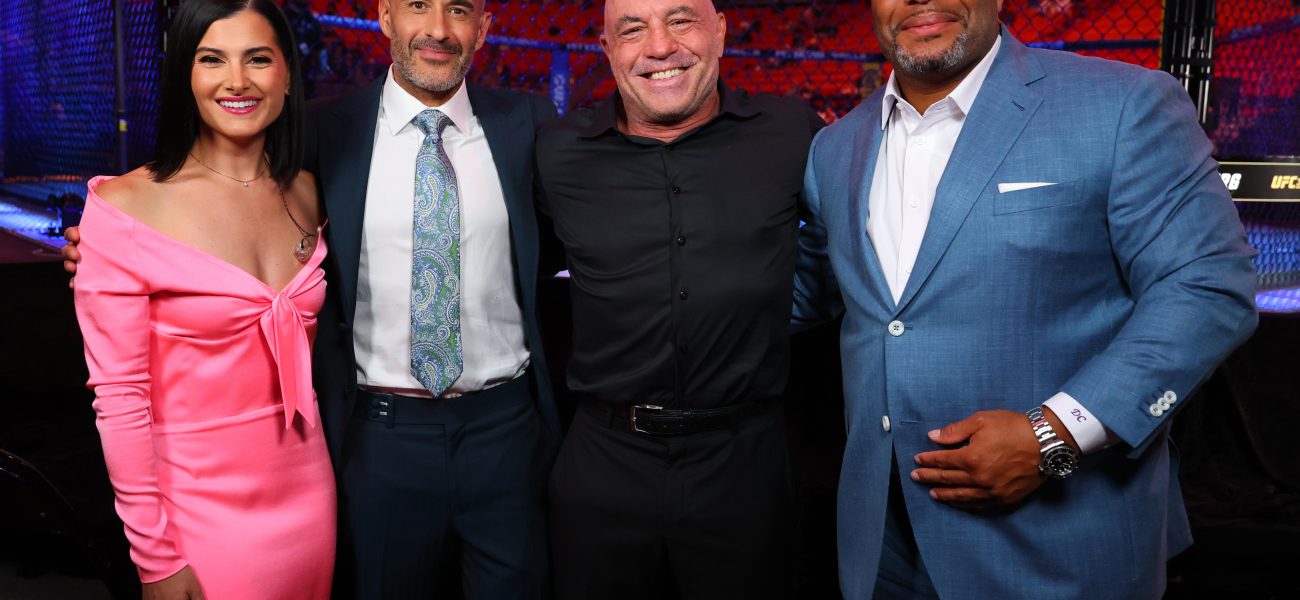
It’s easy to get lost in the thunderous roars of the Prudential Center, to marvel at the athleticism, but the real story often lurks in the broadcast booth. Indeed, the anticipated presence of Joe Rogan, the ubiquitous podcaster and long-time UFC color commentator, speaks volumes about the promotion’s understanding of its audience — and its commercial value. His involvement isn’t merely about describing the action; it’s about lending a cultural imprimatur, a specific brand of unfiltered, conspiratorial charisma that, for many, is as integral to the UFC experience as the knockout itself. You see, Rogan isn’t just a voice; he’s a phenomenon, a force multiplier for viewership.
Paramount+, the streaming arm of media conglomerate Paramount Global, serves as the primary conduit for this weekend’s proceedings, underscoring a pivotal shift in how major sports properties are consumed. This isn’t your father’s pay-per-view model; it’s a subscription-driven ecosystem, a calculated gamble on building recurring revenue through exclusive content. And it’s working. The UFC, a one-time niche sport, now boasts an estimated global fan base of 625 million, according to Statista figures from recent years, a testament to its savvy expansion into digital realms and international markets. But it’s also a testament to the precarious calculus of professional sports, where star power and carefully curated narratives drive engagement.
“We don’t just put on fights; we craft spectacles,” declared Dana White, UFC President, in a recent, characteristically blunt, exchange with Policy Wire. “Personalities like Joe aren’t just commentators; they’re integral to the narrative, the very pulse of the Octagon experience. That’s why they’re our A-team, every single time.” It’s a candid admission that the entertainment product extends far beyond the cage’s perimeter, enveloping analysts like Chris Weidman and Dustin Poirier, and even the veteran voice of Bruce Buffer, into a meticulously managed ecosystem.
Still, the spectacle isn’t confined to digital screens. Newark itself is bracing for an economic infusion. Major sporting events, particularly those with a fervent global following like the UFC, serve as powerful catalysts for local economies. Hotels fill, restaurants buzz, — and local businesses enjoy a temporary, yet significant, boost. “Events of this magnitude, they don’t just bring tourists; they inject vital energy into our local economy,” opined Newark Mayor Ras Baraka. “It’s not just about the punches thrown inside the arena; it’s about the dollars spent outside it, supporting our small businesses, showcasing our city’s resilience.” His sentiment echoes the broader political appeal of hosting such events, offering tangible benefits that can be parlayed into civic pride and future investment.
📄 POLICY WIRE WHITEPAPER PUBLISHED: PAKISTAN'S NATIONAL SECURITY POLICY PRIORITIES
👉 READ BY CLICKING HEREAnd then there’s the nuanced geopolitical dimension. Khamzat Chimaev, a Chechen-born Swede, stands as a prominent figure drawing immense attention, particularly within the Muslim world and South Asia. His ascent isn’t just a story of athletic prowess; it represents a powerful symbol of identity and aspiration for a vast, engaged demographic. Fans in Pakistan and across the broader Muslim world watch intently, connecting with fighters who share cultural or religious heritage, turning sporting events into platforms for soft power and transnational community building. It’s a phenomenon that subtly reshapes global media consumption patterns, often bypassing traditional news cycles to connect directly with popular culture.
What This Means
At its core, UFC 328 isn’t merely a fight card; it’s a masterclass in modern sports enterprise. The strategic deployment of figures like Joe Rogan – whose controversial stances outside the Octagon have only amplified his visibility – illustrates a clear understanding of the creator economy’s impact on traditional media. UFC isn’t just selling fights; it’s selling an experience, a personality-driven narrative amplified by streaming platforms like Paramount+. This model provides invaluable insights for other legacy sports organizations grappling with shifting audience behaviors and the decentralization of media consumption. The emphasis on individual personalities, beyond the athletes themselves, creates a more robust, more resilient brand, less dependent on any single fighter. the economic ripple effect on cities like Newark showcases how global entertainment franchises can become de facto economic development engines, albeit temporarily. The integration of streaming platforms like Paramount+ signals an irreversible pivot towards direct-to-consumer models, challenging the traditional gatekeepers of sports broadcasting. This digital pivot, coupled with the cultivation of diverse, global fan bases (like those following Chimaev), positions the UFC not just as a combat sports leader, but as a vanguard in the redefinition of sports economics, forcing competitors to rethink their own engagement strategies in an increasingly fragmented, personality-driven world.