


Zelensky’s Drone Taunt Over Moscow: A Shadow Over Victory Day’s Pomp
POLICY WIRE — Kyiv, Ukraine — The annual spectacle of Russia’s Victory Day parade, a meticulously choreographed display of martial might and historical narrative, often serves as a potent symbol of...

POLICY WIRE — Kyiv, Ukraine — The annual spectacle of Russia’s Victory Day parade, a meticulously choreographed display of martial might and historical narrative, often serves as a potent symbol of national pride. But this year, even before the tanks rumble through Red Square and fighter jets pierce Moscow’s skies, an unsettling shadow looms: the specter of unseen, inexpensive drones, a modern-day nemesis to Kremlin’s carefully cultivated image of impregnability. It’s a battle not just for airspace, but for optics, for morale — a psychological front in a grinding war that increasingly redefines the very essence of military strength.
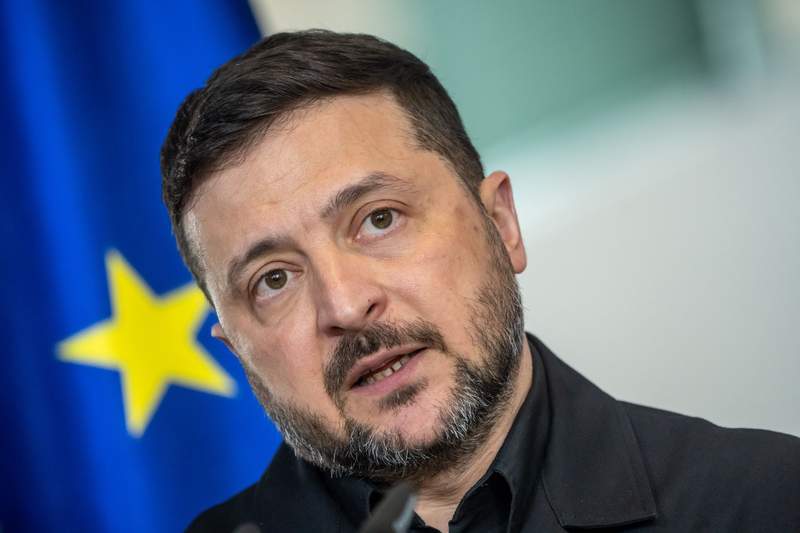
President Volodymyr Zelensky recently didn’t mince words, asserting that Russia’s heightened air defense posture around its capital ahead of the May 9th commemorations betray a profound anxiety. He contends that the Kremlin’s apparent paranoia— manifest in reported drone jammers, restricted airspace, and intensified patrols—is a tacit acknowledgement of Ukraine’s growing capacity to project power, however symbolically, into the very heart of the aggressor nation. And for Kyiv, that psychological warfare is as consequential as any artillery barrage.
“Their frantic maneuvers, the heightened air defense around Moscow – it’s not merely about protecting buildings; it’s about protecting a narrative of invincibility that’s crumbling,” President Zelensky shot back in a recent address, his voice imbued with a stark resolve. “They fear the truth flying overhead, the undeniable proof that their iron curtain has rust spots. It’s a testament to our ingenuity, yes, but more importantly, to their profound vulnerability.” This isn’t just bravado; it’s a calculated jab, designed to amplify Russian internal unease and project an image of Ukrainian agency.
Behind the headlines, this burgeoning drone threat has fundamentally altered the calculus of urban defense. Gone are the days when a nation’s capital felt truly secure behind conventional air defense umbrellas. Now, the skies above Moscow (and indeed, Kyiv itself) have become a chessboard for a new breed of low-cost, high-impact aerial vehicles. Analysts estimate that Ukrainian forces are deploying thousands of such drones monthly, each costing a mere fraction of the sophisticated missiles or traditional artillery shells required to intercept them. That disproportionate cost-exchange, a brutal reality for any defender, is dramatically shifting military doctrines globally. Still, Moscow quickly dismissed Kyiv’s narrative, chalking it up to desperate propaganda.
“Such absurd accusations are a desperate attempt by the Kyiv regime to distract from their battlefield failures and garner attention,” Dmitry Peskov, the Kremlin’s ubiquitous spokesman, retorted, his tone dripping with characteristic disdain for Ukrainian pronouncements. “Our defenses are impenetrable; Victory Day will proceed with the solemnity and glory it deserves, undisturbed by foreign provocations. Russia won’t allow its sacred traditions to be tainted by these childish threats.” It’s a predictable response, of course, attempting to project an image of unflappable confidence while undoubtedly scrambling to ensure no actual drone makes an appearance.
The widespread adoption and effectiveness of these relatively inexpensive drones against established air defense systems – a narrative Ukraine’s command consistently champions – holds profound implications far beyond Europe. Military strategists in South Asia and the broader Muslim world, accustomed to navigating complex, often asymmetrical, security challenges, are undoubtedly watching closely. The lessons learned here about urban warfare, precision strikes, and the psychological impact of remote warfare could very well shape future doctrines in places from Islamabad to Cairo. One might argue that the profound societal disruption and fear tactics inherent in such conflicts echo the subtle but pervasive threats explored in pieces like The Viral Abyss: One Father’s Desperate Act Ignites South Asia’s Safety Conundrum, where the fragility of established orders confronts unexpected, often low-cost, challenges.
📄 POLICY WIRE WHITEPAPER PUBLISHED: PAKISTAN'S NATIONAL SECURITY POLICY PRIORITIES
👉 READ BY CLICKING HEREAnd it’s this fragility, this perceived crack in the veneer of Russian military might, that Zelensky’s remarks so acutely target. The symbolic weight of Victory Day in Russia simply can’t be overstated. It’s a foundational myth, a reaffirmation of national resilience — and martial glory. Any intrusion, however minor, into this sacred space by a Ukrainian drone wouldn’t just be a tactical nuisance; it would be a profound psychological blow, undermining the very narrative Putin’s regime so desperately tries to uphold.
What This Means
At its core, Zelensky’s commentary isn’t merely about predicting drone strikes; it’s a masterstroke in the ongoing information war. By highlighting Russian apprehension, Kyiv aims to achieve several objectives. Politically, it frames Russia as vulnerable and reactive, chipping away at the carefully constructed image of a strong, decisive leadership. Economically, the need for enhanced air defenses, particularly against swarms of cheap drones, represents a significant drain on resources—money that isn’t going towards offensive capabilities or other domestic priorities. For Russia, diverting resources to protect the capital from seemingly minor threats underscores a broader strategic bind. They’re forced to respond to asymmetric attacks, often at a disproportionate cost, validating the attacker’s tactics.
Still, the stakes for both sides are immensely high. Should Moscow’s skies remain unmolested during the parade, the Kremlin will trumpet it as a triumph of their security forces, reinforcing the notion of a protected, unbowed capital. But any successful penetration, even by a single, small drone, would serve as a powerful propaganda coup for Ukraine, potentially rattling domestic confidence within Russia and — crucially — signaling to international allies that Kyiv remains capable of innovative, impactful resistance. It’s a contest of perceptions, — and in modern warfare, perceptions often shape reality more powerfully than any missile.