


Barcelona’s Transfer Tightrope: Financial Acumen Collides with Defensive Ambition
POLICY WIRE — Madrid, Spain — The perennial transfer window melodrama, a spectacle where titanic ambitions frequently collide with stark financial realities, is once again gripping European football....

POLICY WIRE — Madrid, Spain — The perennial transfer window melodrama, a spectacle where titanic ambitions frequently collide with stark financial realities, is once again gripping European football. For FC Barcelona, a club whose very identity was once fused with unrestrained spending, this summer presents a familiar, if somewhat ignominious, tightrope walk. They’re not just scouting players; they’re auditing balance sheets, meticulously weighing the prestige of a marquee signing against the grim mathematics of their fiscal ledger.
Behind the headlines of potential blockbuster moves lies a far more intricate narrative: one of a global sporting giant, still reeling from past excesses, attempting to regain its footing in an increasingly inflated market. At its core, the immediate challenge revolves around bolstering its defensive line. Inter Milan’s Alessandro Bastoni, a towering Italian center-back, remains Barcelona’s undisputed primary target. He’s the kind of player a club like Barça should sign – young, gifted, and possessing the defensive acumen to anchor a backline for a decade. But desire, as any seasoned negotiator knows, doesn’t always translate into a signature on a contract.
Gianluca Di Marzio, the ubiquitous Italian transfer guru, has already reported the deal as ‘complicated’. Inter Milan, it seems, isn’t running a charity. They’re reportedly demanding a fee upwards of €60-65 million for Bastoni, a valuation they believe accurately reflects his talent and contractual longevity. And Barcelona? They’re reluctant to spend so heavily, a stark contrast to their pre-pandemic, pre-financial-crisis purchasing habits. It’s a game of chicken, played with millions of euros — and the careers of athletes.
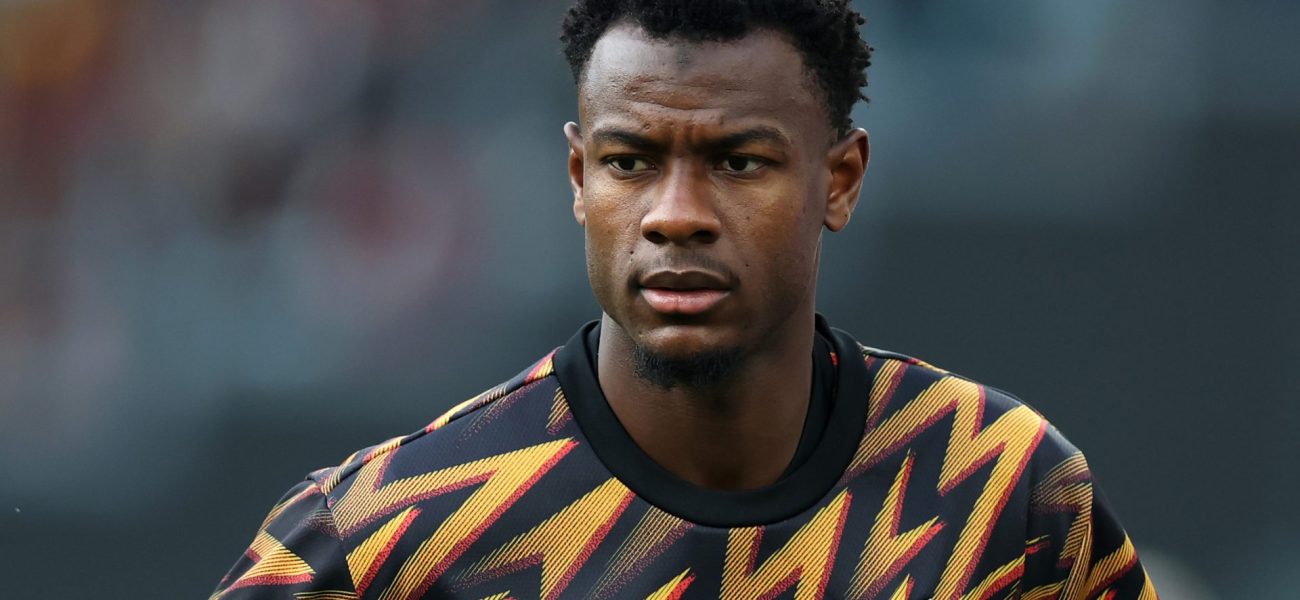
“We’re building for the future, and that means being judicious with every single euro,” stated Deco, Barcelona’s Sporting Director, during a recent press brief. “Quality isn’t cheap, but neither is financial imprudence. We won’t be held to ransom, no matter the player’s pedigree. Our focus is on sustainable success.” It’s a sentiment that rings true, given the club’s past troubles. The alternative, should Inter refuse to budge, appears to be Evan Ndicka, the 26-year-old Ivory Coast international from AS Roma. His market value sits at a more palatable €35 million – a potential half-price deal, give or take, for a player who certainly fits the profile.
Still, the club’s financial narrative casts a long shadow. Barcelona has been battling a well-documented debt burden, which stood at a staggering reported €1.35 billion as of August 2021, forcing them into a series of drastic measures, from activating ‘economic levers’ to offloading star players. This isn’t just about football; it’s about macroeconomic pressures trickling down to the grass pitch. Inter Milan’s CEO, Giuseppe Marotta, on the other hand, isn’t known for his flexibility in negotiations. “Alessandro is pivotal to our ambitions,” Marotta recently opined to Italian media. “He’s a player of immense talent — and market value. We operate on principles of fairness — and protecting our club’s assets. We value our players accordingly.” It’s a clear signal: Bastoni isn’t going anywhere on the cheap.
So, Barcelona, despite its grand history — and global reach, finds itself in a peculiar position. It’s the equivalent of a luxury car manufacturer having to haggle over the price of engine parts. They want the best, undoubtedly. But they’ve also got to ensure the entire operation doesn’t veer off course due to an ill-advised splurge. This dance of demand — and supply, aspiration and constraint, is what defines the modern transfer market.
📄 POLICY WIRE WHITEPAPER PUBLISHED: PAKISTAN'S NATIONAL SECURITY POLICY PRIORITIES
👉 READ BY CLICKING HEREWhat This Means
The pursuit of Alessandro Bastoni—or the eventual pivot to Evan Ndicka—isn’t merely a trivial football story; it’s a micro-drama reflecting macro-economic shifts within global sport. For Barcelona, it underscores the enduring pressure of UEFA’s Financial Fair Play (FFP) regulations, which, despite occasional critiques, remain a significant force in curbing reckless spending. The club’s dilemma is a textbook case study in how past financial mismanagement can hamstring future competitive aspirations. It’s also a stark reminder that even the biggest brands must adapt to fiscal realities; the days of simply outspending rivals are, for many, gone.
Politically, the implications stretch beyond the pitch. Clubs like Barcelona are global entities, with enormous fan bases from São Paulo to Lahore. Their perceived strength, or weakness, impacts brand value, sponsorship deals, and even potential investment from sovereign wealth funds or state-backed entities. In a region like South Asia, where European football commands a fervent following, financial prudence—or its visible absence—can influence everything from merchandise sales to the allure for nascent talent. A financially stable, well-managed club projects an image of reliability, crucial for tapping into these burgeoning markets. Conversely, constant reports of debt and transfer sagas might make a fan in Karachi or Dhaka think twice about committing loyalty, or disposable income, to a club appearing perpetually on the brink. These aren’t just footballers; they’re symbols of economic prowess — and strategic foresight, or a lack thereof.
Economically, the saga illustrates the persistent inflation within the transfer market. Elite defensive talent is a premium commodity, with prices consistently outstripping general economic growth. Inter’s demand for Bastoni isn’t arbitrary; it’s a reflection of this market reality, compounded by the player’s age and potential. For Barcelona, opting for Ndicka would signal a strategic shift: prioritizing value and fiscal responsibility over immediate, top-tier acquisition. It’s a pragmatic decision, yes, but one that could, ironically, secure their long-term competitive viability more effectively than another high-cost gambit.