

Chivu Breaks Italian Coaching Monopoly, Signals New Era for Serie A
POLICY WIRE — Milan, Italy — For fourteen long seasons, an unwritten decree seemed to govern Italian football’s most coveted prize: the Scudetto, it appeared, was reserved for native hands. A...

POLICY WIRE — Milan, Italy — For fourteen long seasons, an unwritten decree seemed to govern Italian football’s most coveted prize: the Scudetto, it appeared, was reserved for native hands. A formidable lineage of Italian tacticians, from Massimiliano Allegri’s meticulous machines to Antonio Conte’s fiery passion, had reclaimed the league since José Mourinho’s audacious, treble-winning conquest in 2010. But the script, it seems, has decisively flipped, ushered in by a familiar face from that very era, now charting his own course.
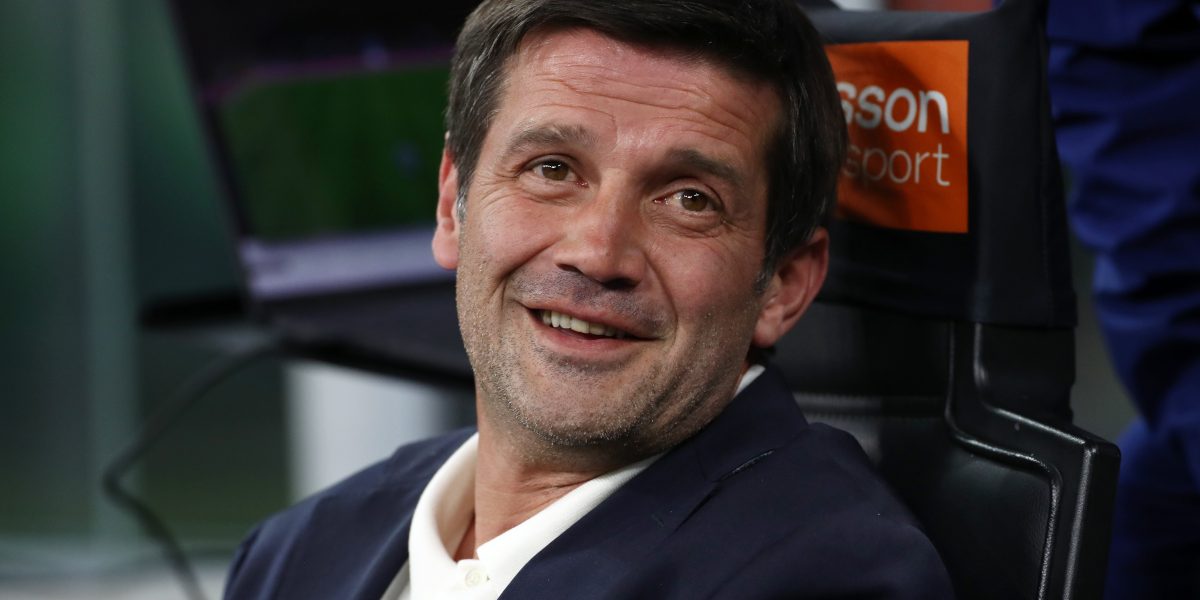
Cristian Chivu, once a stalwart defender under Mourinho’s iron fist at Inter Milan, has now, in his inaugural full season, shattered this formidable streak. His Inter Milan squad — not necessarily the star-studded behemoth of old, but a cunning, disciplined, and undeniably effective unit — secured their 21st Serie A title with a commanding 2-0 victory over Parma at the iconic San Siro. It wasn’t just a win; it was a seismic shift, marking the end of a 13-season-long Italian coaching hegemony in the league (a truly remarkable run, isn’t it?).
And what a triumph it represents for the Romanian tactician. Chivu, whose only prior top-flight managerial experience was a brief, 13-match stint with Parma the previous term, has taken Inter directly to the pinnacle. His ascent is a testament to calculated risk-taking and a belief in a process that often diverges from conventional Italian methodologies. Mourinho himself, no stranger to upending expectations, would undoubtedly appreciate the narrative.
"I always believed in the process, even when others doubted, even when the noise was deafening," Chivu articulated after the final whistle, his voice tinged with both relief and pride. "This isn’t just a victory for Inter; it’s a testament to patience and a different approach to the game that isn’t afraid to look beyond traditional confines. We’ve proven that fresh perspectives can still yield profound results."
Still, the unseating of a long-standing national dominance isn’t met without a measure of introspection from Italian football’s establishment. FIGC President Gabriele Gravina, perhaps with a soupçon of wistfulness, posited, "It’s a stark reminder that Italian football must evolve. We can’t simply rest on past glories, no matter how cherished they’re, or how many legendary coaches we’ve produced. The global game demands new perspectives, new strategic thought, even if it occasionally stings the national pride a little." A candid admission, considering the depth of talent Italy has historically produced.
Behind the headlines of triumph — and national pride, this changing guard in Milan isn’t merely a local affair. The drama of European football, with its shifting power dynamics and emergent heroes, resonates profoundly across the globe. From the bustling cafes of Lahore to the vibrant living rooms of Karachi, millions of ardent fans track these narratives with an almost religious fervor. Inter Milan’s triumph under a Romanian coach isn’t just a headline for Italy; it’s another chapter in the global football saga, influencing allegiances and inspiring discussions in distant lands where the beautiful game often serves as a primary cultural export. It’s a testament to football’s boundless appeal, effortlessly transcending geographical and linguistic barriers—a unifying spectacle, if you will, for a world often fragmented.
📄 POLICY WIRE WHITEPAPER PUBLISHED: PAKISTAN'S NATIONAL SECURITY POLICY PRIORITIES
👉 READ BY CLICKING HEREThe numbers don’t lie. For 13 consecutive seasons following Mourinho’s 2010 triumph – a span covering 2010-11 through 2023-24 – Italian strategists held an unyielding grip on the Scudetto, as confirmed by official Serie A records. That’s more than a decade of home-grown success, now disrupted by a man who learned some of his most pivotal lessons from the ‘Special One’ himself.
What This Means
At its core, Chivu’s victory signals a pivotal moment for Serie A, challenging long-held notions of national tactical supremacy. Politically, within the insular world of football, it suggests a broader acceptance of diverse leadership in roles traditionally dominated by locals. This mirrors global trends where the efficacy of meritocracy, regardless of origin, often overrides nationalistic sentiments in high-stakes environments. It’s a pragmatic embrace of globalization within the highly emotive sphere of sport.
Economically, the implications are equally consequential. Major European leagues, including Serie A, are increasingly global brands. To attract and retain a worldwide audience — crucial for lucrative broadcast rights and sponsorship deals — they must present a dynamic, diverse, and competitive product. A foreign coach’s success, particularly one with Chivu’s compelling narrative, enhances Serie A’s international appeal. It signals that top clubs are willing to invest in global talent, not just players but also strategic minds, making the league a more attractive proposition for viewers in emerging markets like South Asia. This diversification of coaching talent could, in turn, drive up viewership and commercial revenues, essential for Italian clubs to compete on Europe’s grandest stages, where the pitch battles for talent are increasingly fierce.
So, the Scudetto, an emblem of Italian football’s very soul, has once again left native hands. And in doing so, Cristian Chivu hasn’t just delivered a title; he’s delivered a potent message. The beautiful game, it seems, knows no borders — not anymore. It’s a complex tapestry woven with global threads, where the most compelling stories often emerge from unexpected corners, challenging entrenched traditions and redefining what success truly looks like.