

Anderson Cooper’s Avian Obsession: A Political Barometer in Flight?
POLICY WIRE — New York, USA — When a prominent purveyor of geopolitical anxieties and societal fractures suddenly pivots to the quiet, granular pursuit of ornithological observation, it’s bound to...

POLICY WIRE — New York, USA — When a prominent purveyor of geopolitical anxieties and societal fractures suddenly pivots to the quiet, granular pursuit of ornithological observation, it’s bound to elicit more than just a fleeting eyebrow raise. It isn’t merely the incongruity of a hardened journalist—one intimately familiar with the cacophony of global crises—finding solace in the rustle of leaves or the flash of an unfamiliar plumage; it’s the broader implication of such a conspicuous shift in the public sphere.
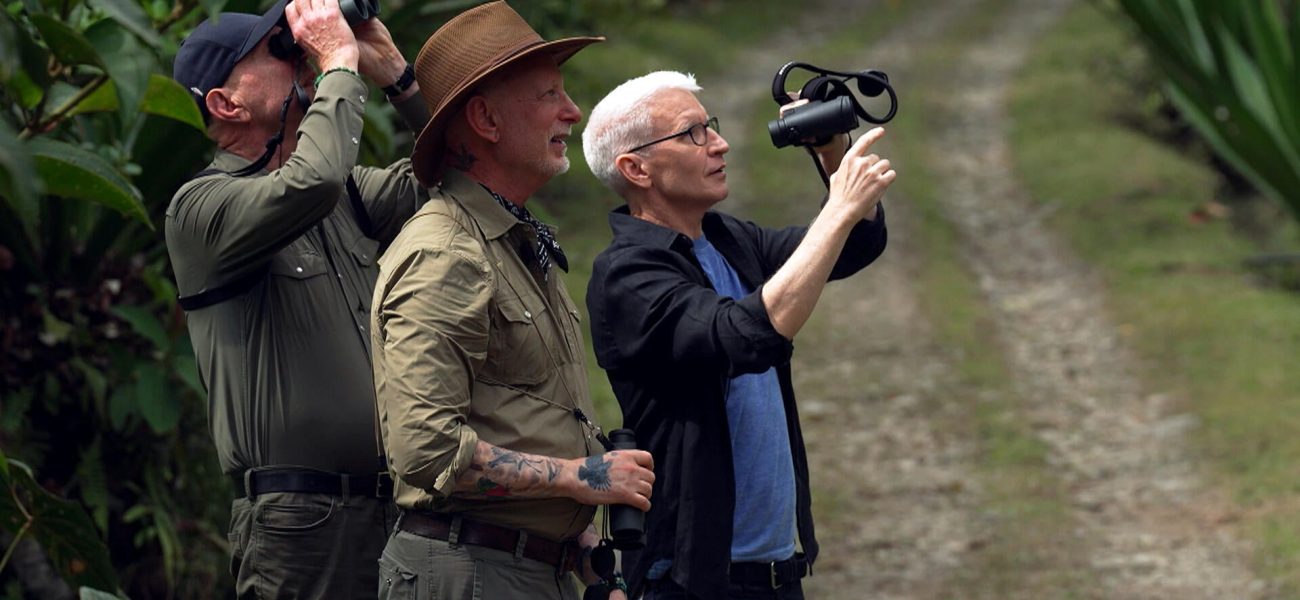
Behind the headlines detailing Anderson Cooper’s newfound fascination with avifaunal scrutiny lies a compelling, if subtle, commentary on contemporary celebrity, environmental awareness, and perhaps, the desperate search for an unquantifiable metric of peace. This isn’t just about spotting a rare warbler; it’s about what that act represents in a world increasingly preoccupied with the tangible, the transactional, and the tragically televised.
Cooper, a figure whose gravitas typically anchors analyses of elections and international conflicts, has reportedly acquired a peculiar preoccupation with bird identification. It’s an immersion that, for some, borders on the quixotic, a stark contrast to the relentless news cycle he helps drive. And yet, this seemingly innocuous hobby carries surprising weight, drawing attention, however inadvertently, to the precarious state of global ecosystems.
“While Mr. Cooper’s enthusiasm undeniably casts a necessary spotlight on avian conservation, the hard truth remains that celebrity endorsement, whilst welcome, doesn’t unilaterally stem habitat destruction or redirect national budgets,” declared Dr. Aisha Khan, Director of the Mountain and Glacier Protection Organization in Islamabad, her voice resonating with years of environmental advocacy. “Policy, not mere observation, is the ultimate arbiter of ecological survival.” She underscored the relentless pressure on migratory bird habitats, many of which span from Siberia, through Pakistan’s crucial Indus Flyway, and down to the Arabian Sea—a fact often overlooked in Western conservation narratives.
Still, the spectacle of a public figure, accustomed to grand narratives, immersing himself in the minute details of bird life begs closer examination. It’s a journey from the sweeping panorama of human conflict to the intricate tableau of nature’s delicate balance. And it certainly isn’t an isolated phenomenon; the allure of nature has always provided a counterpoint to urban clamor.
📄 POLICY WIRE WHITEPAPER PUBLISHED: PAKISTAN'S NATIONAL SECURITY POLICY PRIORITIES
👉 READ BY CLICKING HEREBut what does this particular celebrity dalliance mean for the broader conservation movement, particularly in regions where environmental concerns often take a backseat to immediate economic imperatives? Across South Asia, for instance, the intricate dance of migratory birds faces unprecedented threats. According to a 2022 report by BirdLife International, nearly 49% of bird species globally are experiencing population declines, with habitat loss and climate change cited as primary drivers. In many parts of Pakistan and India, crucial wetlands are shrinking, and illegal hunting persists, threatening species that traverse continents—species that Mr. Cooper might one day hope to glimpse.
“It’s a curious pivot, isn’t it? From the cataclysmic political maelstroms to the quiet contemplation of a warbler,” mused Dr. Julian Thorne, Professor of Media Studies at Georgetown University. “One could argue it’s a refreshing demonstration of humanity, or perhaps a tactical retreat from the unrelenting digital cacophony, a search for an ‘unquantifiable metric’ of peace. Either way, it’s potent symbolism.” His assessment touched upon the inherent tension between public persona and private passion, a duality that defines many contemporary figures.
What This Means
Cooper’s unexpected avocation isn’t merely a quaint personal hobby; it functions as a subtle yet consequential barometer of societal preoccupations. Politically, it subtly aligns with a broader, though often fragmented, global push for environmental stewardship, potentially nudging casual observers toward ecological concerns previously perceived as niche. Economically, even indirect celebrity endorsement can impact burgeoning eco-tourism sectors, particularly in developing nations along vital migratory routes, like those traversing Pakistan’s rich but vulnerable biodiversity. The visibility Cooper lends to birding might also inadvertently bolster funding for conservation organizations, even if the primary drivers of habitat destruction—industrial expansion, agricultural encroachment, and climate change—require far more robust, systemic solutions than celebrity advocacy alone can provide. It’s a testament to the enduring power of optics, even when the subject is something as ostensibly apolitical as a feathered creature.