


Luxury’s Underside: Hantavirus Outbreak Casts Ominous Shadow Over Global Cruise Industry
POLICY WIRE — Cape Town, South Africa — The opulent, hermetic world of a luxury cruise liner, typically a sanctuary from quotidian anxieties, has been abruptly pierced by a silent, formidable foe. An...

POLICY WIRE — Cape Town, South Africa — The opulent, hermetic world of a luxury cruise liner, typically a sanctuary from quotidian anxieties, has been abruptly pierced by a silent, formidable foe. An insidious hantavirus outbreak aboard an unspecified vessel — later identified by maritime trackers as the Dutch-flagged MV Hondius — has claimed three lives and left at least three others battling severe illness, according to the World Health Organization (WHO). It’s a stark, visceral reminder that even oceans can’t isolate humanity from the planet’s more primal, microscopic threats.
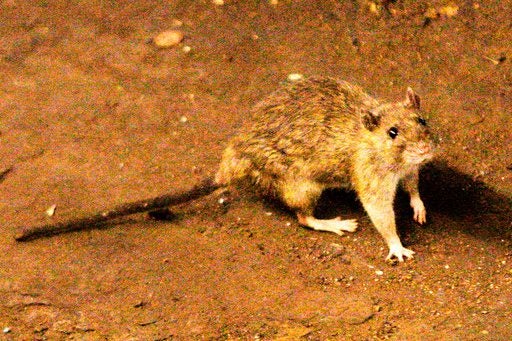
Behind the glittering veneer of onboard amenities — and curated itineraries, an unseen battle unfolded. This wasn’t a tempest at sea, nor a mechanical failure; it was something far more ancient, something spread by rodents, quietly devastating passengers. The WHO, in its rather laconic statement to the Associated Press, confirmed an ongoing investigation, affirming at least one hantavirus case and hinting at the broader epidemiological detective work underway. They’re sequencin’ the virus, trying to understand its specific strain — and transmission dynamics. It’s a complex undertaking, isn’t it?
The human cost, however, is anything but abstract. South African media reports, referencing health department spokesperson Foster Mohale, painted a somber picture: an elderly man was the first to succumb aboard the ship. His wife, later evacuated, also perished in a South African hospital. These aren’t just statistics; they’re shattered lives, abruptly concluded far from home, underscoring the brutal efficiency of certain pathogens. And what a sobering thought for an industry that thrives on escapism.
“Our comprehensive investigation is tracing every potential vector, acknowledging the atypical context of this outbreak aboard a vessel designed for human comfort, not rodent infestation,” posited Dr. Lena Enderson, head of WHO’s Global Outbreak Alert — and Response Network, in a rare public utterance. “The global interconnectedness of travel makes rapid, transparent information sharing absolutely paramount.” Her emphasis on the ‘atypical context’ hints at the perplexing challenge this incident presents to conventional public health responses.
Hantavirus, often associated with exposure to rodent urine or feces, typically isn’t spread person-to-person. Yet, the WHO cautions that such transmission, while rare, isn’t impossible, and its effects can be lethally severe, particularly respiratory distress. Hantavirus Pulmonary Syndrome (HPS), a severe form of the disease, carries a case fatality rate that can soar to 38% according to the CDC, underscoring the formidable threat. There’s no specific cure, only supportive care, which makes early detection a desperate race against time. So, when it surfaces in such an enclosed, international environment, alarms blare.
The MV Hondius, reportedly sailing from Argentina to Cape Verde, now sits docked in Praia. This incident, while geographically specific, reverberates across the globe. Think about the intricate web of global travel: passengers from dozens of nations, crew from even more. A single point of origin can become a hundred, a thousand vectors. “This isn’t merely a health crisis; it’s a stark reminder of how rapidly an unseen pathogen can traverse continents, demanding immediate, coordinated international response,” Foster Mohale stressed, detailing the logistical nightmares of evacuating ill passengers and containing potential spread across international borders. It’s an exercise in global statecraft, really.
📄 POLICY WIRE WHITEPAPER PUBLISHED: PAKISTAN'S NATIONAL SECURITY POLICY PRIORITIES
👉 READ BY CLICKING HEREStill, this incident inevitably casts a long shadow over the cruise industry, which is still navigating post-pandemic jitters. While rodent infestations are hardly novel — they’ve plagued everything from cargo ships to five-star hotels — their deadly manifestation on a passenger liner, where sanitation is rigorously advertised, generates an exceptionally chilling narrative. It’s proof, perhaps, that some primal demands simply won’t be tamed, regardless of how much we engineer comfort and control.
What This Means
This hantavirus episode, despite its contained nature thus far, carries substantial political and economic ramifications. Firstly, it jeopardizes the already delicate reputation of the cruise industry, which, following the COVID-19 pandemic, has invested heavily in reassuring passengers about safety and hygiene. Insurers will undoubtedly be scrutinizing policies, potentially escalating premiums for operators who can’t demonstrate ironclad pest control and health protocols. Governments, too, particularly those reliant on cruise tourism, will face pressure to implement stricter health screening and monitoring at ports, a lesson often painfully learned in disaster management.
Economically, any widespread apprehension could translate into fewer bookings, impacting not just cruise lines but also port cities, local tour operators, and supply chains that service these behemoths of the sea. the outbreak highlights a global vulnerability: a pathogen, even a relatively rare one, surfacing in an international travel hub can quickly become an international headache. For nations in the Muslim world and South Asia, where burgeoning middle classes are increasingly exploring international travel, such incidents can fuel anxieties, particularly if public health messaging isn’t precisely calibrated.
It’s also a stress test for global health cooperation. The WHO’s role in coordinating international responses, despite its bureaucratic heft, becomes demonstrably crucial. This isn’t just about treating the sick; it’s about tracking, containment, and transparent communication, all while respecting national sovereignties – a delicate dance. The incident, therefore, becomes more than a localized tragedy; it’s a micro-geopolitical event, forcing a reckoning with our shared biological fragility and the pervasive unquantifiable metrics of risk in a hyper-connected world.