

French Fusion: Mentor-Mentee Showdown Reshapes Western Conference Playoff Narrative
POLICY WIRE — San Antonio, USA — Long before the breathless highlight reels or the seismic draft night pronouncements, Rudy Gobert harbored a singular apprehension about a spindly, preternaturally...

POLICY WIRE — San Antonio, USA — Long before the breathless highlight reels or the seismic draft night pronouncements, Rudy Gobert harbored a singular apprehension about a spindly, preternaturally gifted teenager. It wasn’t merely recognition; it was an almost prophetic discernment of Victor Wembanyama’s formidable trajectory, a destiny now hurtling towards a head-on collision on the NBA’s grandest postseason stage. A mentor, once a fount of wisdom for his compatriot, now stands as the primary obstacle.
This isn’t merely a playoff series; it’s a crucible where a carefully cultivated relationship metamorphoses into an intense, public rivalry. Gobert, a seasoned sentinel of the paint, first encountered a 13-year-old Wembanyama. Their conversations weren’t casual; they were structured tutorials, young Wemby peppering the veteran with queries, soaking up every morsel of insight. “And the rest is history,” Gobert, ever laconic, opined, a statement now laden with a delightful irony as the protégé challenges the master for Western Conference supremacy. They’ve been on this collision course for years, it seems.
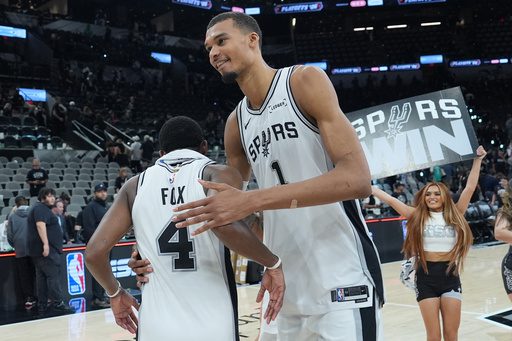
So, here we’re. A Western Conference semifinal pits Gobert’s Minnesota Timberwolves against Wembanyama’s San Antonio Spurs. At its core, this isn’t about teams initially; it’s about French basketball’s unprecedented triumph on American soil, epitomized by two towering figures who just happen to be from the same nation. For a sport historically dominated by American narratives, this Gallic-centric showdown signals a profound shift, resonating from the bustling avenues of Paris to the quiet villages of Pakistan, where even fervent cricket enthusiasts now track NBA scores, captivated by the league’s burgeoning global appeal and the magnetic pull of unique talent.
But make no mistake, this is about basketball, fierce — and uncompromising. Minnesota, a team many analysts initially dismissed, stormed through the first round, defying expectations even after sustaining significant backcourt injuries. Still, the Spurs aren’t conceding an inch. Coach Mitch Johnson, typically reserved, couldn’t help but acknowledge the challenge. “They guard. They’re physical. They try to impose that will and impose their will and their competitiveness on you,” Johnson declared, recognizing the relentless tenacity of the Timberwolves. It’s a testament to Minnesota’s grit, an almost unyielding defiance.
Wembanyama, now a Defensive Player of the Year and MVP finalist, still regards Gobert with an almost familial reverence. “He’s meant a lot as a role model,” Wembanyama conceded. “There’s lots of (ways) that he inspired me and I think he should inspire more people in terms of taking care of your body. He should be a model for all big men.” The fact that Wembanyama recently inquired about Gobert’s preferred water filter (a small, almost domestic detail amidst the gladiatorial theater) underscores the enduring connection, a student’s unquenchable thirst for knowledge from his perceived sensei. Yet, that deference will evaporate the moment the jump ball ascends.
The numbers, of course, tell part of the story. In their eight regular-season matchups, Gobert’s teams hold a 6-2 advantage. However, Wembanyama has tallied 20 or more points in five of those confrontations, illustrating his individual impact even in defeat. The Spurs struggled against Minnesota this season, notably blocking only seven shots across three games — by far their lowest total against any Western Conference opponent, according to league statistics. That’s not an indictment of Wembanyama, who missed one of those contests, but rather a sharp observation of Minnesota’s astute shot selection.
📄 POLICY WIRE WHITEPAPER PUBLISHED: PAKISTAN'S NATIONAL SECURITY POLICY PRIORITIES
👉 READ BY CLICKING HEREAnd now, the stakes are ratcheted impossibly high. Minnesota is pursuing its third consecutive trip to the Western Conference Finals, while San Antonio aims for its first since 2017. Oddsmakers have positioned the Spurs as substantial favorites, a curious proposition given the Timberwolves’ recent performance and Gobert’s historical dominance over his younger counterpart. It’s an incongruity that suggests more faith in Wembanyama’s burgeoning superstardom than in the collective unit, which is certainly a narrative worth monitoring.
What This Means
This series transcends typical playoff fare; it’s a policy statement on the global trajectory of basketball and player development. The French national team will be watching with particular interest, their future frontcourt — already a formidable prospect — sharpening its teeth against itself. It’s also a poignant illustration of the increasingly complex dynamics of mentorship in professional sports, where yesterday’s guide becomes today’s adversary. We’re seeing a live-action case study in the transfer of power, or at least the challenge thereof.
Economically, such high-profile, personality-driven matchups elevate the league’s international marketability, particularly in regions like South Asia and the broader Muslim world, where basketball’s cultural footprint is rapidly expanding. The narrative of two French phenoms, both embodying distinct eras of basketball prowess, isn’t lost on fans globally. It adds layers to the sport’s evolving tapestry, proving that elite talent isn’t confined by borders or traditional pipelines. This cultural exchange, facilitated by the universal language of athletic excellence, strengthens the NBA’s global brand, fostering connections and building fan bases in unexpected territories. It’s a strategic boon, whether intentional or not.
Still, for all the external implications, the immediate reality remains stark: one of these French titans will advance, the other won’t. And while Gobert may have seen this day coming, even he couldn’t have fully prepared for the ferocity with which his own prophecy would be fulfilled.