

Octagon’s Iron Fists: The Unseen Costs of Combat Sports’ Global Ascent
POLICY WIRE — New York, USA — The glint of sweat under arena lights in Abu Dhabi often obscures a far more intricate, if less publicized, reality: elite combat sports aren’t just about athletic...

POLICY WIRE — New York, USA — The glint of sweat under arena lights in Abu Dhabi often obscures a far more intricate, if less publicized, reality: elite combat sports aren’t just about athletic prowess; they’re a sprawling, multi-billion-dollar enterprise grappling with profound policy dilemmas. Behind every thunderous knockout or submission, an intricate web of fighter compensation, global market expansion, and athlete welfare concerns quietly — or not so quietly — unravels. It’s a paradox, isn’t it? The purity of individual struggle, yet so deeply entangled in the cold mechanics of commercial ambition.
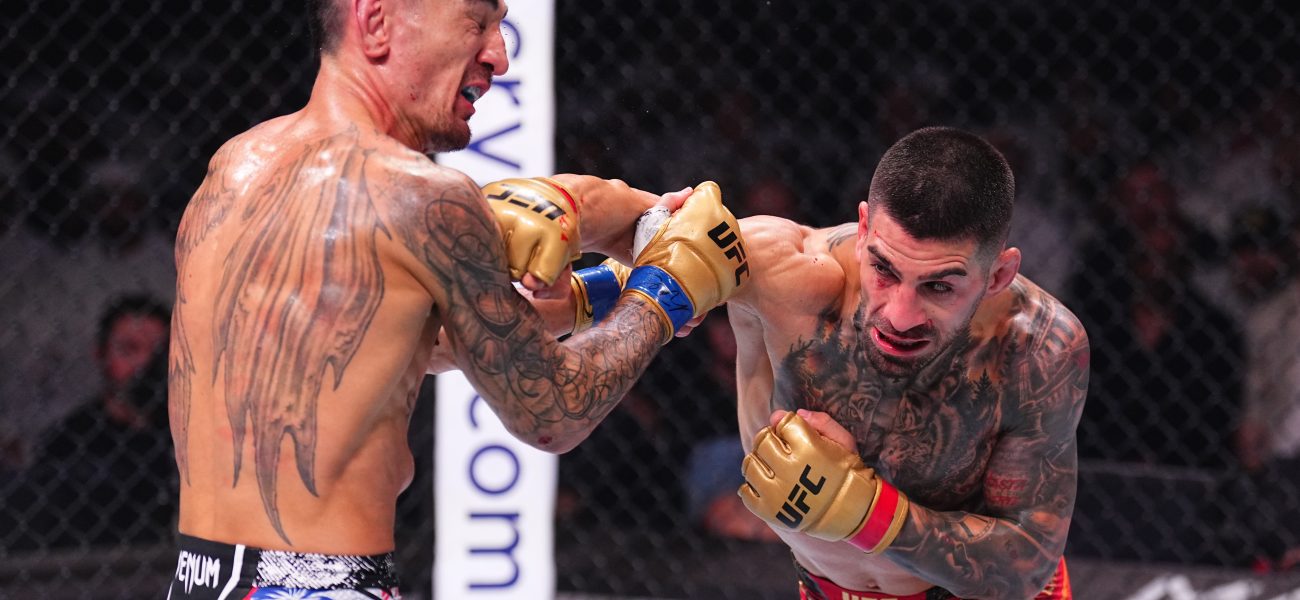
Consider the recent stir around Ilia Topuria, a featherweight phenom whose training intensity reportedly pushed his sparring partners to the brink, prompting requests for him to ‘go a little softer.’ This anecdote, while seemingly trivial, illuminates the relentless, almost inhumane, pressure cooker that defines the upper echelons of mixed martial arts. Such hyper-competitive environments, while forging champions, also raise persistent questions about the long-term physical and mental toll on athletes. They’re not just fighters; they’re capital, albeit highly perishable capital.
But the grit of a Topuria is merely one facet of a diamond cut with sharp, sometimes jagged, edges. Elsewhere, the economic model itself draws scrutiny. Take the Ultimate Fighting Championship (UFC)’s bonus structure, where ‘Performance of the Night’ and ‘Fight of the Night’ awards – substantial sums of $75,000 – don’t stack. A fighter might deliver a career-defining performance and engage in a war, yet walk away with only one bonus, essentially leaving $25,000 on the table. It’s a quirk of accounting that, for athletes whose careers are fleeting and often brutal, can mean the difference between financial stability and a precarious existence.
Davey Grant, a seasoned UFC veteran, articulated this stark reality with a refreshing candor. “I’m not delusional,” he recently stated, “I don’t think I’m going to get in there and make a title run. Look, if that happens—if I go out and knock out the next three in quick fights—maybe we can start talking…” Grant’s pragmatic outlook underscores a widespread sentiment among the roster: for most, it’s a grueling grind for often modest returns, a stark contrast to the promotion’s stratospheric valuation. One 2023 report estimated the UFC’s enterprise value at upwards of $12 billion, a figure that often clashes with the relatively small percentage of revenue allocated directly to fighter compensation.
Meanwhile, the global expansion of combat sports continues unabated, a geopolitical chess match played out in arenas rather than boardrooms. The UFC’s upcoming foray into Serbia, for instance, isn’t just about staging fights; it’s about market penetration and talent acquisition in previously untapped regions. This strategy mirrors their robust presence in the Middle East, notably Abu Dhabi, which has become a pivotal hub for major events. “These are not just fight cards,” declared UFC President Dana White in a recent press briefing, “They’re cultural bridges. We’re investing in developing talent and connecting with fans in markets that understand and appreciate the warrior spirit.” He didn’t, however, address the bonus structure directly.
📄 POLICY WIRE WHITEPAPER PUBLISHED: PAKISTAN'S NATIONAL SECURITY POLICY PRIORITIES
👉 READ BY CLICKING HEREAnd it’s this very ‘warrior spirit’ that resonates deeply across the Muslim world — and South Asia. Nations like Pakistan, with its rich wrestling traditions and fervent sports fan base, represent a frontier ripe for combat sports development. The success of fighters from adjacent regions, like Khabib Nurmagomedov (from Dagestan, a Muslim-majority Russian republic), provides a powerful blueprint. Such expansion isn’t merely commercial; it’s a soft power play, fostering cultural exchange and brand loyalty in strategically important locales.
Still, amidst the commercial maelstrom, moments of altruism do emerge. Former champions Jan Blachowicz and Glover Teixeira are reportedly planning an unofficial rematch to benefit cancer charities — a commendable initiative, certainly, that humanizes the brutal ballet of the sport. It’s a stark reminder that beneath the calculated violence, there are individuals capable of profound compassion (even if their primary job is to inflict controlled mayhem).
What This Means
The contemporary landscape of combat sports, exemplified by the UFC, is a microcosm of broader global economic and political currents. The relentless pursuit of new markets — from the Balkans to the bustling metropolises of the Gulf — signifies both opportunity and potential exploitation. For athletes, the path to superstardom is paved with physical sacrifice and often, financial precarity, even as the entities they fight for amass staggering wealth. It’s a dynamic mirroring many segments of the global gig economy, where individual contractors bear significant risk while platforms capture disproportionate rewards. Policymakers, while traditionally hands-off with professional sports, might increasingly find themselves compelled to scrutinize athlete welfare and compensation models as these enterprises grow into geopolitical actors, not just entertainment providers. The question isn’t whether the sport will continue its global march, but what ethical and economic frameworks will ultimately govern its ever-expanding dominion.