

Wrexham’s Championship Crucible: When Hollywood Dreams Meet Hard-Nosed Reality
POLICY WIRE — Wrexham, Wales — The intoxicating narrative of perpetual ascent, scripted by Hollywood’s finest, finally encountered the unscripted, often cruel, reality of English...

POLICY WIRE — Wrexham, Wales — The intoxicating narrative of perpetual ascent, scripted by Hollywood’s finest, finally encountered the unscripted, often cruel, reality of English football’s Championship. Wrexham AFC, a club transformed from obscurity to global phenomenon by its celebrity owners, found its dazzling upward trajectory momentarily arrested last season. Not quite a stumble, but certainly a pause—a moment of reckoning for a project that has, until now, defied sporting gravity with consistent promotions.
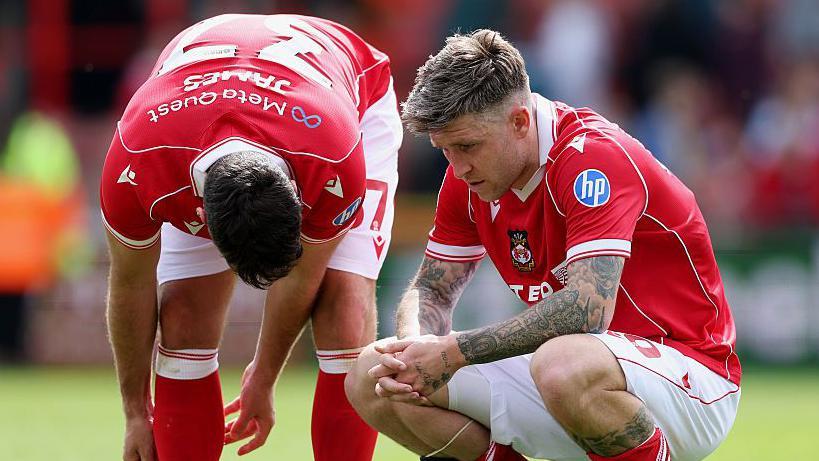
It wasn’t a cataclysmic failure, mind you. The North Wales outfit achieved their highest-ever league finish in a storied, century-and-a-half-long history. Yet, for a fanbase accustomed to champagne celebrations at season’s close, the final whistle of the 2025-26 campaign against Middlesbrough reverberated with a distinct, unfamiliar clang of disappointment. Players, in a stark reversal of recent tradition, slumped to the turf; the fourth consecutive promotion, it seemed, was one audacious leap too far.
Co-chairman Ryan Reynolds, ever the master of public sentiment, articulated the bittersweet mood with customary candor. "I am completely gutted by today’s result but incredibly proud of our season," he posted to his legions of social media followers. "We’ve come a long way in five years — and this was the best result in our 150+ year history. More to do. But for now, we have so much to be proud of. Reds." A pragmatic assessment, perhaps, for a club that garnered 19 victories across 46 gruelling Championship encounters.
But behind the headline-grabbing pride, there lurks an inquest. Manager Phil Parkinson, a seasoned tactician in these unforgiving leagues, will meticulously dissect where precisely his squad fell short, promising a stronger, more competitive Wrexham for the next campaign. Still, the gnawing question persists: did Wrexham squander a golden opportunity?
A key area of contention, say insiders, was the January transfer window. After a hefty summer outlay, the winter strategy pivoted to squad streamlining, leading to a slew of loan departures. Incomings, as a result, weren’t deemed "vital." Yet, previous seasons had seen shrewd mid-season acquisitions galvanize promotion pushes. This term? Not so much. The impact of the few players who did arrive was, frankly, incredibly limited. According to WhoScored.com, Davis Keillor-Dunn, a mid-season acquisition, logged a paltry 81 league minutes after his transfer. And Bailey Cadamarteri managed a mere 27 minutes. Such minimal contributions hardly imbue a dressing room with renewed vigor.
Then came the relentless injury plague, a relentless antagonist in Wrexham’s narrative. The midfield, at one point, resembled a battlefield triage unit. Matty James and Ben Sheaf, pivotal central figures, endured prolonged sidelines, exacerbated by George Dobson’s three-match suspension. And the woes didn’t stop there. Key wing-backs, Liberato Cacace and Issa Kabore, struggled for form and fitness, with the former starting just eight Championship matches in his debut season. Even talismanic striker Kieffer Moore, after a prolific first half netting 12 goals, managed just a solitary strike in his subsequent 19 appearances, hampered by two separate hamstring issues. It’s a testament to Parkinson’s management that they stayed in contention as long as they did, frankly.
And what about the points that simply evaporated? Wrexham were consistently substandard against Hull City, who ultimately pipped them to a play-off spot on the final day. They garnered a single point from three critical matches immediately following the March international break. Dropped points at home against a Sheffield Wednesday side that managed only two wins all season were particularly galling. It’s these margins, sometimes agonizingly slim—like conceding a 90th-minute equaliser against relegated Leicester City—that define Championship campaigns. Such fine lines separate triumph from the bitter taste of ‘what if?’
📄 POLICY WIRE WHITEPAPER PUBLISHED: PAKISTAN'S NATIONAL SECURITY POLICY PRIORITIES
👉 READ BY CLICKING HERENext season, the stakes amplify. The Championship, always a brutal gauntlet, promises to be even more punishing. Clubs with Premier League pedigrees — and formidable parachute payments are poised to descend. Wolverhampton Wanderers, Burnley, and potentially even genuine giants like Tottenham Hotspur, West Ham United, or Nottingham Forest could be in the mix. Their financial muscle alone presents a daunting challenge, compelling Wrexham to potentially elevate their recruitment ambitions, looking "higher" and spending "more," as club officials have conceded.
Meanwhile, in distant climes, the Wrexham saga continues to captivate an audience far removed from the terraced stadiums of Britain. The club’s narrative, amplified by a globally streamed documentary, draws parallels to the ardent following of sport in places like Pakistan, where national identity often intertwines with sporting heroics. The universality of an underdog story, even a monetized one, resonates deeply across cultural divides, making Wrexham’s fortunes a topic of conversation from Cardiff to Karachi.
What This Means
At its core, Wrexham’s 2025-26 season signifies a pivot in the club’s Hollywood-fueled narrative. It’s a stark reminder that even the most compelling storytelling and celebrity ownership can’t entirely bypass the unforgiving economics and physical demands of professional sport. For the local economy of Wrexham, sustained Championship status, even without promotion, injects significant revenue through increased tourism, merchandise sales, and elevated media exposure. But for the club itself, this season illuminates the critical importance of a robust transfer strategy—particularly in the volatile mid-season window—and depth to withstand the inevitable injury crises. Shaun Harvey, the club’s CEO, recently mused, "This wasn’t about missing out; it was about nearly making it. We’ve defied expectations and laid a foundation that many clubs would envy." His assertion rings true, emphasizing the tangible value of consolidated progress over unrealistic, immediate aspirations.
Looking ahead, the expanded play-off structure for next season, now encompassing the top seven rather than six teams, does offer a tantalizing silver lining. It means more clubs will remain in contention longer, potentially encouraging a more aggressive, risk-reward approach to squad building. This structural change could prove consequential for Wrexham, offering them a wider berth for error while still keeping the dream alive. Still, the market for top-tier Championship talent will intensify, demanding strategic agility and continued financial resolve from an ownership group that has, by all accounts, evinced unwavering commitment.
The Red Dragons aren’t losing their luster, not yet anyway. Investment continues, stadium improvements are ongoing, and the documentary continues to burnish their global commercial power. You’d be unwise to bet against them, for sure. This wasn’t the final chapter, only a particularly bruising paragraph in a story still very much being written.