


The Smirk Heard ‘Round the Web: Road Rage Incident Ignites Fury, Spurs Questions on Public Order
POLICY WIRE — [City], [State] — The subtle, almost imperceptible upturn of lips, a fleeting defiance etched across a booking photograph, has ignited a conflagration of public outrage far exceeding...

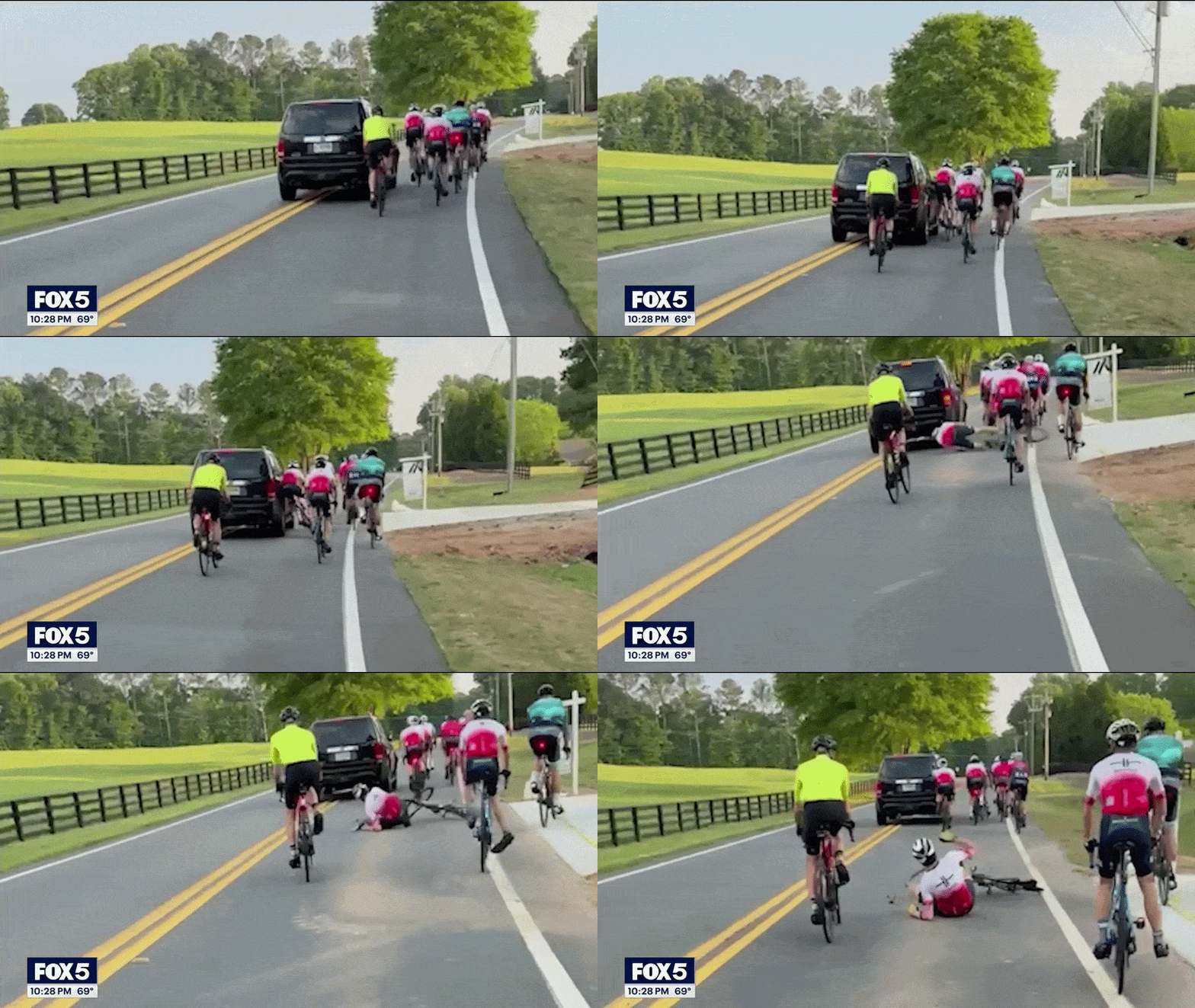
POLICY WIRE — [City], [State] — The subtle, almost imperceptible upturn of lips, a fleeting defiance etched across a booking photograph, has ignited a conflagration of public outrage far exceeding the usual furor over vehicular infractions. It wasn’t merely the alleged act itself—a driver purposefully swerving into a cluster of cyclists, captured in harrowing detail on a dashcam—that seized the collective consciousness; it was the perpetrator’s apparent nonchalance, his chillingly casual expression in the subsequent mugshot, that turned a local incident into a national referendum on accountability and urban civility.
This isn’t just about a driver’s temper, you see. It’s about what that temper, and that smirk, represent: a brazen disregard for human life and the unspoken social contract that underpins communal safety on our increasingly congested roadways. The footage, disseminated rapidly across social media platforms, showed an SUV deliberately veering into a cycling group, sending bodies and bikes sprawling across the asphalt. Witnesses recount a swift, brutal assault, leaving several individuals with injuries ranging from scrapes and bruises to suspected fractures. And then came the mugshot, an image that seemed to mock the very idea of justice.
“Such flagrant disregard for human life — and the rule of law simply won’t be tolerated in our jurisdiction. We’re pursuing this case with the utmost rigor,” asserted Police Chief Evelyn Reed, her voice tight with professional resolve during a press briefing. She noted the egregious nature of the incident, compounded by the accused’s unapologetic demeanor. But it isn’t just law enforcement vexed by the incident.
Maria Ramirez, executive director of the Safe Streets Alliance, didn’t mince words. “This isn’t just an accident; it’s an act of violence, and that chilling smile in his booking photo speaks volumes about a societal deficit in empathy, a worrying trend of dehumanization on our roads.” Her organization, she explained, has seen a worrying uptick in aggressive driving incidents since the pandemic, a phenomenon that mirrors global patterns of heightened urban aggression. In places like Karachi, for instance, public transportation infrastructure struggles often contribute to frayed tempers and dangerous driving conditions, albeit with different cultural and enforcement nuances.
The accused, 42-year-old Marcus Thorne, faces multiple felony charges, including assault with a deadly weapon and reckless endangerment. He’s currently being held without bail, and his legal team, one can imagine, is scrambling to craft a narrative that might soften the impact of that viral image. Good luck with that, frankly.
This incident, horrifying as it’s, merely highlights a larger, more insidious problem. Road rage isn’t some fringe phenomenon; it’s a grim reality for many. According to the AAA Foundation for Traffic Safety, nearly 80% of drivers admit to expressing significant anger, aggression, or road rage at least once in the past year, with an estimated 8 million drivers engaging in extreme examples of road rage, such as purposely ramming another vehicle or getting out of their car to confront another driver. That statistic, frankly, is a terrifying indictment of modern temperaments — and urban pressures.
And it’s not just about cyclists. Pedestrians, other motorists, even public transit operators face increased hostility. The vehicle, once a symbol of freedom, has, for some, become an instrument of intimidation. It’s a manifestation of a deeper societal short fuse, where personal inconvenience can rapidly escalate into criminal acts. Behind the headlines, there’s a troubling normalization of aggression that policymakers are struggling to contain.
Still, the enduring image isn’t the crumpled bikes or the injured riders. It’s Thorne’s smirk, a silent, audacious challenge to the norms of civil society — and the mechanisms of justice. That image, whether he intended it or not, has made him a symbol, a lightning rod for everyone who has ever felt vulnerable on the road, or indignant at a perceived lack of accountability.
What This Means
This single, egregious road rage incident, amplified by the accused’s defiant public image, carries substantial political and economic implications. For one, it will undoubtedly reignite calls for stricter penalties for aggressive driving and a re-evaluation of traffic safety legislation. Legislators, facing a vocal public demanding action, will be pressured to implement measures ranging from enhanced surveillance – think more ubiquitous dashcam use and public reporting mechanisms – to mandatory anger management courses for convicted offenders. We’ll likely see a surge in public discourse around civic engagement and how individuals interact within shared public spaces, extending beyond just roadways.
Economically, the fallout isn’t negligible. Increased incidents of road rage lead to higher insurance premiums for all drivers, a greater strain on emergency services, and lost productivity due to injuries. Urban planners, too, face renewed scrutiny. Questions about dedicated bike lanes, pedestrian safety infrastructure, and the overall design of urban transport systems will inevitably surface. This isn’t just about deterring bad actors; it’s about building a more resilient, safer urban environment, a challenge that many global cities, from Berlin to Bangkok, grapple with amidst burgeoning populations and insufficient infrastructure. (It’s a persistent, vexing global puzzle, really.) The costs associated with such incidents – medical bills, property damage, legal fees, and the intangible cost of eroded public trust – add up, ultimately impacting municipal budgets and the broader economy. This brazen act, therefore, isn’t an isolated anomaly; it’s a symptom requiring a systemic policy response.