


Silent Currents: UAE, Bahrain Cement Security Cohabitation Amidst Gulf’s Shifting Sands
POLICY WIRE — Abu Dhabi, UAE — The Gulf’s quiet maneuvers often speak louder than its pronouncements. While headlines frequently fixate on flashier geopolitical dramas, a profound, if understated,...

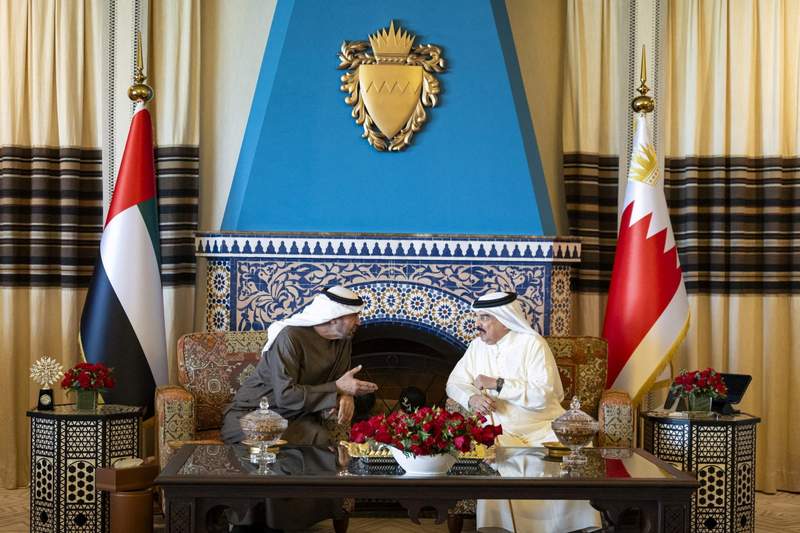
POLICY WIRE — Abu Dhabi, UAE — The Gulf’s quiet maneuvers often speak louder than its pronouncements. While headlines frequently fixate on flashier geopolitical dramas, a profound, if understated, recalibration of alliances is underway. Take, for instance, the United Arab Emirates and Bahrain’s recent, barely whispered intensification of “security cohesion”—a clinical term for what effectively constitutes a deepening military and intelligence partnership. It’s a move less about grandstanding and more about the existential anxieties that hum beneath the region’s placid, oil-rich surface.
This isn’t merely about joint drills or ceremonial visits; it’s a strategic dovetailing of defense architectures, an effort to create an interoperable shield against what both monarchies perceive as shared, evolving threats. Behind the headlines, there’s a palpable sense of urgency, especially as the shadow of a resurgent Iran—and the unpredictable eddies of global power shifts—lengthens across the Strait of Hormuz. The Gulf, an arena of constant flux, demands nimble responses, and this latest bilateral embrace is nothing if not pragmatic.
H.E. Anwar Gargash, Diplomatic Advisor to the UAE President, asserted in a recent closed-door briefing, “Our regional security isn’t a given; it’s a constant construct, a perpetual state of vigilance. This deepened partnership with Bahrain isn’t just about mutual defense; it’s about projecting an impenetrable front, an unambiguous signal to anyone—anyone—who might miscalculate the cost of destabilization.” His sentiments encapsulate the strategic calculus driving Abu Dhabi’s foreign policy—a blend of economic diversification and robust deterrence. And they’re not wrong, are they?
Still, the implications ripple far beyond immediate deterrence. Such security consolidation invariably weaves itself into the economic fabric. According to the UAE’s Ministry of Economy, non-oil trade between the UAE and Bahrain surged by 92% over the past five years, reaching nearly $10 billion in 2022. That’s a staggering figure, underscoring that economic prosperity and security are two sides of the same very valuable coin. It’s tough to have one without the other, particularly in a region so vital to global energy flows.
Sheikh Khalid bin Ahmed Al Khalifa, Bahrain’s former Foreign Minister and current Advisor to the King for Diplomatic Affairs, for his part, posited, “Bahrain’s security is inextricably linked to the broader Gulf architecture. This isn’t simply a bilateral agreement; it’s a reinforcement of shared destiny, recognizing that collective strength is the only sustainable answer to the multifaceted challenges we face. We’re building bridges, yes, but also fortifications.” His words betray a deep-seated apprehension, a kingdom acutely aware of its geographic vulnerabilities and the persistent regional pressures.
For onlookers in South Asia — and the broader Muslim world, these Gulf shifts are consequential. Pakistan, for instance, with its deep historical and economic ties to the GCC states—millions of its citizens comprise the Gulf’s expatriate workforce, remitting billions annually—watches such developments closely. Any ripple in Gulf stability can send economic shockwaves across the subcontinent. the evolving security matrix here has profound implications for broader Islamic solidarity and the delicate balance of power that shapes the Muslim world’s collective voice on global platforms.
Consider the delicate dance of diplomacy that Iran often attempts, sometimes leveraging intermediaries like Pakistan. These renewed Gulf alliances serve as a counterweight, ensuring that any diplomatic overtures are met with a unified, resolute front. It’s a game of chess, played with realpolitik — and very high stakes.
What This Means
At its core, this deepened UAE-Bahraini security cohesion signifies a recalibration of Gulf defensive strategies, moving towards greater self-reliance and intra-GCC cooperation—even if the broader Gulf Cooperation Council (GCC) itself has experienced its share of internal squabbles. Politically, it strengthens a nascent bloc within the GCC, one less reliant on external guarantors, though US military presence remains foundational. Economically, enhanced security fosters investment confidence and trade stability, crucial for diversification efforts as the world edges away from fossil fuels (eventually). The implications for regional stability are stark: a more unified front could deter adversarial actions, but it could also escalate tensions with external powers who interpret such moves as provocative. For the wider Muslim world, particularly nations like Pakistan, the stability of the Gulf directly translates to economic lifeline and regional influence. It’s a subtle flex of muscle, undeniably, but one that reverberates with considerable force.