

The Fading Spectacle: Why Football’s Grandest Rivalries Are Yielding to Caution
POLICY WIRE — London, UK — There’s a quiet dread creeping into the anticipation of football’s most storied encounters, a subtle shift away from the theatrical grandeur that once defined them. It...

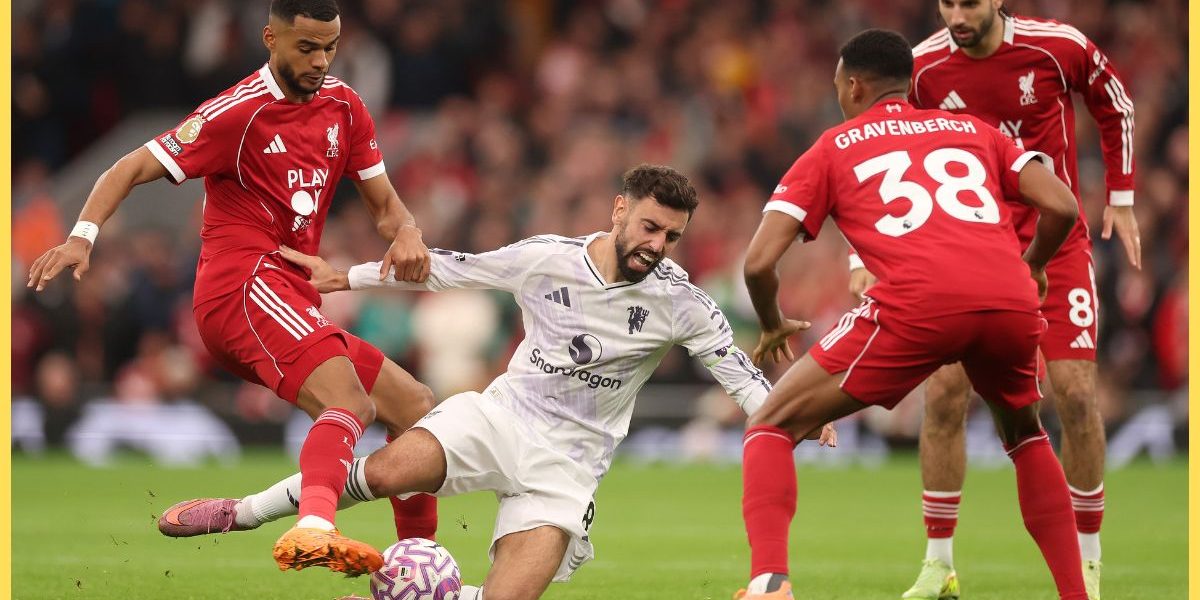
POLICY WIRE — London, UK — There’s a quiet dread creeping into the anticipation of football’s most storied encounters, a subtle shift away from the theatrical grandeur that once defined them. It isn’t the usual pre-match jitters; rather, it’s a pervasive sense that the tactical chess match, the calculated risk-aversion, has supplanted the raw, visceral drama. This weekend’s Liverpool-Manchester United fixture, historically a cauldron of unbridled passion and audacious play, now stands poised to be a monument to this very phenomenon.
And so, it wasn’t surprising when Alan Shearer, the Premier League’s unimpeachable all-time top scorer, recently offered a prognosis that felt less like a prediction and more like a lament. He’s not alone, mind you, in suggesting that a stalemate is the most probable outcome. He didn’t just opine on the scoreline; he articulated a deeper disquiet about the very essence of the contest itself.
“It’s not the Liverpool or Man United we know at all from how they’ve played this season,” Shearer shot back, speaking via Metro, his words cutting through the usual hyperbole. He wasn’t just critiquing form; he was touching on a perceived decline in identity, a cautious pragmatism that seems to have seeped into the fabric of both institutions. For decades, this rivalry was about more than points; it was a clash of philosophies, a battle for bragging rights that transcended mere league standings. Now? It’s about securing European qualification, preserving an investment, not unleashing footballing anarchy.
The sentiment isn’t confined to ex-pros. Even Opta’s formidable supercomputer, a cold arbiter of probability, pegs a draw as the weekend’s most likely result (Opta, data report, 2024). It’s an algorithmic reflection of the human observation: two formidable but imperfect entities, both acutely aware of the stakes, are more inclined to protect than to plunder. That’s modern football, isn’t it?
Still, for fans halfway across the globe, in bustling metropolises like Karachi or Lahore, this anticipated lack of fireworks often translates into a muted experience. Pakistan’s colossal Premier League viewership, a passionate cohort that rises at ungodly hours to catch every kick, expects theatre. They expect the kind of pulsating drama that once captivated an entire subcontinent, not a cautious, attritional affair where both sides might privately concede a point isn’t such a bad outcome. It’s a commercial product, after all, and diminished spectacle risks eroding that fervent loyalty over time, much like any commodity that fails to deliver on its promise.
And let’s be frank, neither club is exactly brimming with the kind of uninhibited attacking flair that used to define them. Liverpool’s recent victories have felt more like hard-won skirmishes than joyous romps. United, for their part, have flattered to deceive, oscillating between moments of brilliance and spells of utterly baffling inertia. Key players are either recovering from injuries or are yet to hit their stride – a reality that breeds caution. Jamie Carragher, another stalwart pundit who has witnessed countless iterations of this derby, echoed the prevailing mood. “Neither side possesses that truly devastating, consistent edge right now,” he observed. “It’s why managers will preach prudence, not swashbuckling heroics.” It’s pragmatic, perhaps, but certainly not poetic.
📄 POLICY WIRE WHITEPAPER PUBLISHED: PAKISTAN'S NATIONAL SECURITY POLICY PRIORITIES
👉 READ BY CLICKING HEREThe focus, then, isn’t on a definitive vanquishing, but on strategic manoeuvring. It’s a brutal ballet of talent, yes, but one constrained by the relentless march of capital and the unforgiving economics of qualification. For a league that commands billions in global broadcasting rights, a perceived dip in product quality for its marquee fixtures could pose a long-term geopolitical and financial challenge.
What This Means
At its core, this projected stalemate between two footballing behemoths isn’t merely a sporting prognostication; it’s an economic and policy reflection. Clubs, now multi-billion-dollar enterprises, operate with an investor’s mindset. The ‘policy’ is often one of risk aversion, particularly when Champions League qualification — and its immense revenue streams — hangs in the balance. Three points are preferable, naturally, but one point is a strategic asset, a commodity to be secured rather than risked in a high-stakes gamble. This cautious approach could well be a harbinger of things to come, signaling a broader trend where the financial imperatives of modern sport increasingly dictate tactical conservatism. It suggests that brand protection and incremental gains are often prioritized over the kind of daring, all-out offensive that once defined the very spirit of competition. The global fan base, from Merseyside to Multan, ultimately pays the price in diminished spectacle, pondering if the ‘classic’ encounter has become an endangered species in the pursuit of fiscal stability.
But can a sport thrive when its most anticipated spectacles consistently underwhelm? That’s a consequential question for football’s custodians. They’ll need to weigh the immediate benefits of cautious play against the potential erosion of the very passion that fuels their colossal industry.