


The Brutal Ballet of Talent: Vikings’ Roster Reshuffle and the Relentless March of Capital
POLICY WIRE — Minneapolis, USA — In the glittering, high-octane world of professional sports, where billions are exchanged and dreams are both forged and shattered with breathtaking...

POLICY WIRE — Minneapolis, USA — In the glittering, high-octane world of professional sports, where billions are exchanged and dreams are both forged and shattered with breathtaking speed, the constant churn of human capital remains its most stark, unyielding truth. It’s a brutal ballet, really, this relentless pursuit of the next ‘perfect player’ — a microcosm of global labor markets where the young and inexpensive frequently displace the seasoned and costly. And nowhere is this more acutely observed than in the annual spectacle of the National Football League’s player acquisition cycle, epitomized this season by the Minnesota Vikings’ calculated maneuvers.
Behind the headlines of “stealing a do-it-all talent” and “ace up his sleeve” lies a more profound narrative: the industrial-scale processing of athletic potential into economic value. General managers, coaches — they’re not just building a team; they’re managing a portfolio of exceptionally perishable assets. The recent draft and undrafted free agent (UDFA) pickups by the Vikings, highlighted in industry analyses, aren’t merely about bolstering a roster; they’re a strategic reinvestment, a high-stakes gamble on youth and untapped capability.
Take the defensive side, for instance. Brian Flores, the team’s defensive coordinator, is known for his exacting standards — and schematic ingenuity. He’s a chef, as some quip, who demands very specific ingredients. “My defensive schemes demand a specific kind of aptitude — versatility, instincts, and relentless physicality,” Flores asserted recently, his voice betraying a hint of impatience for anything less than perfection. “We’ve brought in individuals who don’t just fit the mold; they redefine it. This isn’t some sentimental exercise; it’s about winning.” His unit saw additions across the defensive line, linebackers, and defensive backs — a complete retooling, effectively, ensuring each echelon is fortified with fresh blood.
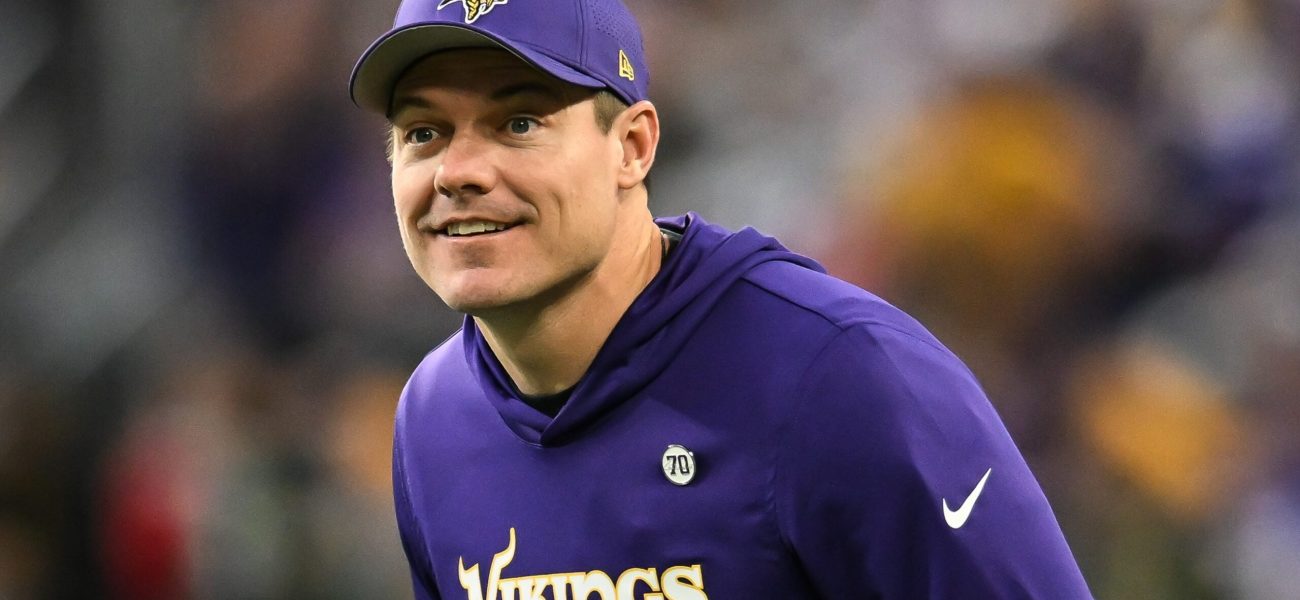
Still, the influx of “gazelle-like” speedsters and “do-it-all” prospects, however promising, casts a long shadow over those already entrenched. Kevin O’Connell, the head coach, often frames these moves with a broader, long-term vision. “We’re not just drafting athletes; we’re acquiring strategic assets,” O’Connell opined during a recent press briefing, “This isn’t merely about filling a roster; it’s about meticulously constructing a competitive apparatus, one piece at a time, with an eye on sustainable success.” He alluded to the pivotal role of coaching, particularly veteran assistant Ryan Nielsen, in unlocking the potential of raw talents like defensive lineman Caleb Banks, picked 18th overall in the 2026 NFL Draft. It’s a calculated partnership, meant to fast-track development — and maximize return on investment.
But the glittering promise of new talent always necessitates “bad news” for others. The average NFL career length, a sobering statistic hovering around just 3.3 years, underscores this brutal reality. This annual ritual — the ‘youth infusion’ replacing ‘veteran experience’ — isn’t unique to American football. It’s a pattern recognizable in myriad global labor markets, from the fast-paced tech industry to the informal economies of South Asia. In countries like Pakistan, for instance, where a burgeoning youth population contends with scarce formal employment, the concept of a constant ‘new intake’ often means established workers face an uphill battle against younger, cheaper alternatives. The economics of competition, it seems, have a universal language, spoken loudly in the roar of a stadium and whispered in the quiet anxieties of a global workforce.
📄 POLICY WIRE WHITEPAPER PUBLISHED: PAKISTAN'S NATIONAL SECURITY POLICY PRIORITIES
👉 READ BY CLICKING HEREWhat This Means
At its core, the Vikings’ aggressive approach to talent acquisition provides a compelling case study in modern human capital management, a ruthless blueprint applied across high-stakes industries globally. It’s a business where sentiment rarely factors into decisions, where players — despite their extraordinary physical gifts — are ultimately seen as depreciating assets. This constant cycle of scouting, drafting, developing, and ultimately discarding reflects a broader economic philosophy: efficiency above all else. For the team, it means a perennial hunt for competitive advantage, often at the psychological expense of individuals.
So, what are the implications? For Minneapolis, it signifies a continued commitment to winning, which translates into economic activity through ticket sales, merchandising, and local employment around the franchise. For the league, it reinforces a meritocratic (and often brutal) system that rewards performance and potential over loyalty or tenure. But most importantly, it highlights the profound precarity inherent in these ‘golden handcuff’ professions. Every “perfect player” secured, every “ace” uncovered, contributes to a system that, by design, leaves others behind. It’s a stark reminder that even in the most celebrated arenas, the fundamental economic levers of supply, demand, and ruthless optimization remain firmly in control, echoing the shifting sands of other high-value industries where individual fortunes can pivot on a dime.