

The Ghost of ‘Thala’: Dhoni’s Spectral Return Haunts IPL’s New Guard, Igniting Economic Speculation
POLICY WIRE — Chennai, India — The phantom limb of Mahendra Singh Dhoni’s cricketing genius continues to ache for millions, even as fresh faces assume the mantle of leadership in the Indian Premier...

POLICY WIRE — Chennai, India — The phantom limb of Mahendra Singh Dhoni’s cricketing genius continues to ache for millions, even as fresh faces assume the mantle of leadership in the Indian Premier League. So, when images surfaced of the Chennai Super Kings’ iconic captain, pads strapped, bat in hand, the collective gasp wasn’t just about sport; it was a potent signal, a potential economic defibrillator for a league whose very narrative arc often hinges on its titans.
It’s a peculiar dynamic, isn’t it? A 42-year-old veteran, officially sidelined by a calf strain, yet his mere presence — or the possibility of it — electrifies an entire subcontinent. That’s the ‘Thala’ effect, an almost mythical aura that translates directly into viewership, sponsorship, and merchandise sales. His prolonged absence has already cast a long shadow over the IPL’s economic crucible, fostering palpable anxiety among stakeholders.
Behind the headlines of cheerful reunions — and social media virality, a deeper, more consequential drama unfolds. Both the Chennai Super Kings and the Mumbai Indians, historically the league’s dominant franchises, find themselves adrift in uncharted, turbulent waters. Mumbai, now captained by Hardik Pandya, languishes near the bottom of the table, their tactical choices often bewildering. CSK, under Ruturaj Gaikwad, fares only marginally better, clinging precariously to a mid-table spot.
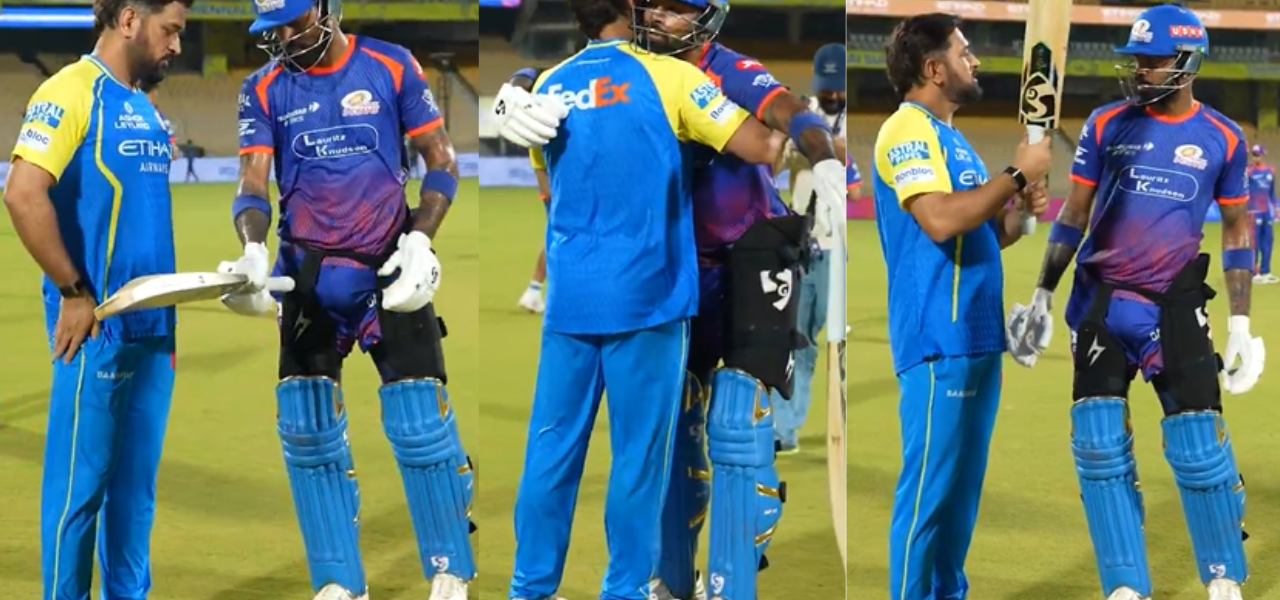
But then came the visual elixir: Dhoni, seemingly hale, engaging with Pandya at a training session, even exchanging a hug. And that poignant, almost deferential, moment when Pandya, a national captain in his own right, handed his bat to Dhoni, implicitly seeking wisdom. Later, a clip captured Pandya’s almost childlike adoration, “Mahi bhai, love you darling, bye bye,” after observing Dhoni’s net session — a sentiment echoing millions. It’s clear: for all the talk of new eras, the gravitational pull of Dhoni remains immense. He’s less a player, more a cultural phenomenon.
“The IPL’s narrative arc often hinges on its titans; Dhoni isn’t just a player, he’s a brand, a cultural anchor whose absence reverberates across viewership metrics and team morale,” asserted Anand Sharma, a veteran sports economist whose firm tracks fan engagement across South Asia. It’s an astute observation. For Pakistan, a nation whose cricket fervor mirrors India’s intensity but is currently excluded from IPL participation, Dhoni’s mystique is equally potent. He represents a golden age of subcontinental cricket, a shrewd leader whose tactical acumen is discussed with the same reverence as their own legendary captains. His potential return isn’t just an Indian affair; it’s a regional talking point, fueling debates from Karachi to Dhaka.
The numbers don’t lie, — and they paint a picture of disarray. Mumbai Indians have reportedly shuffled through an astonishing 22 players this season, a statistic gleaned from official IPL records, reflecting an almost desperate search for a winning combination. CSK isn’t far behind, having deployed 19. Such incessant rotation undermines team cohesion, leaving both new captains — Pandya and Gaikwad — wrestling with an unsettling lack of stability. They’re both talented, yes, but the weight of expectation, especially in the gargantuan shadow of a legend, can be crushing.
📄 POLICY WIRE WHITEPAPER PUBLISHED: PAKISTAN'S NATIONAL SECURITY POLICY PRIORITIES
👉 READ BY CLICKING HERE“Frankly, both Hardik — and Ruturaj are navigating a crucible. The ‘Thala’ factor can’t be replicated, but it’s an intimidating shadow for any new captain,” opined S. Karthikeyan, a former national selector known for his candid assessments. He’s right; the transition isn’t just about technique; it’s about leadership, temperament, and managing the relentless scrutiny of a billion-plus impassioned fans. That’s a burden not easily shouldered.
What This Means
Dhoni’s seemingly imminent return isn’t merely a sporting narrative; it’s an intricate dance of economics, psychology, and public relations for the IPL. For CSK, it could mean an immediate surge in fan engagement and perhaps, more critically, a much-needed shot of confidence and tactical clarity for a squad visibly struggling to find its rhythm. His presence, even as a designated finisher or strategic advisor from the dugout, alters the psychological landscape of a match.
For the league itself, a Dhoni comeback amplifies its commercial draw. Broadcasters, advertisers, and sponsors view him as a magnet for eyeballs, particularly vital as competition for entertainment dollars intensifies. And for the new generation of captains, like Pandya and Gaikwad, it’s a double-edged sword: a chance to learn from the master, yet also a stark reminder of the immense shoes they must fill. Their performance, or lack thereof, under this renewed ‘Dhoni-gaze’ will be scrutinized with an almost forensic intensity. At its core, this isn’t just about one man playing cricket; it’s about how the enduring power of celebrity, charisma, and a strategic mind continue to dictate the fortunes of a multi-billion-dollar sporting spectacle, reminding everyone that sometimes, the legend himself is the most consequential ‘impact player’ of all.