


Beneath the Gloss: LeBron’s Playoff Crucible and the Unseen Burden of Sustained Dominance
POLICY WIRE — Houston, United States — The very air in the Toyota Center hung thick with expectation, not merely for a basketball game, but for a referendum on time itself. It wasn’t the facile...

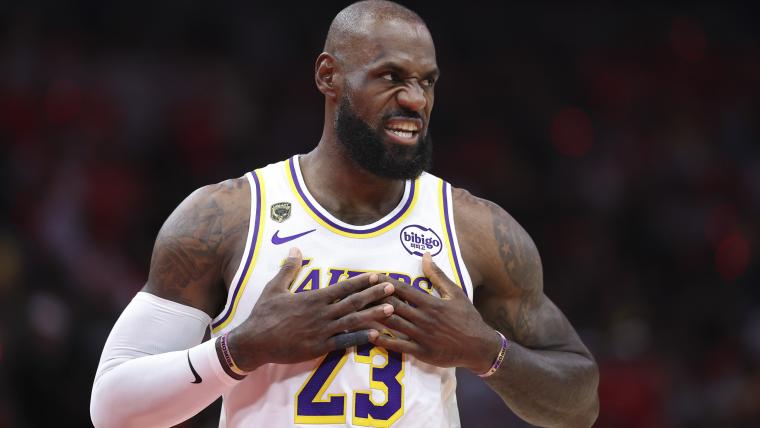
POLICY WIRE — Houston, United States — The very air in the Toyota Center hung thick with expectation, not merely for a basketball game, but for a referendum on time itself. It wasn’t the facile scoreboard — though that ultimately tallied a decisive Lakers lead — that commanded attention. No, it was the spectral presence of an aging titan, LeBron James, pushing against the implacable march of seasons. His every strained grimace and explosive drive: a silent, eloquent rebuttal to pundits writing his professional obituary. This was less a Game 6, more a high-stakes examination of enduring human capital in a brutal, youth-obsessed arena.
Los Angeles, holding a precarious 3-2 series advantage, arrived on hostile turf. They weren’t just seeking victory, but aiming to decisively extinguish the flickering hopes of a resilient, albeit nascent, Houston Rockets squad. The narrative: experience versus youthful exuberance. Yet, beneath that veneer lay a deeper current — the merciless economics of peak performance, where even generational talent eventually confronts its limits. The Rockets, despite their fledgling roster, had prolonged a series many predicted would be swift; their earlier 99-93 conquest of the Lakers demonstrated unexpected tenacity.
Indeed, the Lakers, fueled by James’s relentless drive, opened the second quarter with a scorching 9-0 run, extending their lead to a commanding 32-18. One might dismiss this as mere athletic dominance. But consider the strategic calculus behind such an outburst — a veteran squad applying immense, suffocating pressure, exploiting every momentary lapse. Houston’s subsequent struggles, including a dismal 0-15 stretch from the field, underscored this brutal reality. They just couldn’t punch back with consistent force.
Still, the Rockets weren’t entirely without their moments. Alperen Sengun, despite his youth, has been a statistical marvel, averaging 20.4 points, 8.9 rebounds, and 6.2 assists — numbers many seasoned veterans would envy. And Amen Thompson, stepping into the void left by injuries, averaged 19.7 points over his last ten outings. These are the green shoots of future contention, careful allocations of resources in a long-term strategic plan. Against the immediate exigency of LeBron, however, these bright spots often felt like fleeting sparks.
“Every series is a fresh war, isn’t it?” observed Lakers veteran LeBron James. “You can talk about age all you want, but the game demands what it demands. And I’m still here to give it everything I’ve got, even when it feels like you’re pulling gravity along with you.” His counterpart, Rockets Coach Ime Udoka, offered a more pragmatic assessment. “Look, you face a legend, you learn,” he stated. “Our young guys, they’re getting a masterclass in what it takes to win in this league, even if it’s a painful one. It’s about resilience, — and we’re building that.”
The NBA, itself a global behemoth, transcends mere sport. Its stars, like James, become cultural ambassadors, their exploits followed by millions across continents, including in markets like Pakistan and the broader Muslim world, where basketball’s popularity has surged. Digital streaming and social media have dissolved geographical boundaries, allowing fans in Karachi or Cairo to track every free throw. This isn’t just entertainment; it’s about soft power, the cultural export accompanying economic influence. The league’s annual revenue figures — consistently in the billions, with a substantial portion derived from international broadcasting — attest to this expansive reach. (It’s a far cry from localized sports spectacles of yesteryear, isn’t it?)
📄 POLICY WIRE WHITEPAPER PUBLISHED: PAKISTAN'S NATIONAL SECURITY POLICY PRIORITIES
👉 READ BY CLICKING HEREThe Rockets’ formidable challenge was exacerbated by critical absences. Kevin Durant, a perennial threat, remained sidelined with an ankle injury, robbing Houston of a much-needed offensive anchor. Similarly, the Lakers felt the sting of Luka Doncic’s absence due to a hamstring issue. These injuries, too, are part of the brutal calculus, revealing the fragility of even the most meticulously constructed plans.
At its core, this series isn’t just about a team advancing. It’s a vivid demonstration of strategic deployment, resource management, and the often-unquantifiable value of veteran leadership against the raw, unrefined potential of youth. The Lakers’ ability to close out tight games (they’re 8-3 in contests decided by three points or fewer this season) speaks to a composure and tactical acumen that only comes with sustained exposure to high-pressure situations.
What This Means
The playoff skirmish between the Lakers and Rockets serves as a compelling tableau for broader political and economic dynamics. LeBron James’s sustained excellence challenges conventional economic wisdom about diminishing returns for aging labor, underscoring the premium on experience and leadership in high-stakes environments. For the Lakers, it’s a short-term gamble on proven, expensive capital; for the Rockets, a long-term investment in nurturing raw talent. This mirrors the global economy’s balance between experienced workforces and innovative, lower-cost emerging talent pools. The NBA, with its global viewership and massive media rights, exemplifies the commodification of culture and sport, acting as a powerful engine of soft diplomacy projecting American influence. Game outcomes aren’t just about progress; they validate divergent philosophies on investment, resilience, and competitive advantage. This is the brutal calculus of human capital, played out for millions, a constant reminder that success, whether on the court or in geopolitics, demands unflinching appraisal of strengths and vulnerabilities.