


The Ghost in the Garage: Former F1 Driver’s $22M Hypercar Vanishes Amidst Blackmail Allegations
POLICY WIRE — Berlin, Germany — An audacious, multi-million dollar gambit seems to be unfolding in the rarefied echelons of automotive opulence, not on a Grand Prix circuit, but in the labyrinthine...

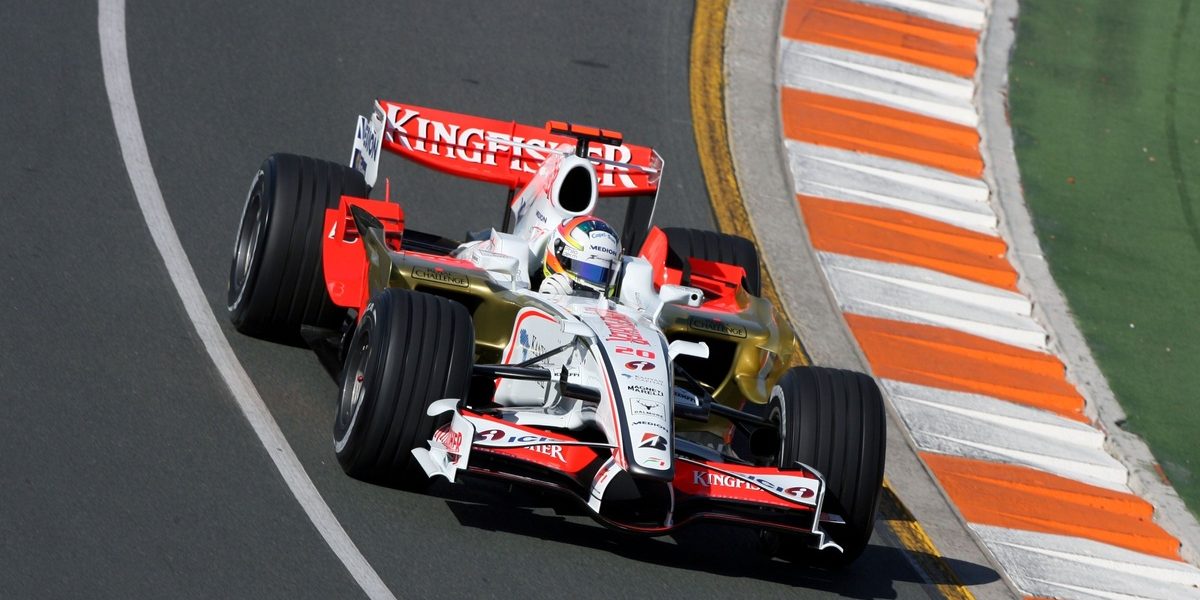
POLICY WIRE — Berlin, Germany — An audacious, multi-million dollar gambit seems to be unfolding in the rarefied echelons of automotive opulence, not on a Grand Prix circuit, but in the labyrinthine world of alleged blackmail and high-stakes fraud. At its core sits a phantom, a $22 million Koenigsegg One:1 hypercar, once the prized possession of former Formula 1 driver Adrian Sutil. It’s gone missing, spiriting away amidst a legal maelstrom that has seen the German driver — and his extraordinary collection — under intense international scrutiny.
The saga, which Interpol has now formally joined, transcends mere luxury vehicle theft; it’s a testament to the sheer audacity of those who operate in the shadows, particularly when confronting individuals accustomed to life in the fast lane. But it’s not merely a case of disappearance; it’s a narrative woven with threads of extortion, a shadowy figure dubbed ‘Vladimir,’ and a chilling connection to a notorious Russian mercenary group. And that’s where the intrigue really begins to accelerate.
This isn’t just any car. The Koenigsegg One:1, a Swedish marvel of engineering, was built between 2014 and 2015, with a production run so exclusive it borders on mythological. Only seven specimens ever left the factory. It was the first homologated production car globally to achieve a perfect 1:1 power-to-weight ratio (one horsepower per kilogram) – a feat that renders it less a mode of transport and more a kinetic sculpture, an apex predator of the asphalt. Autoevolution pins its staggering value at $22 million, a figure that makes its vanishing act all the more extraordinary.
Sutil, a veteran of seven F1 seasons, found himself arrested in November 2025, subsequently placed in pre-trial custody on suspicion of fraud and embezzlement. These charges, the authorities allege, directly relate to his astonishing car collection. But he’s shot back vehemently, denying every accusation. His legal counsel, Dirk Schmitz, has pivoted the narrative, claiming Sutil is, in fact, the victim of a sophisticated blackmail plot. “The message was clear – cars out, or else,” Schmitz declared, his voice tight with a mixture of exasperation and professional resolve. “These cars are so unique that they can hardly go unnoticed.” It’s a statement that underscores the bizarre nature of trying to disappear an object so inherently conspicuous.
Behind the headlines, whispers of a more sinister plot emerged. Auto Motor und Sport previously reported that Sutil had received an anonymous phone call. The caller, identifying himself only as ‘Vladimir,’ reportedly insinuated connections to Russia’s Wagner Group — a detail that elevates the case from a mere criminal investigation to one with unsettling geopolitical undertones. Whether this shadowy figure was a genuine operative or merely leveraging a fearsome reputation remains unclear, but it certainly complicates any recovery effort.
Sutil’s automotive vault is legendary, a veritable museum of vehicular extravagance. Beyond the elusive Koenigsegg One:1, his collection reportedly boasts an iconic Mercedes 600, once owned by Elvis Presley himself, alongside a Rolls-Royce Phantom, a Ferrari California, and another Koenigsegg, the Regera. Such an assemblage speaks not just to immense wealth but to a particular, discerning taste – the kind that makes targeted theft and extortion a deeply personal, rather than purely financial, affront.
📄 POLICY WIRE WHITEPAPER PUBLISHED: PAKISTAN'S NATIONAL SECURITY POLICY PRIORITIES
👉 READ BY CLICKING HERESo, where does a $22 million hypercar go? And who orchestrates such a brazen disappearance? That’s where Interpol enters the fray, navigating the murky waters of international asset recovery. “The challenge with these ultra-high-value assets isn’t just their physical tracking, but untangling the financial trails and global networks that facilitate their movement,” explained Inspector General Zahid Khan, an expert on transnational illicit flows with strong ties to cooperative efforts in the Gulf and South Asia. (He’s often involved in high-profile cross-border operations, you see.) “Whether it’s a rare manuscript or a bespoke hypercar, the same pathways of money laundering and organized crime are often exploited.” Global Financial Integrity estimates that illicit financial flows from developing and emerging economies averaged over $1 trillion annually between 2005 and 2014, a substantial portion of which is laundered through luxury goods and real estate globally. It’s a sobering statistic.
What This Means
The disappearance of Adrian Sutil’s Koenigsegg One:1 isn’t just a tabloid sensation; it’s a stark illustration of the evolving nature of transnational organized crime and the vulnerabilities even the wealthiest individuals face. This isn’t merely about a stolen car; it’s about the weaponization of information and the growing nexus between high-value assets and illicit financial networks. The alleged involvement of a figure linked to the Wagner Group, whether real or a calculated intimidation tactic, underscores a worrying trend: the intertwining of criminal enterprises with quasi-state actors or highly organized mercenary outfits, adding layers of complexity to law enforcement efforts. For countries like Pakistan, which is increasingly becoming a strategic nexus for global trade and investment — as highlighted in discussions around Gwadar’s moment of geopolitical significance — such incidents serve as a potent reminder of the need for robust financial intelligence and international policing cooperation. It’s not just about stopping drug trafficking anymore; it’s about tracking invisible money, blackmailed assets, and the shadowy figures who move them across borders, often leveraging emerging markets as transit points or havens.
The economic implications are equally profound. The ultra-luxury market, often seen as an exclusive preserve, becomes an attractive target for money laundering and asset stripping when oversight is lax. And this case, with its high-profile victim and audacious methods, threatens to cast a long shadow over the provenance and security of high-value collectibles worldwide. It also highlights the intricate dance of international cooperation required to combat such sophisticated operations, a dance that often involves delicate diplomatic maneuvers alongside gritty detective work, even as nations like Pakistan continue to play an increasingly important role in complex global mediation efforts that require trust and robust international ties. This isn’t some back-alley car theft; it’s a global financial mystery playing out with a former racing driver at its heart.