


The Fleeting Zenith: Jaiswal’s Instant Glory, Starc’s Brutal Retort, and Cricket’s Unforgiving Calculus
POLICY WIRE — Jaipur, India — In the grand, often merciless theater of professional sport, moments of incandescent brilliance are frequently — perhaps even inevitably — shadowed by the brutal hammer...

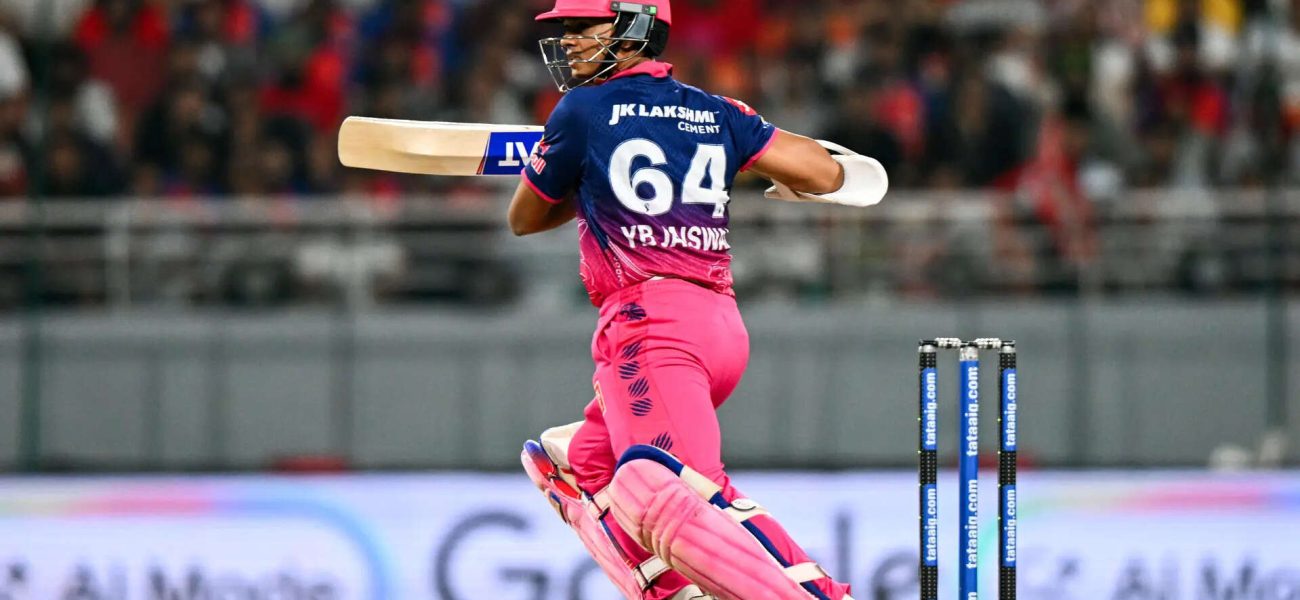
POLICY WIRE — Jaipur, India — In the grand, often merciless theater of professional sport, moments of incandescent brilliance are frequently — perhaps even inevitably — shadowed by the brutal hammer of reality. And so it was in Jaipur, where the Indian Premier League (IPL) witnessed a breathtaking, record-shattering opening salvo from Rajasthan Royals’ prodigious opener Yashasvi Jaiswal, only for its fragile glory to crumble within a handful of deliveries. It’s a narrative less about a single match and more about the unforgiving calculus that underpins peak performance: fleeting triumph, relentless competition.
The stage was set. Mitchell Starc, the formidable Australian quick, was back in the Delhi Capitals lineup after a brief recuperation from a shoulder complaint. He’s a bowler whose reputation precedes him, a mercenary of the crease, but even he wasn’t impervious to the initial shockwave. Jaiswal, a young man whose ascent has been nothing short of meteoric, didn’t just meet Starc’s opening delivery; he ambushed it. A short, inviting offering, it soared over backward square leg with a disdainful flick of the wrist. A massive six, a crowd on its feet, — and a statistical anomaly instantly created.
With that single stroke, Jaiswal etched his name deeper into the IPL annals, becoming the first player to hit four first-ball sixes in an innings throughout the league’s history. Official IPL statistics indicate Yashasvi Jaiswal’s four first-ball sixes now top the league’s all-time records, a testament to his explosive, if sometimes ephemeral, impact. It wasn’t merely a boundary; it was a statement, a declaration of intent, a thrilling affirmation of youthful audacity. But, as we’ve all seen before, statements often invite swift retorts.
Starc, a seasoned predator, isn’t one to suffer indignity long. He didn’t just respond; he annihilated the fleeting narrative of Jaiswal’s dominance. Just two balls later, a full toss — a ball often considered a gift by batsmen — deceived the young prodigy. Jaiswal’s attempted heave resulted in a meek balloon back to the bowler, a dismissal as ignominious as his opening six had been majestic. Instant gratification, instantly revoked. It’s a dynamic that underscores the brutal calculus of this hyper-competitive league, isn’t it?
“These young talents, they’re the future—a beacon of what South Asian grit can achieve on the global stage,” opined Ranjit Singh, a Member of Parliament and former Sports Committee chair, reflecting on Jaiswal’s moment. “His initial flourish, it wasn’t just a six; it was a statement of intent for a generation eager to prove its mettle. We need to foster that fire.” Still, that fire, for all its intensity, can be extinguished with remarkable speed. So often, the euphoria of individual brilliance gets subsumed by the relentless march of the game, a microcosm of larger battles for supremacy.
And the Royals’ start? It became a cascading disaster. Vaibhav Sooryavanshi followed Jaiswal back to the pavilion shortly thereafter, managing a mere four runs. The initial explosion, once a herald of dominance, now seemed a distant, mocking echo. Jaipur, initially electric, settled into a quiet hum of apprehension. It’s a familiar pattern for anyone who follows professional sports: the promise of a dream, the swift awakening to a nightmare. Behind the headlines of individual heroics often lies the hard reality of collective struggle, a struggle amplified in the high-stakes environment of the IPL, a league that’s become a global phenomenon, not just a cricketing tournament.
📄 POLICY WIRE WHITEPAPER PUBLISHED: PAKISTAN'S NATIONAL SECURITY POLICY PRIORITIES
👉 READ BY CLICKING HERE“For every fleeting peak, there’s an immediate valley. That’s the unforgiving rhythm of professional sport, isn’t it?” asserted Dr. Anjali Sharma, a geopolitical sports analyst at the Centre for Asian Studies, weighing in on the incident. “Starc’s immediate riposte, it’s a stark reminder that sheer talent often gets eclipsed by relentless execution, a lesson applicable far beyond the cricket pitch.” Indeed, the IPL, for all its glitz, is an arena where reputations are forged and broken with startling alacrity, a spectacle that captivates hundreds of millions, particularly across the South Asian and Muslim world, where cricket isn’t just a game; it’s a cultural lodestone, a source of national pride and intense regional rivalries.
What This Means
This incident, though seemingly confined to the boundaries of a cricket pitch, offers a potent lens through which to examine broader sociopolitical and economic currents in South Asia. Jaiswal’s journey, from humble beginnings to a multi-million-dollar IPL contract, isn’t just an individual success story; it’s a testament to the transformative power of sport in developing economies. For a region grappling with complex geopolitical challenges, the IPL offers a shared spectacle, a common language of aspiration and competition that transcends borders. Even as direct sporting ties between nations like India and Pakistan remain fraught, the individual brilliance of a Jaiswal or the dominance of a Starc resonates deeply across the cricketing diaspora.
The league itself is an economic juggernaut, attracting immense investment and sponsorship, making it a critical soft power asset for India. It’s a platform where regional talent is nurtured, but also a ruthless marketplace where even established stars like Starc must continually justify their staggering price tags. The immediate response from Starc isn’t just about winning a wicket; it’s about validating an investment, fulfilling an expectation in a league where performance is directly tied to a player’s economic value. This creates a fascinating, if sometimes brutal, economic calculus for every athlete involved. The fleeting nature of Jaiswal’s record, swiftly countered, serves as a poignant reminder that in the upper echelons of professional sport, glory is never truly owned; it’s merely rented, often on the most precarious of terms. It’s a shattered spectacle of instant gratification and even swifter retribution, playing out before a global audience.