

Haaland’s Budweiser Bonanza Ignites Fjord-Sized Fury: When Athletic Prowess Meets Alcoholic Endorsements
POLICY WIRE — Oslo, Norway — It’s an age-old conundrum, isn’t it? The spectacle of a prodigious athlete, a sculpted avatar of peak physical conditioning, lending their formidable image to a...

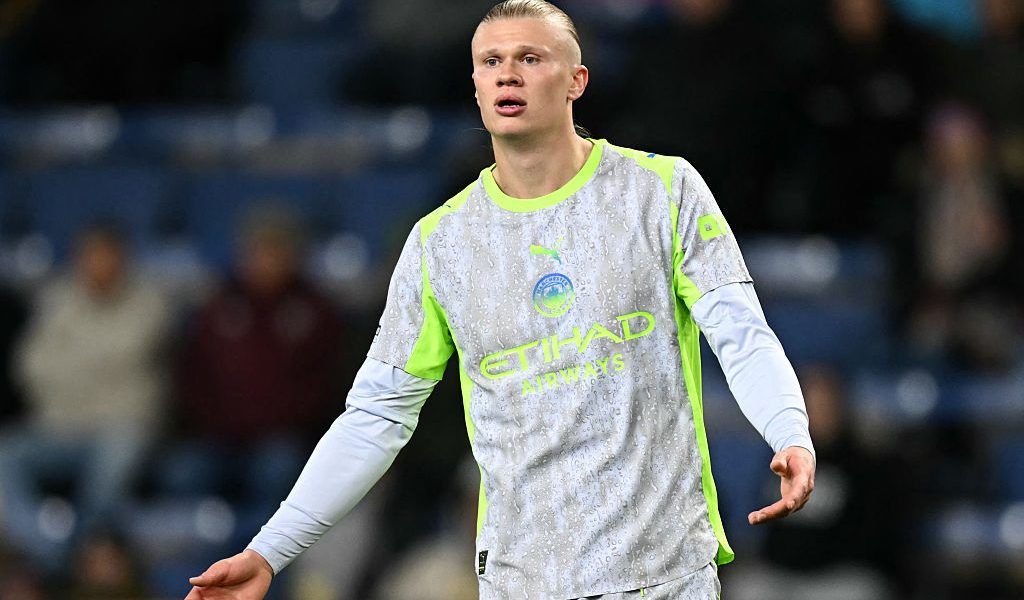
POLICY WIRE — Oslo, Norway — It’s an age-old conundrum, isn’t it? The spectacle of a prodigious athlete, a sculpted avatar of peak physical conditioning, lending their formidable image to a product diametrically opposed to the very tenets of health they embody. But when that athlete is Erling Haaland, Norway’s goal-scoring colossus, and the product is a global beer behemoth, the ensuing fracas transcends mere marketing critique; it becomes a societal flashpoint, particularly in a nation grappling with its own relationship to alcohol.
The Manchester City striker, a figure synonymous with raw power and relentless fitness, now fronts an advertising blitz for Budweiser, strategically timed to coincide with the World Cup. But in his native Norway, this commercial liaison hasn’t been met with cheers; rather, it’s ignited a firestorm of indignation, prompting prevention organizations to raise a collective, indignant eyebrow. It’s a situation that pulls back the curtain on the often-murky intersection of sports, commerce, and public health, proving that even the most celebrated boots can tread on sensitive ground.
Hanna Cecille Widnes, a vocal critic and spokesperson for a prominent Norwegian advocacy group, didn’t mince words when she conveyed her dismay to the Dutch newspaper ‘Telegraaf.’ She declared, rather pointedly, “I want the Norwegian Football Federation to put an end to this.” For Widnes, it’s not just a matter of personal choice; it’s a profound betrayal of trust. She labeled it “tragic” that Haaland, whose every on-pitch move inspires millions, seemingly fails to recognize “the negative impact on children and young adults” such endorsements invariably produce. Indeed, Widnes cast Haaland’s latest venture as “really problematic,” suggesting a palpable dissonance between his public persona and his commercial decisions.
And she isn’t alone. Other observers, many within the nation’s robust public health community, have voiced similar consternation. They point to the inherent contradiction: here’s a man whose career depends on an almost monastic dedication to physical purity – a diet, a training regimen, a lifestyle optimized for elite performance – now championing a beverage whose excessive consumption is consistently linked to myriad health woes. It’s a cognitive dissonance that, for many, is simply too glaring to ignore. But then, capitalism often thrives on such delicious ironies.
Still, the Norwegian Football Federation (NFF) has, thus far, remained steadfast in its support, or perhaps, its non-interference. They assert that Haaland made “a personal agreement” and “of course has the right to do so.” This stance, however, only fuels the debate. Does a professional athlete, particularly one of Haaland’s immense stature — and influence, truly operate in a vacuum? Or do their commercial decisions, by their very nature, carry an inescapable weight of social responsibility?
“We expect our role models, especially those reaching millions of impressionable young minds, to exercise a heightened degree of social consciousness,” asserted Dr. Ingrid Johansen, Norway’s Deputy Minister for Health Promotion, in an exclusive statement to Policy Wire. “Their choices echo far beyond the pitch, shaping perceptions and potentially normalizing behaviors we, as a nation, are striving to mitigate.” Johansen’s words underscore a growing sentiment that public figures, particularly those revered by youth, bear a heavier ethical burden than simple contractual obligations might suggest.
📄 POLICY WIRE WHITEPAPER PUBLISHED: PAKISTAN'S NATIONAL SECURITY POLICY PRIORITIES
👉 READ BY CLICKING HEREThis Scandinavian skirmish also resonates powerfully across the Muslim world, where alcohol consumption and advertising are often viewed through a vastly different lens, frequently constrained by religious and cultural proscriptions. Consider the recent FIFA World Cup in Qatar — a tournament, ironically, also sponsored by Budweiser. Organizers there, bowing to local cultural and religious sensitivities, largely banned alcohol sales within stadiums, a decision that caused its own international ripple of controversy. This Norwegian brouhaha, then, isn’t just about public health; it’s a microcosm of the global friction where commercial imperatives clash with deeply held societal values, highlighting how the same endorsement can elicit wildly divergent reactions depending on cultural context.
The statistics, too, present a sobering counterpoint to the glitzy marketing. According to the Norwegian Institute of Public Health, roughly 15% of Norwegian youth aged 15-24 reported hazardous drinking patterns in the past year, a figure that underscores the societal stakes involved in normalizing alcohol consumption, especially through influential figures. It’s a reminder that beneath the glamour of big-money endorsements, a palpable public health struggle persists.
What This Means
At its core, this controversy is a fascinating exploration of athlete agency versus societal expectation in the hyper-commercialized world of modern sport. For Haaland, it’s likely a lucrative deal, a further cementing of his global brand. For Budweiser, it’s an unparalleled opportunity to hitch their product to a rising star, amplifying reach. But for public health advocates and, critically, for impressionable young fans, it’s a troubling conflation of athletic excellence with a product carrying significant social cost. The NFF’s hands-off approach, while legally sound, might prove politically short-sighted, as it implicitly prioritizes individual commercial freedom over collective well-being. It’s a delicate balance, and as this episode illustrates, it’s one that increasingly pits the burgeoning wealth of sports stars against the often-fragile health of the communities they inspire. How governments and federations navigate this evolving landscape will dictate not just the future of sports marketing, but also the ethical compass of global athletic institutions. And frankly, the entire debate, in its earnestness, highlights just how entangled our cultural icons have become with corporate interests, making it difficult to discern where the athlete ends and the advert begins. It’s an economic calculus often brutal in its simplicity.