

Echoes in Asphalt: Traveling Vietnam Memorial Replica Ignites Reflection in King
POLICY WIRE — KING, USA — The sheer weight of 58,220 names, etched into granite, is a burden most can scarcely fathom. But what happens when that burden, typically anchored in Washington D.C.’s...

POLICY WIRE — KING, USA — The sheer weight of 58,220 names, etched into granite, is a burden most can scarcely fathom. But what happens when that burden, typically anchored in Washington D.C.’s solemn expanse, becomes portable? What emotional gravity does it exert when it unfurls on temporary asphalt, far from the Capitol’s shadow, in a town like King? It’s a question not just of logistics, but of the very nature of collective memory—how it travels, how it settles, and how it compels a reckoning with sacrifice that, for many, still feels impossibly fresh.
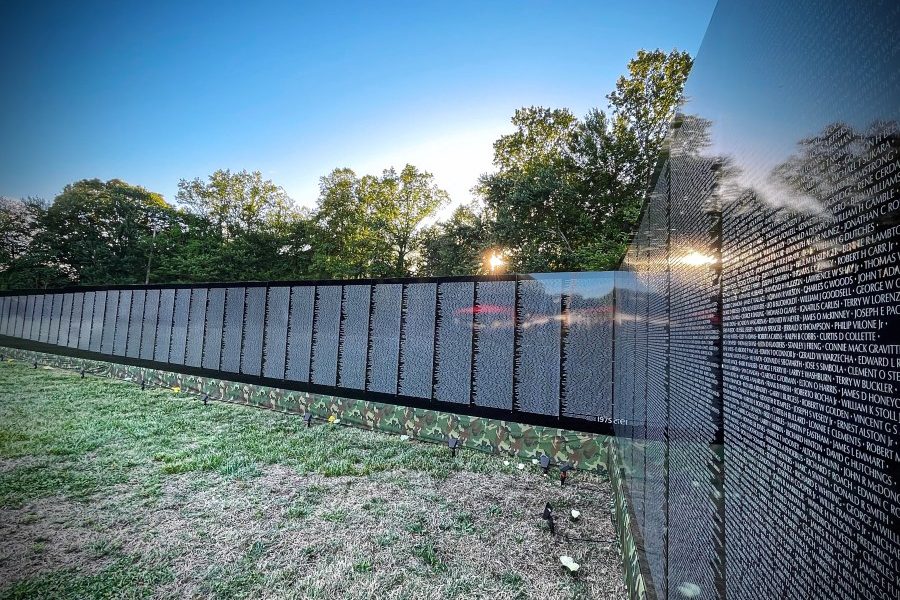
This week, the traveling replica of the Vietnam Veterans Memorial, often dubbed ‘The Wall That Heals,’ began its sojourn in King, inviting locals to touch the polished surface, trace familiar letters, and confront a national trauma through its most visceral manifestation. It isn’t merely an exhibition; it’s a pilgrimage, a pop-up shrine erected for a few fleeting days, forcing communities to pause and absorb the brutal arithmetic of war. For many, it’s their sole opportunity to engage with a monument that has, for decades, served as America’s most potent symbol of a deeply divisive conflict.
Mayor Evelyn Hayes, her voice hushed during the opening ceremony, opined, “It’s more than just a wall; it’s a mirror reflecting our shared history, our collective grief, and, ultimately, our resilience.” She wasn’t wrong. The meticulously crafted, three-quarter scale reproduction — stretching nearly 400 feet — brings the solemnity of the nation’s capital right to Main Street. Its presence forces a direct encounter, unmediated by distance or the typical tourist bustle, allowing for an intensely personal, almost confrontational, moment of remembrance.
And that personal encounter is vital, particularly for the aging cohort of Vietnam veterans who, for far too long, returned home to a nation less than eager to acknowledge their service or their wounds. It’s a painful historical footnote, one that this movable monument attempts to correct, even decades later. According to the National Archives, 58,220 American service members perished in the Vietnam War, a figure starkly imprinted on the wall, each name a testament to a life irrevocably altered, a family permanently scarred. That’s a statistic that continues to reverberate, doesn’t it?
But the wall’s journey across America isn’t just about the past; it’s about the continuing conversation surrounding military service, sacrifice, and the often-fraught process of national remembrance. It’s about understanding the long-tail economic and human costs of intervention, a calculus that often extends far beyond the final troop withdrawal. Think about it: the echoes of conflicts don’t simply dissipate when the last helicopter lifts off. They linger, shape policy, — and influence generations.
📄 POLICY WIRE WHITEPAPER PUBLISHED: PAKISTAN'S NATIONAL SECURITY POLICY PRIORITIES
👉 READ BY CLICKING HERERetired Colonel Marcus Thorne, Director of State Veterans Affairs, asserted, “We haven’t just inscribed names; we’ve etched lessons into our national consciousness — lessons about intervention, about supporting those we send to war, and about the long shadow conflict casts on families.” It’s a candid assessment that holds relevance far beyond American borders. Consider the intricate tapestry of memory and historical reckoning in nations like Pakistan, where the reverberations of conflicts—from the Soviet-Afghan War to the myriad proxy battles that have traversed its porous borders—continue to shape national identity and socio-political discourse. They, too, grapple with the profound costs of distant wars, albeit through a different cultural lens. The process of memorialization, of collective grieving and national introspection, isn’t uniquely American; it’s a universal struggle for societies entangled in the geopolitical gauntlet.
So, as visitors in King walk alongside the polished black panels, searching for names, leaving mementos, they aren’t just remembering a past conflict. They’re engaging in a contemporary act of civic re-education, a tacit acknowledgment of the human consequence woven into the very fabric of foreign policy. This isn’t just about Vietnam; it’s about every conflict, every soldier, every family left behind.
What This Means
The strategic deployment of ‘The Wall That Heals’ signifies more than just a traveling exhibit; it’s a deliberate, politically astute effort to reinforce civic engagement and national unity around the concept of military sacrifice. Economically, while the direct impact on host towns might seem negligible, the intangible benefits are substantial—fostering community cohesion, drawing visitors (albeit briefly), and providing a low-cost, high-impact platform for dialogue. It acts as a continuous, decentralized public relations campaign for veteran support, subtly influencing local and state policy regarding veterans’ services. Still, the underlying message remains stark: the true cost of military adventurism isn’t merely tallied in budgets, but in the countless lives irrevocably altered—a ledger that transcends generations and geographies, from the rice paddies of Southeast Asia to the arid mountains of the Muslim world.