
Albuquerque’s Quiet May Day Echo: A Local Rally Amidst Global Labor’s Unfinished Business
POLICY WIRE — Albuquerque, N.M. — While much of the world observes International Workers’ Day with nationwide holidays and robust demonstrations, the United States offers a more nuanced, often...

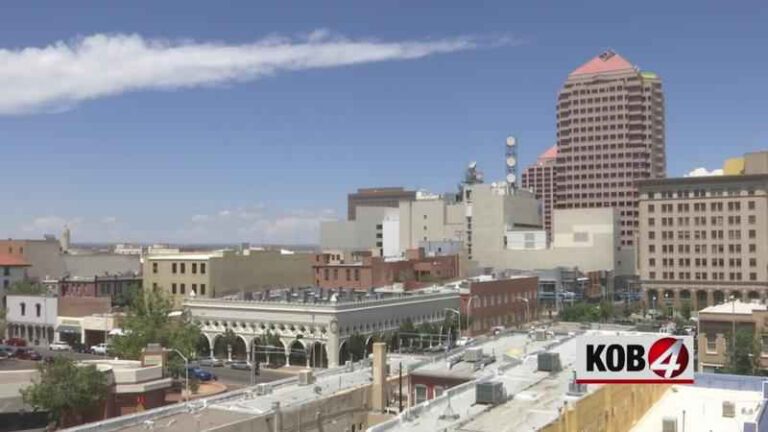
POLICY WIRE — Albuquerque, N.M. — While much of the world observes International Workers’ Day with nationwide holidays and robust demonstrations, the United States offers a more nuanced, often localized, tableau. May 1st — a date steeped in the legacy of American labor struggles from Chicago’s Haymarket affair — finds itself largely unacknowledged federally here. And yet, this Friday, a dedicated coalition of labor unions and community organizers in Albuquerque isn’t letting the day pass without a public articulation of its enduring purpose.
It’s not merely a local gathering; it’s an annual, pointed reminder. More than 25 local labor unions — and community organizations are slated to convene at Albuquerque Civic Plaza. Their agenda? A rally, followed by a march, bookended by a youth gathering — and art-making. At its core, the event, commencing formally at 3 p.m. with the youth focus, then pivoting to the main rally at 4 p.m. and a march at 5 p.m., seeks to underscore the often-overlooked contributions of workers, as well as the contemporary challenges they confront in an economy that frequently tests their mettle. A celebratory segment with music is planned afterward, because even advocacy needs a beat.
This particular May Day observance comes at a time when discussions around wage stagnation, inflationary pressures, and the dwindling power of collective bargaining feel less like academic exercises and more like daily bread-and-butter issues for millions. So, while Albuquerque’s Civic Plaza might not host the throngs seen in, say, Karachi or Dhaka—where May Day is a national holiday and often precipitates massive, politically charged parades (sometimes to the government’s consternation)—its significance here isn’t diminished. It’s simply refracted through a different lens, a grassroots assertion in a country that largely opted for Labor Day in September, effectively decoupling itself from the global tradition it historically inspired.
Sarah Jenkins, President of Local 104 of the Service Employees International Union (SEIU), shot back at the notion of May Day’s fading relevance. “It’s not just about a single Friday afternoon in Civic Plaza; it’s about reminding ourselves, and those in power, that labor didn’t just build this nation—it sustains it,” Jenkins asserted, her voice carrying the timbre of long-fought battles. “We’re fighting for dignity, for a living wage, for a world where a day’s work truly provides a life, not just bare subsistence.” Her words cut through the usual bureaucratic niceties.
Still, not everyone shares Jenkins’s revolutionary fervor. Councilman Ben Carter, a figure often balancing the city’s economic development goals with community needs, offered a more tempered perspective. “While we celebrate the spirit of entrepreneurship and job creation, we can’t forget the foundational role of every working man and woman in our city’s prosperity,” Carter conveyed, with the careful diplomacy of a seasoned politician. “These gatherings serve as an important reminder of the ongoing dialogue needed between employers and employees to build a truly thriving Albuquerque.” One couldn’t help but notice the emphasis on ‘dialogue’ over ‘demand.’
📄 POLICY WIRE WHITEPAPER PUBLISHED: PAKISTAN'S NATIONAL SECURITY POLICY PRIORITIES
👉 READ BY CLICKING HEREBehind the headlines of local gatherings, a starker global reality persists. The precarity of global economic conditions continues to squeeze workers. Globally, real wage growth decelerated from 2.2% in 2021 to a paltry 0.9% in 2022, according to the International Labour Organization (ILO). For advanced G20 countries, that figure plummeted to a negative 2.2% in the first half of 2022. It’s a numerical testament to the uphill battle many workers face, even in seemingly prosperous nations.
What This Means
This Albuquerque rally, while geographically specific, serves as a microcosm of broader shifts in global economic power and labor dynamics. Its very existence, and the broad coalition it commands, signals an enduring, if often understated, political capital of organized labor. Policy-wise, these events keep the pressure on local and state governments to consider legislation that bolsters worker protections, minimum wages, and collective bargaining rights. Economically, they represent a pushback against an increasingly financialized global economy where labor’s share of wealth has often diminished. The subtle irony here is that the U.S., a progenitor of May Day, remains one of the few industrialized nations not to recognize it as a national holiday—a policy decision that speaks volumes about its historical prioritization of corporate interests over collective labor memory. For emerging economies, particularly across South Asia and the Muslim world, May Day isn’t just a historical footnote; it’s a living, breathing political force that can shape national policy and even destabilize governments. Its quieter American cousin, however, still manages to amplify voices that might otherwise be drowned out by the ceaseless hum of commerce.