


The Drone Defense Deficit: Nations Scramble for Scarce Skies, Leaving Vulnerable Allies Exposed
POLICY WIRE — Washington, D.C. — The future of warfare, it seems, isn’t always built on hypersonic missiles or stealth bombers. Sometimes, it’s a nimble, inexpensive drone, repurposed...

POLICY WIRE — Washington, D.C. — The future of warfare, it seems, isn’t always built on hypersonic missiles or stealth bombers. Sometimes, it’s a nimble, inexpensive drone, repurposed from hobbyist gear, delivering a devastating punch. And suddenly, nearly every defense minister and procurement chief across the globe is scrambling for an answer to this pervasive threat: drone interceptors.
But here’s the rub: the assembly lines aren’t humming fast enough. Not even close. The sudden, voracious appetite for systems designed to swat these aerial nuisances from the sky has created a bottleneck of epic proportions, turning what was once a niche defense capability into a top-tier strategic priority. It’s a supply-side shock that’s leaving gaping holes in national security doctrines, prompting a frantic re-evaluation of defense industrial bases — and some uncomfortable geopolitical truths.
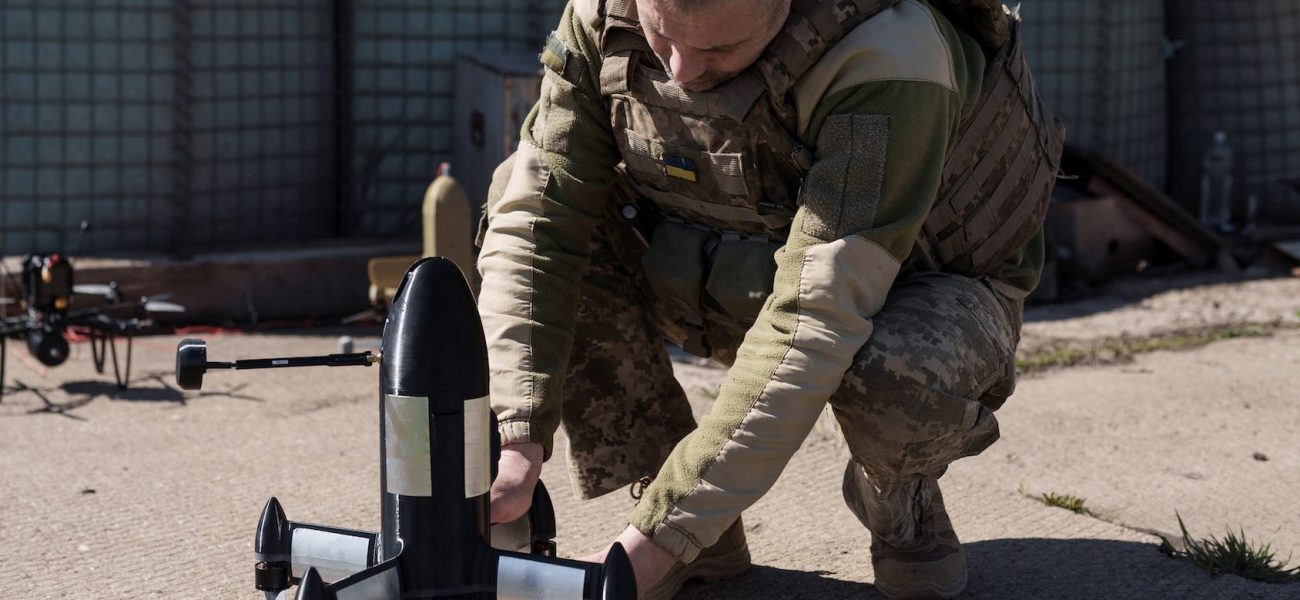
Ukraine’s battlefield, of course, serves as the starkest exhibit. There, cheap, off-the-shelf unmanned aerial vehicles (UAVs) have redefined tactical engagement, necessitating an urgent, almost desperate, need for countermeasures. From sophisticated laser systems to jammers and even dedicated interceptor drones, the lesson is clear: if you can’t stop the swarm, you’re going to pay a heavy price. This paradigm shift, however, wasn’t precisely foreseen by industrial planners focused on traditional, big-ticket weaponry. Now, everyone wants a piece of this defensive pie, — and there simply isn’t enough to go around.
“We’ve seen a complete recalibration of threat assessment,” bemoaned General Mark Vandenberg, former NATO Supreme Allied Commander Europe, speaking from his retirement in Brussels. “For decades, the focus was on peer adversaries with conventional airpower. Now, it’s about micro-drones guided by a smartphone, and the industry’s just not geared to produce thousands of high-tech counter-UAV systems overnight. We’re playing catch-up, and it’s a dangerous game.” Indeed, the scramble has become a defining feature of contemporary defense procurement.
Still, the demand isn’t confined to Europe’s eastern flank. Nations across the Middle East and South Asia, long familiar with the asymmetric threat of drones—a calculus often shaped by regional rivalries and insurgency—are now acutely aware of their own vulnerabilities. Take Pakistan, for instance. With porous borders and ongoing counter-terrorism operations, the threat of weaponized commercial drones isn’t theoretical; it’s an ever-present specter. Their security forces routinely encounter drone incursions, often for reconnaissance or smuggling, but the potential for more sinister payloads looms large. These nations, often with more constrained defense budgets, find themselves at the end of a very long queue for technologies that wealthier nations are now hoarding.
And that’s where the geopolitical fault lines become glaringly apparent. The manufacturers—largely concentrated in North America, Europe, and some parts of Asia—are struggling with everything from rare earth minerals for sensors to skilled labor for complex integration. “It’s not just about the hardware,” explained Dr. Anya Sharma, a defense supply chain analyst at the Royal United Services Institute. “It’s about the software, the AI for threat classification, the training—it’s a holistic system, and scaling that up globally is proving incredibly difficult. The global counter-drone market is projected to reach $10.5 billion by 2030, growing at a CAGR of 24.8% from 2023, according to a report by MarketsandMarkets, yet even that staggering growth rate can’t meet current demand.”
📄 POLICY WIRE WHITEPAPER PUBLISHED: PAKISTAN'S NATIONAL SECURITY POLICY PRIORITIES
👉 READ BY CLICKING HERE“Our security apparatus constantly monitors evolving threats, and drones are undeniably a significant challenge,” stated Aisha Khan, spokesperson for Pakistan’s Ministry of Foreign Affairs, in an email exchange. “Acquiring advanced counter-drone capabilities is a national priority, but global supply chain limitations mean we must also explore indigenous solutions and regional collaborations. We can’t afford to be left behind while others secure their skies.” Her sentiment underscores a broader reality: for many developing countries, securing these systems isn’t just about defense; it’s about sovereignty and stability in an increasingly volatile neighborhood. They’re often left improvising, adapting, or simply hoping the threat doesn’t escalate.
Behind the headlines, this shortage is creating new diplomatic leverage — and strains. Allies who once relied on ready access to Western military tech now find themselves competing for scarce resources. It’s forcing some to reconsider alliances or, perhaps more alarmingly, to turn to less scrupulous providers who might prioritize speed over ethical considerations. The implications are profound, shaping not just future defense budgets but the very nature of international security cooperation.
What This Means
The burgeoning global demand for drone interceptors, set against a backdrop of constrained supply, signals a seismic shift in strategic defense priorities. Economically, we’re likely to see a massive investment surge into counter-UAV research and development, potentially fostering new defense tech hubs and creating unforeseen economic advantages for nations quick enough to adapt their industrial output. However, it also means smaller, less affluent nations—those unable to compete for limited high-end systems—will remain disproportionately vulnerable to asymmetric drone attacks, potentially exacerbating regional instabilities and creating a new class of ‘air defense haves’ and ‘have-nots.’ Politically, this scarcity could strain traditional alliances, compelling some partners to forge new defense relationships or to dramatically accelerate their own domestic arms production, even if that means compromising on interoperability. The proliferation of drone technology has democratized aerial strike capabilities; the lack of accessible, affordable countermeasures risks destabilizing vast swathes of the globe, particularly in regions already prone to conflict and where state and non-state actors alike are leveraging these low-cost, high-impact weapons. It’s a critical juncture, indeed, where the speed of technological innovation has once again outpaced the capacity of our collective defense infrastructure.