

Anfield’s Unsentimental Calculus: Henderson’s Exit, Carragher’s Lament, and Football’s Shifting Geoeconomics
POLICY WIRE — London, UK — The siren call of distant coffers, invariably accompanied by the promise of unfettered agency, often proves irresistible even to those ensconced in sporting apotheosis....

POLICY WIRE — London, UK — The siren call of distant coffers, invariably accompanied by the promise of unfettered agency, often proves irresistible even to those ensconced in sporting apotheosis. It’s a fundamental truth increasingly reshaping the global footballing landscape, a phenomenon starkly illuminated by former Liverpool stalwart Jamie Carragher’s recent, rather unsparing assessment of Jordan Henderson’s 2023 departure from Anfield.
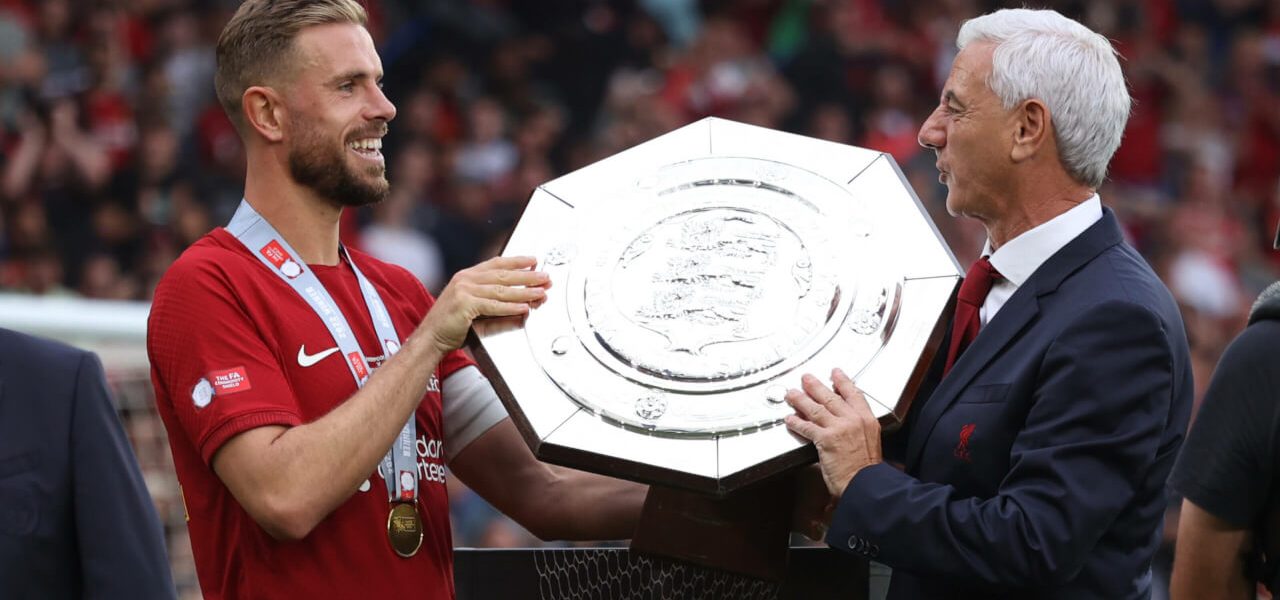
Carragher, a pundit now as trenchant as he was a defender, hasn’t softened his stance on Henderson’s choice to abandon the Premier League’s familiar crucible for the burgeoning Saudi Pro League. For him, it wasn’t just a misstep; it was an abandonment of destiny, a forsaking of the ceremonial goodbye reserved for club legends. He opined with characteristic directness, addressing the tumultuous early days of Henderson’s captaincy: “When I retired and Steven Gerrard left the club, it was, ‘Who is going to be captain?’ Liverpool fans were going nuts that Jordan Henderson was the captain; I was defending him constantly.” Carragher then shot back at the implied detractors, “Don’t tell me who shouldn’t be captain, but who should! It was right that he was captain. He was a brilliant captain, a great lad, a brilliant player for Liverpool. I still don’t think he should have left Liverpool. He should still be at Liverpool now.”
And there it’s, the unvarnished truth from a man steeped in Liverpool’s unique, almost tribal, ethos. But behind the emotional resonance of Carragher’s commentary lies a colder, harder calculation: the growing chasm between traditional club loyalty and the irresistible financial magnetism of new footballing superpowers. Henderson’s trajectory — a brief, lucrative sojourn in Saudi Arabia, a stopover in Amsterdam, and now a return to the Premier League with Brentford — reads less like a career progression and more like a hasty scramble, a tacit admission that the grass wasn’t necessarily greener, merely more expensively manicured.
His exit, in July 2023, arrived just as Saudi Arabia unleashed an unprecedented financial offensive on European football, luring established stars with contracts few traditional clubs could match. The Saudi Pro League, intent on elevating its global profile, spent over one billion U.S. dollars on transfers in 2023 alone, according to estimates by Deloitte, a stark figure that reconfigures the power dynamics of player acquisition. This influx of capital isn’t merely about sport; it’s a profound instrument of soft power, reshaping global perceptions and economic flows, especially across the broader Muslim world, from Cairo to Karachi.
📄 POLICY WIRE WHITEPAPER PUBLISHED: PAKISTAN'S NATIONAL SECURITY POLICY PRIORITIES
👉 READ BY CLICKING HEREStill, for Carragher, the missed opportunity for a grand Anfield farewell trumps any pecuniary gain. “I think he made a big mistake there, and what he missed out on is what Mo Salah and Andy Robertson will get in a few weeks, a big send-off from the Anfield crowd. Jordan Henderson deserved that. Fantastic player, fantastic lad.” It’s a poignant observation, laying bare the unquantifiable cost of such decisions. Henderson, a captain who lifted both the Premier League and Champions League trophies, forfeited the kind of valedictory procession usually reserved for club titans, a ritual deeply embedded in Liverpool’s identity. His departure was abrupt, clinical, devoid of the sentimental pageantry he’d so demonstrably earned.
Dr. Zafar Iqbal, a geopolitical analyst specializing in Gulf affairs, noted recently, “Saudi Arabia’s aggressive investment in sports isn’t just about attracting star players; it’s a strategic long-term play. It signals a new era where economic might, rather than just historical prestige, increasingly dictates player movement and, by extension, the cultural influence of football across continents, including in populous regions like Pakistan and Indonesia where the sport holds immense sway.” This perspective underscores that Henderson’s choice, while personal, was a micro-reflection of macro shifts.
What This Means
At its core, Carragher’s critique isn’t simply nostalgic grumbling; it’s a pointed commentary on the evolving economics and ethics of elite football. Henderson’s brief, albeit lucrative, detour to the Middle East, followed by a circuitous path back to the Premier League, serves as a cautionary tale. It suggests that while the financial allure of emerging leagues is undeniable, the intangible benefits of a storied career — legacy, sustained elite competition, and the emotional dividends of a proper farewell — remain potent, if often underappreciated, currencies. The increasing financial muscle of non-traditional footballing powers, particularly from the Gulf, is forcing players, agents, and clubs to recalibrate their values. For European clubs, it means contending with a new, well-funded rival for talent. For players, it’s a constant negotiation between maximizing earnings — and cementing a legacy. This isn’t just about one player’s decision; it’s a bellwether for a sport grappling with an unprecedented redistribution of wealth and influence, presenting both opportunities and existential challenges for traditional footballing strongholds.
📖 GET YOUR FREE COPY NOW OF POLICY WIRE DIGITAL MAGAZINE JULY 2026 EDITION
👉 READ & DOWNLOAD FREE MAGAZINE