


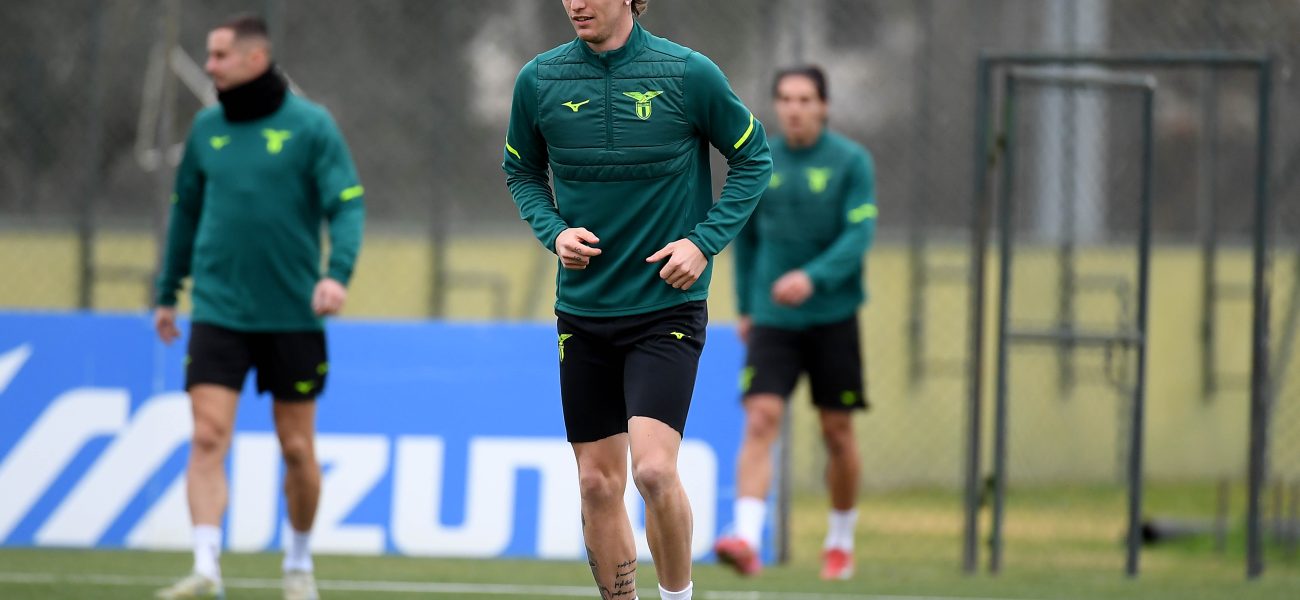
Lazio’s Risky Wager: Rovella’s Return Ignites Transfer Speculation Amidst Coppa Italia Crucible
POLICY WIRE — Rome, Italy — In the high-stakes theatre of European football, where fortunes are forged and shattered with each swing of the boot, the narrative of resilience often plays second fiddle...

POLICY WIRE — Rome, Italy — In the high-stakes theatre of European football, where fortunes are forged and shattered with each swing of the boot, the narrative of resilience often plays second fiddle to the relentless pursuit of silverware. Yet, sometimes, it’s precisely that tenacious, almost defiant, return from the brink that captures the true essence of the game’s brutal ballet.
So it’s with Nicolo Rovella, Lazio’s mercurial midfielder, whose journey back to the pitch has been less a steady ascent and more a series of torturous detours, punctuated by scalpels and physio tables. His singular focus now isn’t merely recovery; it’s a dramatic, almost quixotic, bid to grace the Stadio Olimpico turf for the Coppa Italia final against Inter Milan. That’s a defiant aim, given the litany of ailments he’s endured this season—a veritable medical encyclopedia of injuries. From a groin issue that initially saw him explore ‘alternative’ therapies (a quaint euphemism for anything but surgery, it seems) before the inevitable November operation, to a shattered collarbone in February after a nasty tumble against Cagliari that mandated another trip under the knife, Rovella’s campaign has been a masterclass in physical misfortune. And yet, here we’re, watching him claw his way back. It’s a testament to the man’s steel, isn’t it?
His recent, albeit unused, presence on the bench for Lazio’s chaotic 3-3 draw against Udinese speaks volumes. Manager Maurizio Sarri, a man whose tactical acumen is as sharp as his preferred brand of cigarette, had reportedly intended to unleash Rovella. “One doesn’t merely wish a player into form after such a gauntlet of setbacks,” Sarri reportedly quipped to a knot of journalists, a plume of smoke curling from his lips. “It’s a chess match, always. And we’re not playing checkers here. Rovella offers a different dimension, a different kind of intensity, but only if he’s truly ready.” The late tactical switch, necessitated by Luca Pellegrini’s yellow card risk, merely delayed the inevitable – or so Lazio hopes.
But this isn’t just about a player’s fight against his own anatomy. This saga unfolds against a backdrop of intense strategic maneuvering. Inter Milan, long-time admirers of Rovella’s deep-lying playmaker abilities, had already cast covetous glances his way last summer. Now, with the Coppa Italia final looming and Inter itself grappling with the sporadic absences of key figures like Hakan Calhanoglu, Rovella’s return – especially if impactful – could rekindle that flame with formidable intensity. A stellar performance against his potential future employers? That’s the stuff of agent dreams — and club nightmares. The *Nerazzurri* are in the market for a long-term heir to their midfield maestro, and a 24-year-old with Rovella’s skillset and demonstrable grit becomes an even more compelling prospect, injuries notwithstanding. “The Nerazzurri have always possessed a keen eye for nascent talent, particularly those with a demonstrable cerebral approach to the game,” offered an Inter Milan executive, speaking off the record but not entirely without a hint of strategic foresight. “Certain players, irrespective of current club allegiances, invariably remain on our radar. Rovella’s tenacity, despite his recent travails, speaks volumes about his character — and potential.”
The immediate challenge lies in Monday’s Serie A clash against Cremonese, a crucial dress rehearsal for Rovella to shake off the rust. His emergence would present a potent alternative to Danilo Cataldi, who has commendably filled the regista void, and even Patric, who’s been a surprisingly adept makeshift solution. Still, the lure of a fully fit, hungry Rovella in the engine room for the final is a tantalizing prospect for Sarri’s tactical blueprint.
📄 POLICY WIRE WHITEPAPER PUBLISHED: PAKISTAN'S NATIONAL SECURITY POLICY PRIORITIES
👉 READ BY CLICKING HEREBeyond the immediate spectacle, the economic undercurrents of this narrative are profound. The global transfer market for football players alone surpassed a staggering $7.35 billion in 2023, according to FIFA’s Global Transfer Report, a sum that underscores the immense financial stakes involved in player valuation and recruitment. For clubs, managing player health isn’t just about winning games; it’s about protecting multi-million-dollar investments. A player’s prolonged absence, or an accelerated return that risks re-injury, can send ripples through balance sheets and transfer strategies. It’s a delicate dance between medical prudence — and sporting ambition, often adjudicated by commercial imperative. That’s why clubs, despite their competitive fire, are often scouting potential future acquisitions even from rival squads.
What This Means
At its core, Rovella’s comeback isn’t just a feel-good sports story; it’s a stark illustration of the brutal, often unforgiving, economics governing elite professional sport. For Lazio, his potential return is a gamble: a strategic activation of a player who, despite his injury history, represents significant on-field value and, crucially, future transfer equity. If he plays well, his market value soars, enhancing Lazio’s negotiating position should Inter or another suitor come calling. If he falters or, worse, suffers another setback, it’s a tangible depreciation of a valuable asset. The transfer market, in this sense, is an unyielding economic crucible, a global bazaar where human potential is bought, sold, and traded, mirroring in some ways the broader geopolitical scramble for talent and resources. It highlights how player welfare, often touted as paramount, frequently collides with the relentless pressure for immediate results and the long-term financial health of a club. From a broader perspective, the appeal of European football across continents, including in burgeoning markets like Pakistan and the wider South Asian region — where leagues like the IPL demonstrate their own formidable economic power — means that the individual trajectories of players like Rovella aren’t just local news; they contribute to the global tapestry of sports economics, influencing viewership, merchandise sales, and even investment flows. The high-stakes drama of a Coppa Italia final, amplified by a player’s desperate comeback and simmering transfer speculation, becomes a focal point for millions, underscoring the enduring power of narrative in shaping market perceptions and fan engagement. Beyond the Sixes: IPL’s Unyielding Economic Crucible and South Asia’s Sporting Divide offers a compelling parallel in a different sporting arena, demonstrating the commonalities of commercial pressures across diverse sporting landscapes.