


Beyond the Booster: New Mexico Confronts a Silent Epidemic of Child Vehicular Heatstroke
POLICY WIRE — ALBUQUERQUE, N.M. — It isn’t the screech of tires or the crumpling of metal that marks some of America’s most preventable child fatalities. Instead, it’s the insidious...

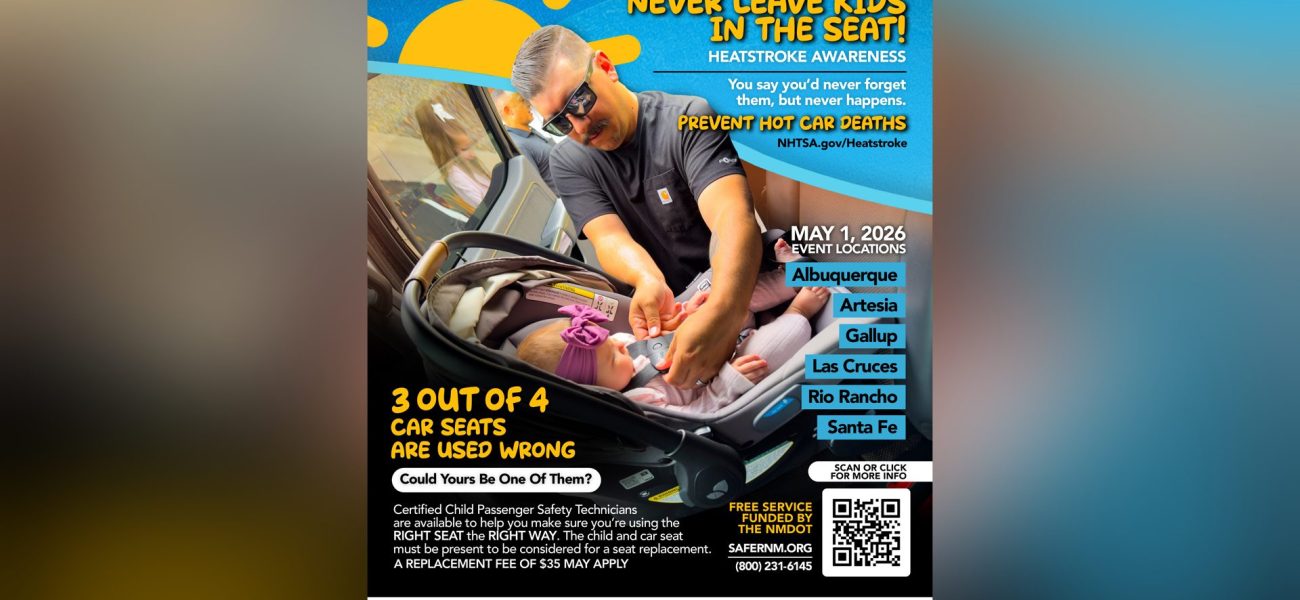
POLICY WIRE — ALBUQUERQUE, N.M. — It isn’t the screech of tires or the crumpling of metal that marks some of America’s most preventable child fatalities. Instead, it’s the insidious rise of cabin temperatures, a silent, invisible assailant claiming young lives with chilling regularity. This grim reality underpins an otherwise mundane announcement: New Mexico’s Department of Transportation (NMDOT), alongside its partner Safer, is convening free car seat inspection clinics across the state this Friday. They’re doing this not merely to mark ‘Heatstroke Awareness Day,’ but to interdict a tragedy that, frankly, continues to plague modern society.
Since 1998, over 1,000 children in the United States have died from vehicular heatstroke, according to data compiled by NoHeatstroke.org, a grim average of 38 fatalities annually. That’s a statistic that should give anyone pause. It’s a stark figure that belies the sophistication of our vehicles — and the purported safety-consciousness of our era. At its core, these clinics are a direct response to this ongoing, systemic vulnerability — a vulnerability often exacerbated by simple oversight or, regrettably, profound neglect.
On May 1, from 9 a.m. to 2 p.m., certified Child Passenger Safety Technicians will dedicate approximately 30 minutes to each caregiver, meticulously guiding them through the correct selection, installation, and usage of car and booster seats. Don’t underestimate this task; it’s more complex than many realize. These technicians aren’t just checking buckles; they’re imparting life-saving knowledge, demystifying manuals, and — crucially — identifying expired, recalled, or unsafe seats. If a seat doesn’t pass muster, replacements might be available, though caregivers should know there’s typically a $35 fee, and the child must be present for qualification. It’s a pragmatic approach to a pervasive problem.
“Our commitment isn’t just about asphalt and bridges; it’s profoundly about safeguarding our most vulnerable passengers,” stated Juanita Ramirez, NMDOT’s Director of Public Safety Initiatives, her tone resonating with an undercurrent of urgency. “We’re not just inspecting seats; we’re fostering a culture of perpetual vigilance that, frankly, saves lives. It’s a foundational piece of our public health strategy.” And yes, this sort of preventative outreach, while seemingly small-scale, constitutes a critical layer of governmental responsibility.
These initiatives, while localized, reflect a broader societal grappling with child safety. Consider the burgeoning economies of South Asia, where vehicle ownership rates are surging. Countries like Pakistan, for instance, are experiencing a dramatic increase in road traffic, yet often contend with nascent, sometimes inconsistently enforced, child restraint laws and public awareness campaigns. While New Mexico addresses the nuances of correct car seat installation, many parts of the Muslim world are still wrestling with the fundamental adoption of any child restraint systems at all, highlighting a global disparity in baseline safety provisions.
📄 POLICY WIRE WHITEPAPER PUBLISHED: PAKISTAN'S NATIONAL SECURITY POLICY PRIORITIES
👉 READ BY CLICKING HERE“It’s a stark reminder that even with advanced automotive technology, the simplest, most fundamental acts of parental responsibility — like securing a child correctly — remain paramount,” State Senator Martin Chavez (D-Albuquerque) mused, observing the preparations at an Albuquerque clinic. “And yes, it takes a village, but it also takes concerted state policy to empower that village, to make these resources not just available, but accessible and understood by every family.”
Caregivers intending to participate are advised to bring the car seat, its manual, the vehicle owner’s manual, and, if feasible, the child who uses the seat. Locations span Albuquerque, Artesia, Gallup, Las Cruces, Rio Rancho, and Santa Fe – a thoughtful distribution aiming for statewide impact. This isn’t just about individual appointments; it’s about a collective societal recalibration of priorities, a pointed acknowledgement that vigilance isn’t merely an individual virtue, but a public mandate. The ephemeral mark of policy, in this instance, is meant to be etched into the very fabric of community practice.
What This Means
Behind the headlines of free inspections lies a complex web of political — and economic implications. From a policy standpoint, these clinics exemplify a proactive public health approach, attempting to mitigate preventable deaths and injuries that impose significant burdens on healthcare systems. Child fatalities and severe injuries aren’t just personal tragedies; they translate into emergency room visits, long-term care, and lost productivity, draining state resources. So, NMDOT’s funding isn’t charity; it’s an investment in societal well-being and, quite literally, future generations.
Economically, robust child safety initiatives can reduce insurance premiums over time, alleviate strain on social services, and foster a healthier workforce. But this also subtly reveals a dependency on state-funded interventions. Why, one might ask, is such fundamental safety instruction not more widely integrated into vehicle sales or even prenatal education? The answer often lies in the perennial tension between individual liberty and collective responsibility, between market solutions and governmental mandates. It’s an ongoing dialogue that shapes everything from road infrastructure to public service announcements. Still, these clinics serve as a stark reminder: preventative measures, however granular, are often the most cost-effective — and humane — form of governance. It’s an essential, if often unheralded, aspect of the state’s duty of care. Even as congressional divisions fester over larger budget battles, the imperative to fund basic safety programs like these remains undeniable at the local level.
📖 GET YOUR FREE COPY NOW OF POLICY WIRE DIGITAL MAGAZINE JULY 2026 EDITION
👉 READ & DOWNLOAD FREE MAGAZINE