


Australia’s Golden Tracks: Luxury Rail’s Opulent Rebirth Amidst Economic Crossroads
POLICY WIRE — Canberra, Australia — It’s not often that the clatter of a luxury dining car eclipses the rumble of parliamentary debates, but Australia’s latest gambit in high-end tourism certainly...

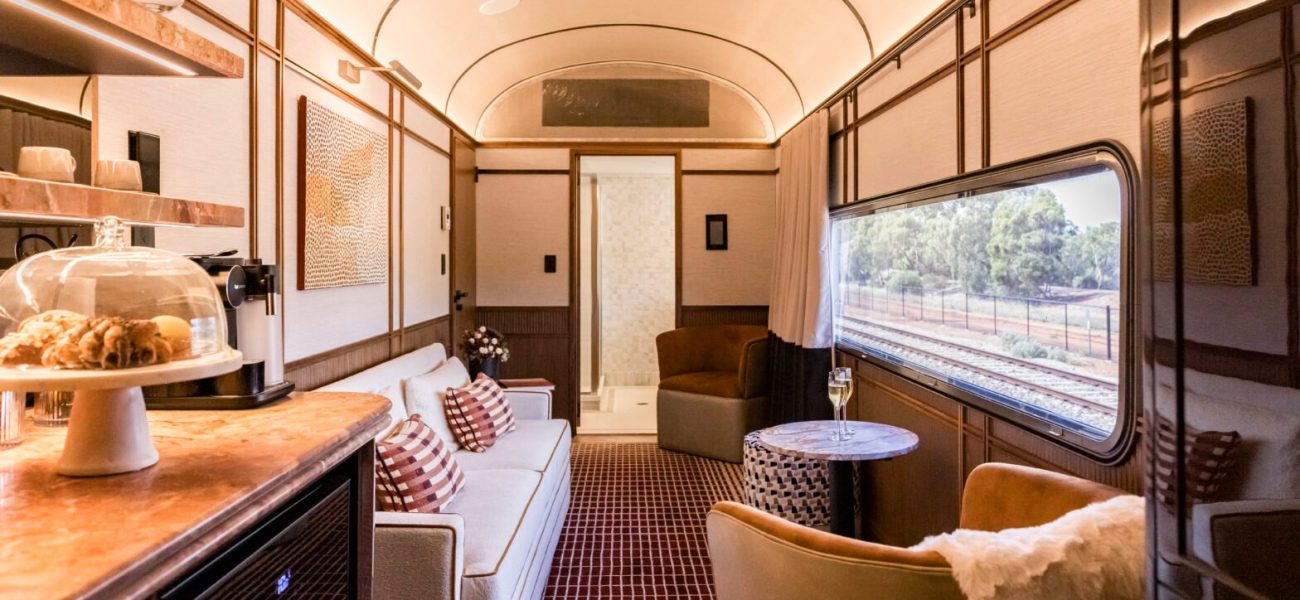
POLICY WIRE — Canberra, Australia — It’s not often that the clatter of a luxury dining car eclipses the rumble of parliamentary debates, but Australia’s latest gambit in high-end tourism certainly offers a potent distraction. The nation’s storied long-distance trains — The Ghan, Indian Pacific, and Great Southern — have quietly, yet comprehensively, shed their former skins for an ultra-luxe overhaul, a move that speaks less to nostalgic charm and more to a calculated, if audacious, economic imperative.
At its core, this isn’t just about new upholstery or a more extensive wine list. This is a strategic repositioning, a brazen play for the globe’s most discerning, and financially well-appointed, travelers. The iconic rail lines, tracing epic journeys across Australia’s vast, unyielding interior, are now essentially mobile five-star hotels. They’re bedecked with lavish private cabins, sophisticated lounges, and gourmet kitchens churning out regional delicacies — a detail few ordinary commuters would ever glimpse. But the real story isn’t found in the thread count of the sheets; it’s in the underlying economic calculus driving such a substantial public-private investment.
Australia, a nation that’s long ridden the wave of resource exports, is increasingly looking to diversify its economic portfolio. And tourism, particularly high-yield tourism, is proving a tantalizing prospect. The pandemic’s chokehold on international travel exposed vulnerabilities, certainly. Still, it also sharpened the focus on attracting visitors willing to spend big, thereby generating greater economic impact per arrival. These revitalized trains, it seems, are the rolling embodiment of that ambition.
“This isn’t merely about aesthetic polish; it’s a strategic investment in our nation’s economic future,” asserted Don Farrell, Australia’s Minister for Trade and Tourism, addressing reporters with characteristic earnestness. “We’re competing on a global stage for discerning travelers, and these upgrades ensure Australia remains a premier luxury destination, creating jobs and stimulating regional economies that sorely need them.” Farrell’s sentiment underscores a governmental confidence in a sector often dismissed as ephemeral. It’s a confidence rooted in the belief that luxury travel offers insulation against broader economic headwinds.
But not everyone’s buying the golden ticket. Dr. Eleanor Vance, a political economist at the University of Sydney, shot back with a more circumspect take. “While the optics are certainly grand, one has to question the return on investment for such niche, high-end offerings,” she contended, her voice tinged with academic skepticism. “Are we diverting resources from more pressing public transport needs, or is this truly a financially sustainable gambit? It’s a question of priorities, isn’t it?” Vance’s critique highlights the perennial tension between national prestige projects and the often-gritty realities of public utility funding.
And indeed, the figures bear out the market’s potential, if not its guaranteed profitability. Australia’s tourism sector contributed approximately AUD $60.8 billion to the national GDP in 2022-23, according to Tourism Research Australia. This isn’t small change. The luxury segment, however, represents a far more concentrated, albeit lucrative, target. The hope is these upgraded trains will capture a disproportionate slice of that high-spending pie.
📄 POLICY WIRE WHITEPAPER PUBLISHED: PAKISTAN'S NATIONAL SECURITY POLICY PRIORITIES
👉 READ BY CLICKING HEREThe drive to capture this high-yield demographic extends well beyond traditional Western markets. Australia’s tourism strategy, increasingly sophisticated, now actively courts affluent travelers from burgeoning economies in the Middle East and South Asia — a demographic accustomed to and demanding of superlative comfort. They’re not just selling a journey; they’re selling an experience tailored to global luxury benchmarks, keenly observed by potential patrons from Islamabad to Dubai. It’s a nuanced outreach, acknowledging diverse preferences while offering universal standards of opulence. This international appeal is vital, particularly as the global economic landscape shifts and wealth increasingly concentrates in non-traditional tourism source markets. It’s about being ready for tomorrow’s tourist dollar, wherever it originates.
What This Means
The lavish metamorphosis of Australia’s long-haul rail network represents more than a mere facelift; it’s a profound recalibration of national tourism policy, signaling a firm commitment to the luxury market segment. Politically, this move offers the incumbent government a tangible ‘win’ — a visible investment that promises job creation and regional economic stimulus, a concept often easier articulated than realized. It allows them to project an image of forward-thinking economic management and global competitiveness, particularly in a post-pandemic recovery era. Economically, the wager is on inelastic demand: the belief that the ultra-wealthy will pay a premium for exclusivity and unique experiences, even during broader economic contractions. It’s a high-stakes gamble on the ‘experiential economy’, a sector less susceptible to the vagaries of mass-market budget constraints.
However, the social implications are equally significant. The stark contrast between these gilded carriages and the everyday struggles of public infrastructure funding, particularly for regional communities, raises uncomfortable questions about resource allocation. While the economic argument for high-yield tourism is compelling on paper, the optics of extreme luxury can sometimes rub against broader societal concerns about equity. For a government, balancing the pursuit of lucrative policy’s grand designs with the ground-level needs of its populace is a delicate dance. This rail upgrade isn’t just about trains; it’s a rolling litmus test for Australia’s evolving economic identity and its embrace of a globalized, stratified tourism landscape.