

Myanmar’s Perpetual Prisoner: Suu Kyi’s ‘House Arrest’ a Gilded Cage, Not Freedom
POLICY WIRE — Yangon, Myanmar — For two years, three months, and countless sunrises, the 78-year-old Nobel laureate, Aung San Suu Kyi, has languished in a specific, cramped prison cell – a stark...

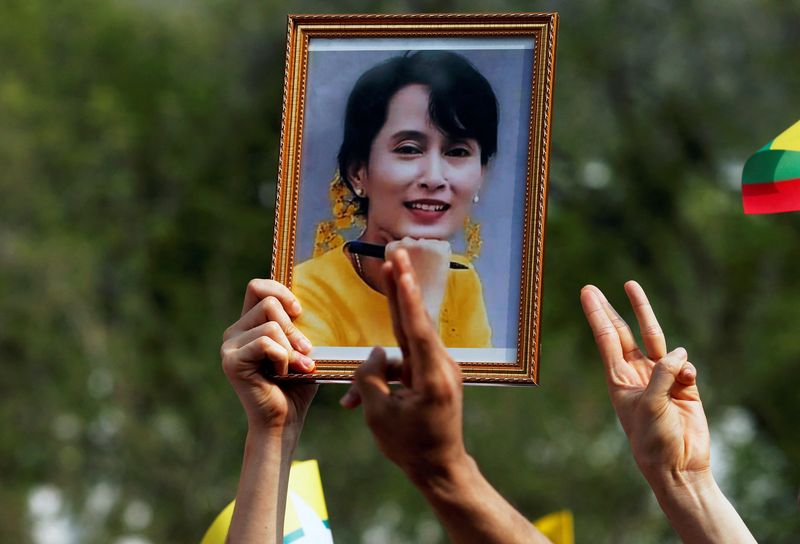
POLICY WIRE — Yangon, Myanmar — For two years, three months, and countless sunrises, the 78-year-old Nobel laureate, Aung San Suu Kyi, has languished in a specific, cramped prison cell – a stark testament to the unwavering grip of Myanmar’s military junta. Now, with a quiet pronouncement from state media, that particular concrete box has been exchanged for another, albeit one with slightly softer furnishings. The move, from Naypyidaw’s notorious prison to house arrest, arrives amidst reports of her declining health and persistent international outcry, yet hardly signals a true thaw in the frigid landscape of Myanmar’s political repression.
It’s a classic play from the junta’s well-worn playbook, isn’t it? A calculated maneuver designed to deflect international opprobrium and project an illusion of compassion, all while retaining absolute control over the nation’s most potent symbol of democracy. This isn’t liberation; it’s merely a relocation within the confines of an elaborate, ongoing detention, a subtle shift in the architecture of her isolation. One might even call it a gilded cage, if the metaphor weren’t so profoundly overused, — and yet, disturbingly apt.
And so, the State Administration Council (SAC), Myanmar’s ruling military body, relayed the news via its controlled media outlets, framing it not as a concession to justice, but as a humanitarian gesture. “This compassionate decision, made on humanitarian grounds and to ensure national stability, reflects our unwavering commitment to the welfare of all citizens,” a spokesperson for the State Administration Council (SAC) reportedly intoned, a statement dripping with the sort of officialese one has come to expect from regimes of its ilk. It’s a pat explanation, barely concealing the underlying calculus of power maintenance.
But few are buying the narrative wholesale. Diplomats and human rights advocates, weary from years of similar pronouncements followed by little substantive change, remain acutely skeptical. “While any easing of Ms. Suu Kyi’s draconian detention is a small mercy, it’s a palliative, not a cure,” observed a U.S. State Department official, speaking on condition of anonymity due to the delicate diplomatic landscape. “The junta must release all political prisoners and restore the democratic mandate, not merely shuffle its most prominent captive between different forms of confinement.” Indeed, the demands haven’t changed, only the scenery has.
Behind the headlines, the brutal reality of Myanmar’s post-coup landscape persists. The Assistance Association for Political Prisoners (AAPP) — a Myanmar-based human rights organization — reports that over 26,000 political prisoners have been arrested since the 2021 coup, with more than 4,800 civilians killed by the junta’s forces. Suu Kyi’s shift from prison to residence does little to alter these grim statistics or the daily terror faced by ordinary Burmese citizens struggling against a ruthlessly entrenched military.
Still, the geopolitical chess game continues. This move offers the junta a convenient talking point when engaging with regional powers, particularly ASEAN nations, who’ve been trying (with varying degrees of success, it must be said) to mediate a resolution to the crisis. It’s a token concession, allowing for future discussions to perhaps avoid the immediate embarrassment of Suu Kyi’s explicit prison conditions. Don’t mistake it for a genuine pivot towards reconciliation.
📄 POLICY WIRE WHITEPAPER PUBLISHED: PAKISTAN'S NATIONAL SECURITY POLICY PRIORITIES
👉 READ BY CLICKING HEREAnd let’s not forget the broader implications for the Muslim world — and South Asia. The plight of Myanmar’s Rohingya Muslim minority, driven en masse into Bangladesh (a South Asian nation) by military atrocities in 2017, remains an unaddressed humanitarian catastrophe. Suu Kyi’s legal re-categorization, while significant for her personally, does absolutely nothing to ameliorate the systemic persecution that has drawn condemnation from Muslim-majority nations like Pakistan, Malaysia, and Indonesia. They’re still waiting for accountability, for justice, for repatriation – — and the junta remains deaf to those calls.
What This Means
At its core, this move represents a cynical calculation by the junta, not a genuine step towards democracy or even fundamental human rights. Politically, it’s a shrewd, albeit transparent, attempt to ease international pressure and potentially soften the edges of the regime’s pariah status, without actually ceding any ground on its iron-fisted rule. They’re hoping a more ‘palatable’ form of detention for Suu Kyi might open doors for engagement, however slightly, with reluctant international actors. It might also be a pragmatic response to her reported health issues, mitigating the catastrophic public relations fallout that would inevitably follow her death in state custody.
Economically, the immediate impact is negligible. Sanctions remain firmly in place, and foreign direct investment remains wary of a country embroiled in civil conflict and ruled by an unpredictable military. While the junta might try to spin this as a sign of their ‘flexibility’ to potential investors, the underlying instability, endemic corruption, and absence of the rule of law will continue to deter any significant influx of capital. The move is, for all intents and purposes, a domestic public relations exercise with minimal external economic resonance.
It’s vital that the international community doesn’t misinterpret this symbolic reshuffling of the cards as a change in the game itself. The goal remains the full release of all political prisoners, the cessation of violence against civilians, and the restoration of a democratically elected government. Anything less, even a slightly more comfortable house arrest for a beloved leader, is simply moving deck chairs on a sinking ship.