

Commercial Silence: England Cricket’s Tour Blackout Underscores Test Cricket’s Perilous Economic Trajectory
POLICY WIRE — London, UK — The thud of a cricket ball against a batsman’s pad, the roar of a capacity crowd, the simmering tension of a five-day contest – these are the hallmarks of Test cricket,...

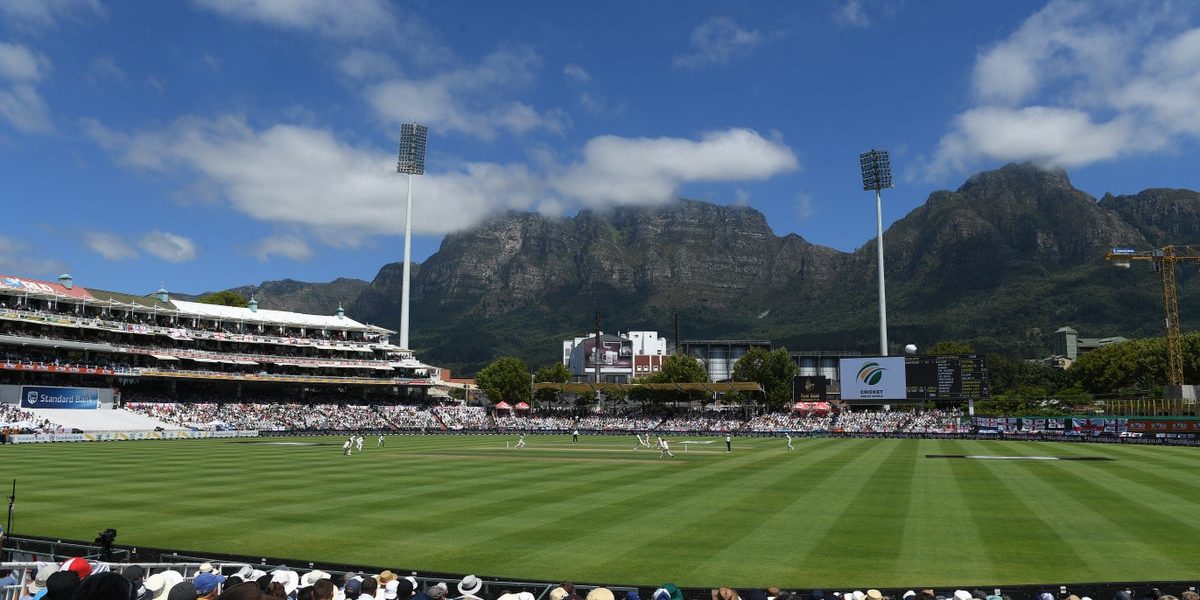
POLICY WIRE — London, UK — The thud of a cricket ball against a batsman’s pad, the roar of a capacity crowd, the simmering tension of a five-day contest – these are the hallmarks of Test cricket, revered by purists. But for England’s looming tour of South Africa this Christmas, those quintessential sounds might as well be silence. Or, more precisely, a commercial silence.
It’s a peculiar conundrum: one of cricket’s marquee nations, playing an away series against the reigning world champions, in a viewer-friendly timezone, during a holiday period when audiences are typically captive. Yet, as matters stand, no major UK broadcaster has seized the rights. Sky Sports’ long-standing pact with Cricket South Africa (CSA) has elapsed, and TNT Sports, an erstwhile contender, has thus far demurred. This isn’t just a glitch; it’s a profound market signal.
The reported asking price from CSA hovers around £8 million – a figure that, for some, represents a paltry sum in the grand scheme of global sports rights, but for others, an exorbitant gamble on a format grappling for relevance. And while history often dictates last-minute interventions save such series from oblivion – recall England’s white-ball sojourn to Bangladesh three years prior, rescued only by a timely financial contribution from the England and Wales Cricket Board (ECB) to smooth negotiations with Dhaka – this protracted standoff lays bare a deeper malady within the sport’s economic underbelly. It’s a ruthless meritocracy, isn’t it?
Behind the headlines, this broadcasting vacuum exacerbates long-held anxieties about Test cricket’s precarious trajectory outside its traditional strongholds. Lalit Modi, the controversial architect of the Indian Premier League (IPL), didn’t mince words this week, positing that Test cricket is, in fact, “dying” beyond England and Australia. Modi, whose influence in the sport’s financial currents is undeniable (and whose creations, like the IPL, continually siphon talent and attention), advocates for four-day, day-night Tests to lure younger demographics. His vision clashes sharply with the romanticized ideal held by many.
Still, the fans remain a defiant counterpoint. “I think it’s a story and a narrative that keeps rearing its head every year, that Test cricket is dying,” remarked Adam Canning, who orchestrates tours for the fervent Barmy Army. “But every time we tour or England play, there’s full stadiums, there’s thousands of England fans that travel overseas. And I get the point that maybe outside of England, Australia and India, the crowds might not be there, but from our experience and what we see, Test cricket is well and truly alive.”
The players, too, often articulate a deep-seated reverence for the red-ball game. Ben Duckett, for instance, conspicuously withdrew from lucrative IPL opportunities to prioritize Test commitments. “Growing up, all I wanted and all I dreamt of was playing cricket for England,” Duckett opined, delineating a sentiment that underscores the profound personal sacrifice many athletes make for the purity of the format. That sort of dedication, however, doesn’t always translate to television ratings.
📄 POLICY WIRE WHITEPAPER PUBLISHED: PAKISTAN'S NATIONAL SECURITY POLICY PRIORITIES
👉 READ BY CLICKING HERESky Sports, a long-standing patron of English cricket, has demonstrably shifted its strategic compass. Its recent £125 million, five-year pact with the Professional Darts Corporation (PDC) — capitalizing on the Luke Littler phenomenon (and who can blame them?) — underscores a broader recalibration. The broadcaster now pursues season-long narratives, echoing its approaches to football and Formula One, which contrast sharply with cricket’s increasingly fragmented calendar. Sky hasn’t aired an England overseas tour since October 2024 in Pakistan, effectively withdrawing from covering England abroad, given South Africa was its last remaining overseas contract.
And it’s not simply an absence of enthusiasm. The digital landscape, with its plethora of streaming behemoths like Amazon Prime Video, DAZN, and Netflix, compels broadcasters toward stringent financial prudence. Every acquisition is meticulously scrutinised, driven by data that quantifies its subscription-driving potency. An expensive winter cricket tour, then, becomes a hard sell against an overflowing festive slate of Premier League football and darts, almost ubiquitously available.
The conversation inevitably circles back to public accessibility. The tantalizing notion of Test matches returning to free-to-air television – reminiscent of the 2005 Ashes, a national communion watched by millions on Channel 4 – remains a distant dream. The sport’s supposed ‘crown jewels’ – a veritable tiara of national significance, apparently – doesn’t include the live action of its indigenous summer game. While Labour MPs are lobbying to expand the government’s ‘A list’ of protected, free-to-air events, their focus appears tilted towards rugby and football. Cricket, alas, seems destined to remain at the behest of unforgiving market forces.
What This Means
This broadcasting impasse isn’t merely a commercial blip; it’s a stark illustration of Test cricket’s diminishing leverage in a ruthlessly competitive global sports economy. Politically, it highlights the government’s inertia in protecting cultural keystones. The absence of live Test cricket from the ‘crown jewels’ list represents a policy failure to safeguard a national pastime, effectively privatizing access to a shared heritage. Economically, it signifies the triumph of a data-driven, franchise-centric model over traditional, bilateral tours. The rising prominence of T20 leagues, particularly those flourishing in South Asia – like the IPL – continuously reshapes player value and broadcaster interest, drawing capital away from formats perceived as less dynamic. This shift doesn’t just affect viewership; it dictates investment in grassroots development, player remuneration, and ultimately, the sport’s global health. The reverberations extend to nations like Pakistan and Bangladesh, whose boards often rely on inbound tours for crucial revenue, making the financial calculus of touring more perilous.