

The Grand Architect’s Return: Real Madrid’s Strategic Play for Post-Pitch Mastery
POLICY WIRE — Madrid, Spain — It’s a curious admission of institutional yearning, really. Not for another mercurial winger or a defensive bulwark, but for the quiet, almost imperceptible hand of a...

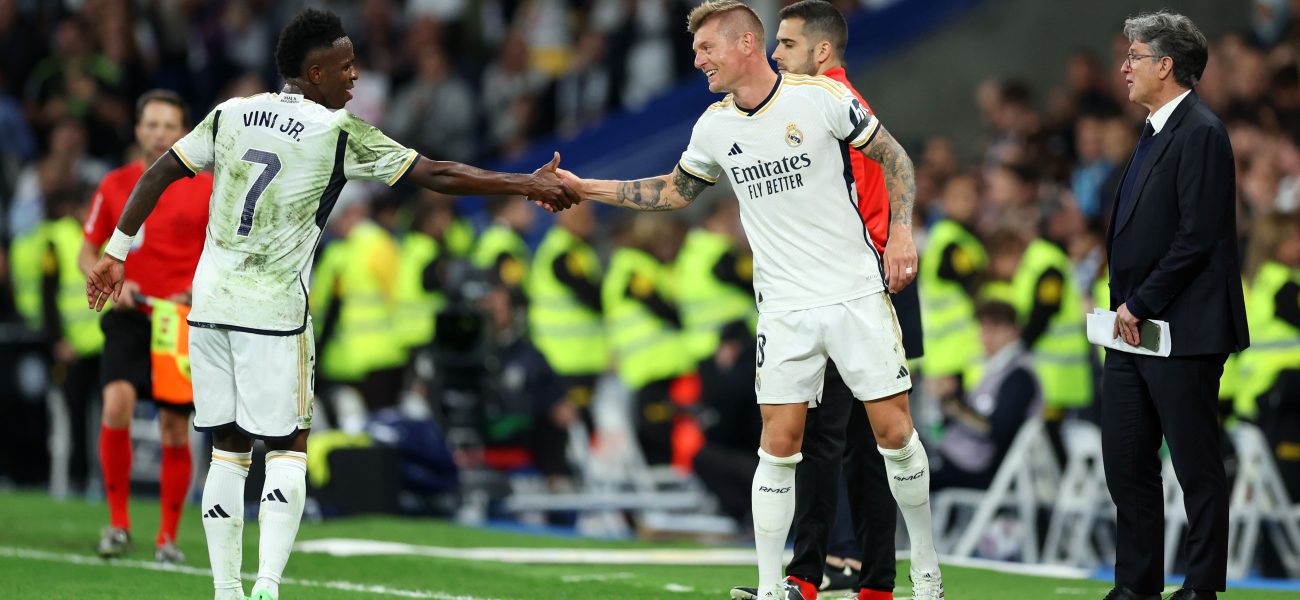
POLICY WIRE — Madrid, Spain — It’s a curious admission of institutional yearning, really. Not for another mercurial winger or a defensive bulwark, but for the quiet, almost imperceptible hand of a former midfield general – a grand architect now beckoned back from his gilded retirement. Real Madrid, the sporting behemoth perpetually in pursuit of dominion, isn’t just opening talks with Toni Kroos for a nostalgic cameo; they’re reportedly orchestrating his return to a pivotal, yet undefined, strategic portfolio within the club’s labyrinthine hierarchy. The echoes of his absence have, it seems, grown too resonant to ignore.
Kroos, 36, concluded his playing career in 2024, hanging up his boots after yet another Champions League triumph. A bittersweet departure, perhaps, given Spain’s subsequent Euro 2024 victory – a triumph that likely deprived him of a second international crown and, many would contend, a legitimate tilt at the Ballon d’Or. Still, the void he left wasn’t merely tactical; it was an intellectual vacuum, a missing cerebral anchor that many aficionados posit has contributed significantly to the club’s post-Kroos drought of major silverware. They’ve been missing that certain something, you see.
Behind the headlines, formal negotiations are now said to be underway between Los Blancos and their former orchestrator, as first reported by The Athletic and subsequently corroborated by other outlets. The notion isn’t new; it’s been a persistent whisper in the hallowed halls of the Santiago Bernabéu for months. And club president Florentino Pérez, a man who rarely shies from a bold gambit, appears convinced of Kroos’s enduring value, not for his passing range, but for his character and incisive judgment. The mutual esteem, forged over years of shared glory, clearly hasn’t dissipated.
“Toni embodies the Madridista spirit. His acumen, his judgment – they’re irreplaceable,” Pérez declared to a small circle of club associates, according to sources close to the president’s office. “We don’t just win trophies; we build legacies. And it’s not about the pitch anymore, it’s about the very architecture of triumph.” A statement that, whilst grandiloquent, nonetheless underscores the strategic calculus at play. Indeed, the club’s valuation, an astounding €6.07 billion as of May 2024 per Forbes, necessitates constant, shrewd decision-making at every echelon.
So, what exactly might Kroos’s remit entail? The specifics remain somewhat nebulous, yet the chatter invariably draws parallels to the post-playing trajectory of Zinedine Zidane. Zidane, another revered figure, transitioned from player to advisor, eventually managing the club to unprecedented success, all while serving as a global ambassador. It’s a blueprint Real Madrid evidently finds appealing. Kroos, still residing in Madrid and a frequent visitor to the Bernabéu, currently dedicates his focus to his academy in the Spanish capital and his podcast, Einfach mal Luppen, with brother Felix. But that, one suspects, is merely an interlude (a rather productive one, at that).
His potential involvement is envisioned within the sporting structure, offering input on squad planning (a truly consequential area, by any measure) and providing support at the training ground. Currently, the Sporting Director role, held by Santiago Solari, is often considered nominal, with Chief Scout Juni Calafat and General Manager Jose Angel Sanchez largely advising Pérez on transfer sagas. Kroos’s arrival would introduce another formidable voice into this already powerful triumvirate, potentially shifting the delicate balance of influence. It’s a power play, plain and simple.
📄 POLICY WIRE WHITEPAPER PUBLISHED: PAKISTAN'S NATIONAL SECURITY POLICY PRIORITIES
👉 READ BY CLICKING HERE“He possesses a unique footballing intellect. It’s an unspoken understanding of the game, a quiet authority,” mused a former teammate, speaking off the record. “He’s not just a name; he’s a philosophy, really – a methodical, precise way of thinking about football. And that’s something you can’t buy, you can’t coach into someone. You either have it or you don’t.” This sentiment captures the essence of what Real Madrid seeks: not just an employee, but an institutional memory, a living embodiment of their winning ethos.
What This Means
At its core, Kroos’s likely return signifies a profound recognition by Real Madrid of the enduring value of institutional knowledge and consistent leadership in an increasingly volatile global sports landscape. It’s less about a coaching appointment and more about solidifying the club’s intellectual capital – ensuring that the ‘Real Madrid way’ is perpetuated not just on the pitch, but in the boardroom and scouting offices. This strategic pivot isn’t merely about internal dynamics; it reverberates across Real Madrid’s sprawling global enterprise, an empire stretching from the training pitches of Valdebebas to the fervent fan bases in Lahore and Jakarta, where the club’s fortunes are tracked with an almost spiritual devotion. The brand’s equity, after all, hinges on consistent success — and a perceived continuity of excellence.
Economically, integrating a figure like Kroos, even in a non-playing capacity, reinforces the club’s ability to retain talent across various stages of a career. It’s a shrewd long-term investment in brand loyalty and expertise, potentially influencing future player acquisitions and youth development. Political implications are subtle but present: the decision reflects a common institutional challenge across many sectors – including governmental bodies in places like Pakistan or Egypt – where harnessing the wisdom of seasoned veterans, bridging generational gaps, and ensuring smooth transitions of power remain paramount. There’s a certain wisdom in not letting valuable minds drift too far, especially when their insights are truly consequential to strategic success. It suggests a mature organizational understanding that the game is played as much in the minds of its leaders as it’s on the turf.
Still, the precise delineation of Kroos’s power — and influence will be crucial. Will he truly be an independent voice, or merely a prestigious figurehead? This appointment could either streamline decision-making by adding a respected voice or, conversely, complicate existing power structures if his insights clash with established figures. His quiet authority could be a balm or a disruptor. Regardless, Madrid’s bold move confirms a fundamental truth: some legacies are too potent to remain simply memories; they must be actively woven into the fabric of the future.
📖 GET YOUR FREE COPY NOW OF POLICY WIRE DIGITAL MAGAZINE JULY 2026 EDITION
👉 READ & DOWNLOAD FREE MAGAZINE