

The Octagon’s Unlikely Vanguard: Veteran Flyweights Defy Time in PFL’s San Diego Crucible
POLICY WIRE — Washington D.C. — In a sporting landscape obsessed with youth, where the shelf-life of an elite athlete often feels shorter than a news cycle, two women are staging a compelling...

POLICY WIRE — Washington D.C. — In a sporting landscape obsessed with youth, where the shelf-life of an elite athlete often feels shorter than a news cycle, two women are staging a compelling defiance. This isn’t just another fight announcement; it’s a masterclass in pugilistic longevity, a calculated chess match veiled as a brutal physical confrontation. And the Professional Fighters League (PFL), ever keen to carve its niche, has shrewdly positioned this clash of venerable talents as the co-headliner for its San Diego event.
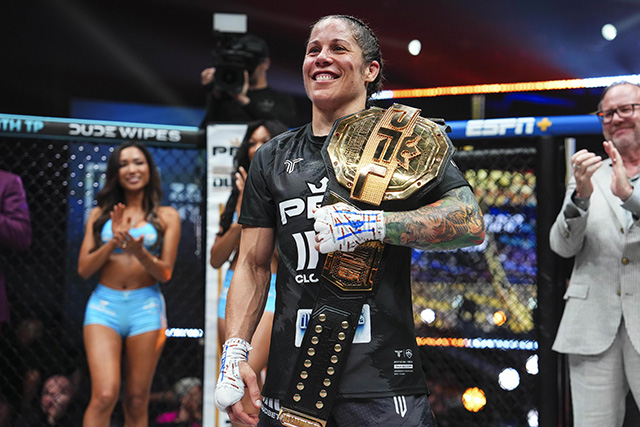
Liz Carmouche, 42, and Viviane Araujo, 39 — with a combined age that easily outstrips many nascent sports franchises — aren’t merely competing. They’re asserting a profound statement about resilience and strategic evolution within the high-stakes, high-impact world of mixed martial arts. Their impending flyweight bout on June 27 at Pechanga Arena isn’t just about rankings; it’s about validating careers, cementing legacies, and, perhaps, rewriting the very narrative of aging in professional combat sports.
Carmouche, a San Diego native, has effectively bottled time. Her 2025 campaign, which saw her dominate the PFL flyweight tournament with a flawless 3-0 record, according to official PFL statistics, wasn’t merely a flash of brilliance. It was a categorical assertion of enduring prowess. She dispatched Ilara Joanne, Elora Dana, and Jena Bishop with a veteran’s surgical precision, securing two of those victories via knockout or technical knockout. “They can talk about youth all they want, but experience? That’s a championship currency, and I’ve got plenty of it,” Carmouche shot back during a recent virtual press conference. “Viviane’s tough, yes, but she hasn’t seen what I’ve seen in that cage, not even close.” Her ledger, a veritable who’s who of flyweight and bantamweight titans, includes notable triumphs over the likes of Juliana Velasquez (twice, no less), Ilima-Lei Macfarlane, and even a historic encounter with Valentina Shevchenko.
Araujo, a Brazilian dynamo, arrives in the PFL circuit with a different, yet equally potent, wind in her sails. After a respectable 7-6 stint in the UFC, she opted for a change of scenery — a strategic career pivot not unlike a high-stakes transfer portal masterclass. Her PFL debut in April, a unanimous decision victory over Shanna Young, signaled her intentions unequivocally. She’s not here for a retirement tour. “Coming to PFL was a new chapter, a chance to really show what I’m capable of,” Araujo asserted to Policy Wire earlier this month. “Liz is a legend, no doubt, but I’m not here for moral victories. I’m here to take that top spot, — and she’s standing right in the way.”
Behind the headlines, this matchup represents a shrewd piece of matchmaking by the PFL. It pits a reigning tournament champion, still operating at an astonishingly high level, against a seasoned UFC defector hungry to prove her worth in a new ecosystem. PFL’s 125-pound division, already a cauldron of talent with the undefeated Dakota Ditcheva looming, demands such high-stakes contests. A win here doesn’t just elevate a fighter; it catapults them into the immediate championship conversation, offering a direct path to the lucrative tournament finals.
📄 POLICY WIRE WHITEPAPER PUBLISHED: PAKISTAN'S NATIONAL SECURITY POLICY PRIORITIES
👉 READ BY CLICKING HEREAnd so, we’re presented with a contest that transcends mere sport. It’s a study in professional adaptability, a testament to the enduring human will to compete, even as the digits on a birth certificate steadily climb. It’s also a stark reminder that in combat sports, sometimes the most compelling narratives are etched not just by youthful exuberance, but by the hardened wisdom of years.
What This Means
At its core, this co-main event carries significant political and economic implications for the Professional Fighters League and the broader combat sports ecosystem. Politically, it showcases the PFL’s savvy in leveraging established, recognizable talent — often veterans from rival promotions like the UFC — to build its own brand equity. It’s a direct challenge to the dominance of long-standing organizations, suggesting that a fighter’s market value isn’t solely tied to one promotional banner. This strategic acquisition and promotion of experienced athletes is a form of industrial statecraft, positioning PFL as a viable, attractive alternative for fighters seeking new challenges or better compensation structures, thereby intensifying the competitive landscape for fighter contracts and overall talent pool without excessive regulation.
Economically, the bout underscores the PFL’s tournament-based model, which offers clear, high-reward pathways for its athletes. For fighters like Carmouche and Araujo, the potential for a seven-figure grand prize at the end of the season provides a powerful incentive, often surpassing per-fight payouts in other leagues. This model is designed to cultivate consistent, high-stakes matchups, appealing to a global viewership — including burgeoning markets in South Asia and the Muslim world, where combat sports, and women’s athletic endeavors more broadly, are gaining significant traction and cultural acceptance. The narrative of accomplished women defying odds resonates universally, acting as a soft power projection for the sport itself. So, while it’s a fight, it’s also a meticulously crafted marketing gambit, designed to elevate both the division and the league’s international profile.