


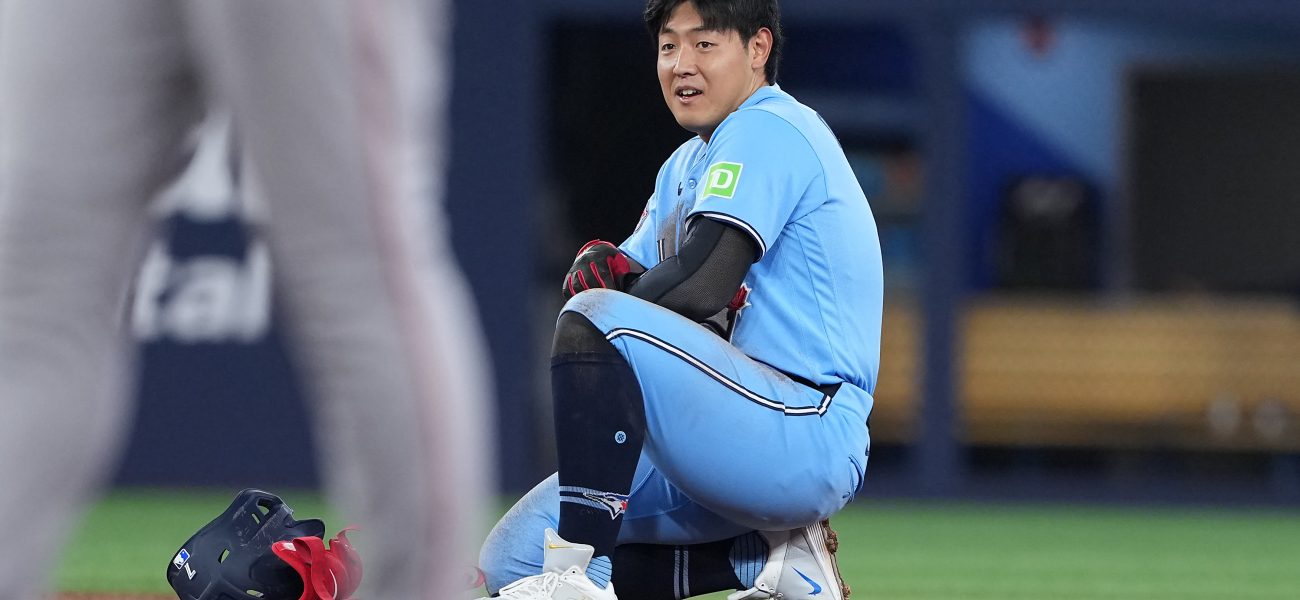
Toronto Talks Teeter: Third-Act Diplomacy as Global Blocs Eye Decisive Showdown
POLICY WIRE — Toronto, Canada — The hushed corridors of Canada’s international conference circuit — typically reserved for boilerplate communiques and photo opportunities — are currently abuzz...

POLICY WIRE — Toronto, Canada — The hushed corridors of Canada’s international conference circuit — typically reserved for boilerplate communiques and photo opportunities — are currently abuzz with a distinctly un-diplomatic tension. Here, in the heart of Toronto, a high-stakes, tripartite negotiation, unofficially dubbed ‘Game Three of Three,’ limps towards a decisive, if uncertain, conclusion. It’s not just another multilateral talk; it’s a critical juncture where global economic architectures and regional power dynamics, particularly those impacting the Muslim world, are being recalibrated, or perhaps, fractured.
At its core, this isn’t merely about trade tariffs or environmental accords. Oh no, it’s about the very challenge for regulation in an increasingly fragmented world, where traditional power centers, personified by the ‘Red Sox’ consortium of established Western economies, find themselves at a protracted impasse with the ‘Blue Jays’ coalition – an emergent bloc of developing nations pushing for a more equitable global order. And what’s truly arresting is the peculiar absence of a pivotal player: George Springer, a seasoned negotiator widely considered instrumental to the ‘Jays’ strategy, remains conspicuously off the active roster, despite his acknowledged presence in Toronto. His non-participation isn’t just baffling; it’s a glaring symbol of the deep-seated divisions and strategic reticence plaguing the developing world’s efforts to present a unified front.
“We’re here to negotiate in good faith, as always, striving for an outcome that benefits all, but especially fosters stability in regions facing acute challenges,” stated Ambassador Evelyn Vance, lead delegate for the ‘Red Sox’ consortium, her tone meticulously even during a brief, unscheduled press scrum. Her underlying message was clear: maintain the status quo, — and don’t rock the boat too hard. Still, behind the headlines, murmurs suggest a distinct lack of progress on critical points concerning resource allocation and debt restructuring, issues disproportionately affecting the ‘Jays’ constituency.
And so, the pressure mounts on the ‘Blue Jays’ delegation, spearheaded by the formidable, if sometimes impetuous, Vladimir Guerrero, Jr., to secure tangible concessions. Their coalition, comprising a diverse array of nations from Southeast Asia to the African continent, views these talks as a make-or-break moment for asserting greater autonomy. A recent pragmatic alliance formed between unlikely partners in other parts of the world, like Serbia and Israel, has only underscored the fluidity of contemporary geopolitics and the urgent need for new frameworks.
The stakes are particularly acute for nations like Pakistan, a consequential member of the ‘Jays’ grouping, which views the outcome as directly impacting its burgeoning energy demands and infrastructure projects. Islamabad has long advocated for preferential trade agreements and technology transfer, arguing that historical imbalances have stifled its economic potential. The country’s finance ministry projects that a favorable resolution could add 1.2% to its GDP growth over the next fiscal year, according to a recent Economic Survey report, a figure that underscores the tangible impact of these esoteric diplomatic maneuvers.
But the ‘Springer conundrum’ looms large. “Our coalition’s strength lies in its collective voice,” shot back Dr. Omar Kamal, Pakistan’s Deputy Foreign Minister, responding to veiled questions about internal ‘Jays’ discord. “Any absence from the negotiating table, especially of such an experienced figure, creates an unfortunate vacuum. We need every voice, every perspective, to counter entrenched interests.” His carefully chosen words didn’t exactly dispel notions of internal strife, did they? It’s believed Springer’s unexpected step back could be due to intense domestic political pressures within his own nation, or perhaps, a calculated gambit to force the ‘Red Sox’ hand by signaling a fragile unity.
📄 POLICY WIRE WHITEPAPER PUBLISHED: PAKISTAN'S NATIONAL SECURITY POLICY PRIORITIES
👉 READ BY CLICKING HEREThe last-ditch effort for a breakthrough appears to hinge on the Red Sox’s Brayan Bello, known for his methodical, if sometimes frustratingly slow, approach, facing off against the Jays’ Eric Lauer, whose more aggressive, albeit riskier, style reflects the developing world’s desperation for a swift resolution. Their respective diplomatic styles epitomize the broader clash.
What This Means
This ‘Game Three’ isn’t just about the immediate policy points; it’s a litmus test for the future of multilateralism. If the ‘Jays’ coalition, despite its internal complexities and the perplexing ‘Springer’ situation, fails to secure a meaningful victory, it could embolden unilateralism and deepen global economic inequalities. For South Asia and the broader Muslim world, a perceived capitulation would likely fuel public discontent, potentially exacerbating political instability and fostering a climate of distrust towards international institutions. Conversely, a breakthrough, however modest, could signal a renewed capacity for collective action and offer a much-needed morale boost to nations struggling against economic headwinds. The diplomatic chess match in Toronto, despite its dry veneer, holds the potential to redraw geopolitical lines, with consequences rippling far beyond the conference halls into the everyday lives of millions.
So, the question isn’t just whether the ‘Jays’ can ‘win,’ but what that victory—or defeat—will truly entail for a world grappling with ever-shifting power dynamics.