


Desert’s Fury Unleashed: New Mexico Inferno Spans 10,000 Acres, Tests State Resilience
POLICY WIRE — QUAY COUNTY, N.M. — From a nascent flicker to an inferno’s embrace, the high desert landscape of Quay County, New Mexico, has undergone a harrowing metamorphosis in mere hours....

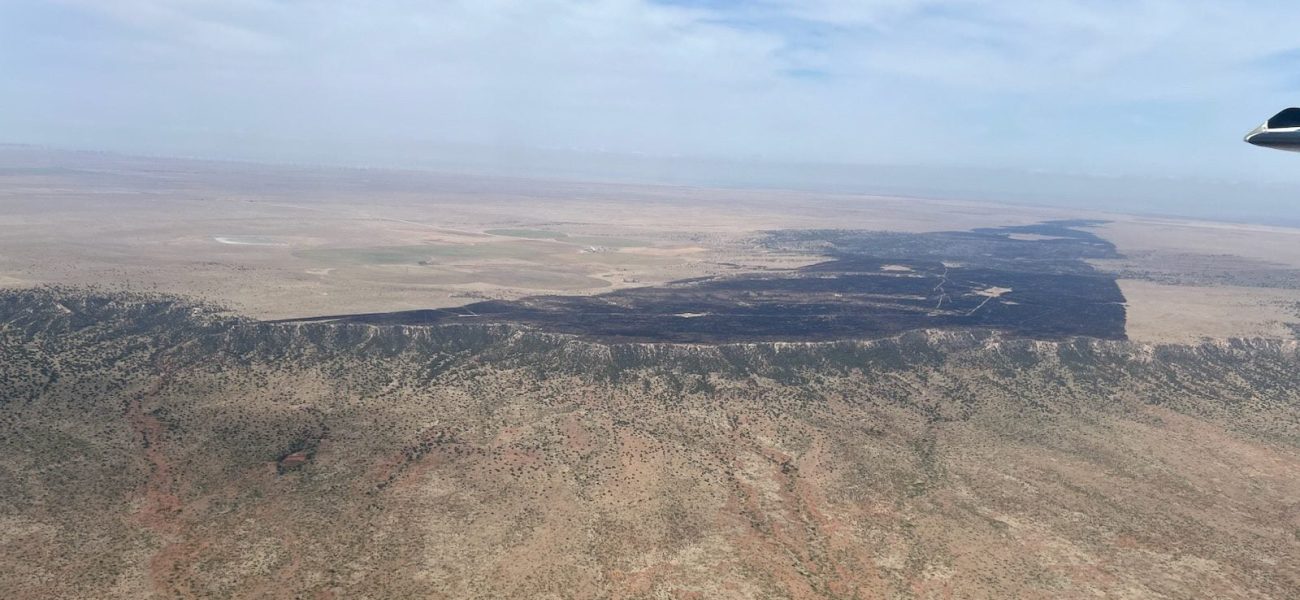
POLICY WIRE — QUAY COUNTY, N.M. — From a nascent flicker to an inferno’s embrace, the high desert landscape of Quay County, New Mexico, has undergone a harrowing metamorphosis in mere hours. What began as a containable brushfire—a mere 1,500 acres just yesterday—has since swelled into a monumental conflagration, now estimated to have consumed a staggering 10,000 acres. That’s an expansion rate that’d give any seasoned fire chief pause, wouldn’t it?
And so, as dawn broke on Wednesday, local communities found themselves staring down a beast of fire. The Sparks Fire, detected Tuesday afternoon along Highway 156, near mile marker 41, north of Hassell, isn’t just a local emergency; it’s a stark, smoking tableau of an escalating environmental reality. Crews, a combined force of 95 dedicated individuals, haven’t yet managed to carve out even a sliver of containment. The perimeter remains an open wound on the parched earth, but for now, the flames exhibit only ‘creeping and smoldering’ behavior—a temporary reprieve, perhaps, but certainly not a victory.
Still, the threat’s palpable. Homes sit precariously on the fire’s edge, their fate hanging in the balance, despite crews establishing fire lines and bolstering defenses around structures. The logistical labyrinth of coordinating ninety-five personnel — ground crews battling the inferno’s flanks, air assets hammering away from above — is immense, a ballet of desperate, determined effort against an unyielding foe.
“We’re throwing everything we’ve got at it, but nature, she’s a fierce adversary out here. It’s a race against time, isn’t it? Our priority is human life and property, period,” opined Sheriff Robert ‘Rusty’ Calhoun of Quay County, his voice gravelly with fatigue, underscoring the raw, immediate stakes involved in such a rapidly evolving crisis. Indeed, these aren’t just statistics; they’re lives, livelihoods, — and legacies.
The relentless creep of desertification and the increasing ferocity of wildfires in the American Southwest aren’t isolated incidents. They echo a global predicament, one acutely felt in regions like Pakistan, where devastating floods fueled by erratic monsoons have displaced millions, serving as grim testament to climate change’s indiscriminate reach – a microcosm of climate’s unsparing global reckoning. We’re seeing similar patterns globally, aren’t we? From the arid plains of the American west to the floodplains of South Asia, the planet’s shifting temperament doesn’t discriminate.
“This blaze, it’s a stark reminder of the escalating challenge climate change presents across our arid states. We’re deploying every available asset, federal and state, to mitigate this — and prepare for the next, because there will be a next,” conveyed Sarah Jenkins, Spokesperson for the New Mexico Department of Forestry, her tone reflecting a weary prescience. She’s not wrong, you know. According to a 2023 report by the National Interagency Fire Center (NIFC), the average number of acres burned annually in the U.S. has increased by nearly 30% over the last decade, underscoring the escalating peril to lives and critical infrastructure.
Optimistically, a fragile window of opportunity seems to have materialized. Increased humidity and decreased fire activity have offered a temporary lull, allowing crews to work more aggressively on suppression. There’s even a chance of rain in the forecast for the next two days, following a predicted high of 76 degrees with easterly winds shifting south. But that’s a small mercy, a fleeting moment against a long, hot season.
📄 POLICY WIRE WHITEPAPER PUBLISHED: PAKISTAN'S NATIONAL SECURITY POLICY PRIORITIES
👉 READ BY CLICKING HEREWhat This Means
At its core, the Sparks Fire isn’t merely a local disaster; it’s a policy litmus test. The swift escalation from a modest threat to a colossal blaze within 24 hours lays bare the acute vulnerabilities of regions grappling with prolonged drought and rising temperatures. Economically, the immediate impact manifests in resource drain: millions poured into aerial support, ground teams, and equipment, all diverting funds from other critical state programs. Insurance premiums in these fire-prone zones? They’re bound to skyrocket, if coverage remains available at all, pushing more families to the brink.
Politically, these events become battlegrounds for climate policy—or the glaring absence thereof. While officials like Ms. Jenkins point to climate change, a significant segment of the populace, and their representatives, often sidesteps the more difficult conversations about long-term mitigation, preferring the immediate, visceral response of suppression. This short-term strategy, however valiant, leaves communities perpetually susceptible. It’s a Sisyphean task, isn’t it? The true cost isn’t just in acres burned or homes lost, but in the erosion of a region’s economic stability and its residents’ collective peace of mind.
So, as the embers cool — or don’t — in Quay County, the broader implication is clear: without a comprehensive, forward-thinking policy framework that transcends the cycle of disaster-response-repeat, these ‘initial estimates’ of destruction will simply keep getting larger, faster, and more devastating.