

Albuquerque’s Lindy’s Diner: Asbestos Haunts Iconic Ruin Amidst Bureaucratic Scrutiny
POLICY WIRE — Albuquerque, N.M. — The scent of green chile, long a fixture in downtown Albuquerque, has given way to the acrid tang of decay. It wasn’t the roar of an earthquake...

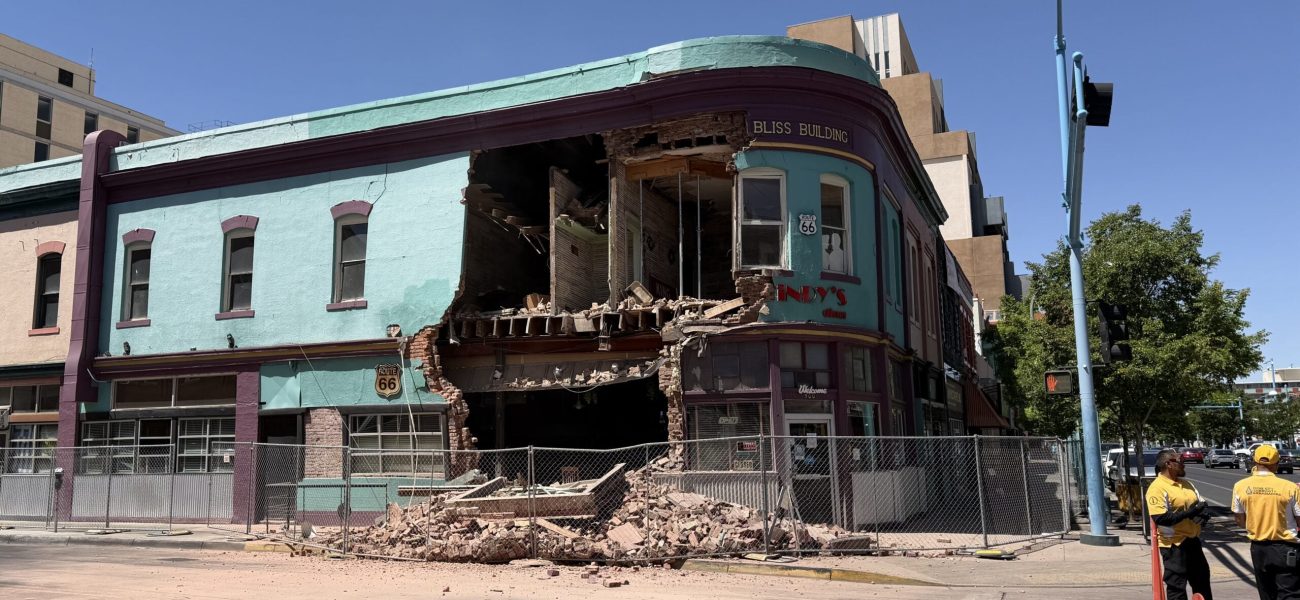
POLICY WIRE — Albuquerque, N.M. — The scent of green chile, long a fixture in downtown Albuquerque, has given way to the acrid tang of decay. It wasn’t the roar of an earthquake that brought down a piece of Lindy’s Diner, a beloved local institution nestled within the venerable Bliss Building. No, it was a far slower, more insidious process—one punctuated by bureaucratic timelines, citizen complaints, and now, the unsettling discovery of hazardous materials. The city, in a recent update, conceded that while the initial debris pile from the partial collapse showed no asbestos, the remaining skeletal structure of the diner’s host building harbors the cancer-causing material within its piping and flooring adhesive. So, what exactly did anyone know, — and when?
It’s a question that hangs heavy over Central Avenue, as residents gaze upon the jagged maw where history once served up burgers and banter. The city’s code enforcement division, having released a somewhat self-exculpatory timeline, now contends with the aftermath. They’re managing the hazardous materials — a delicate, dangerous dance — while simultaneously evaluating the very viability of the Bliss Building itself. That structure, standing since the 1920s, has seen better days, — and perhaps more attentive oversight.
The timeline itself reads like a slow-motion car crash, documented frame by frame: March 20, an external inspection, spurred not by proactive municipal checks, but by a local news channel’s tip. Then, between March 21 — and April 10, two distinct complaints filtered through the city’s 311 system. And yet, it wasn’t until April 2 that these collective alarms prompted an additional inspection. Another eighteen days later, on April 20, a more “in-depth” review finally led to the building’s “red-tagging” and subsequent closure. The collapse, a week later, felt less like an unforeseen tragedy — and more like an inevitable denouement.
“We followed protocol to the letter, ensuring public safety remained our paramount concern, even if it meant shuttering an institution,” shot back Armando Chavez, Albuquerque’s Director of Code Enforcement, during a press briefing, his voice betraying a hint of beleaguered defense. “We simply can’t—we absolutely can’t—compromise on structural integrity, no matter the sentimentality.” But for many, especially those who cherished Lindy’s, the sentimentality *was* the integrity.
The city’s initial review is now subject to verification by an independent structural engineer, a step that, one might observe, seems judiciously belated. Still, the promise is that the findings will eventually see the light of day. But what of the proprietors, the diners, the generations who carved memories into those booths? “Lindy’s wasn’t just bricks and mortar; it was a living chronicle of Albuquerque, a place where everyone, from politicians to poets, felt at home,” lamented Clara Rodriguez, president of the Downtown Historical Society, her words steeped in visible grief. “To watch it crumble, after what felt like a cascade of warnings, frankly, it feels like a betrayal of our collective memory, a failure to protect what was undeniably precious.”
📄 POLICY WIRE WHITEPAPER PUBLISHED: PAKISTAN'S NATIONAL SECURITY POLICY PRIORITIES
👉 READ BY CLICKING HEREThe slow, public demise of Lindy’s, an iconic structure caught in the vortex of bureaucratic inertia and aging infrastructure, echoes a familiar plight in cities far beyond Albuquerque’s desert sprawl. From the precarious colonial-era buildings of Karachi to the rapidly expanding, yet often structurally compromised, tenements of Dhaka, the dilemma remains stark: how to balance preservation with safety, history with inevitability. Indeed, developing nations frequently grapple with this on a far grander scale, where insufficient municipal funding and lax enforcement lead to tragedies that make Lindy’s partial collapse seem a minor tremor. According to a 2023 report from the National League of Cities, nearly 30% of American municipalities report a significant backlog in critical infrastructure maintenance, a statistic that underscores a quiet, yet persistent, erosion of urban fabric nationwide.
And so, as the independent engineers sift through the remnants of a local legend, one can’t help but wonder if the lessons learned here — about the value of proactive maintenance, the urgency of citizen concerns, and the delicate balance between heritage and hazard — will resonate far beyond the immediate clean-up. Or will this become just another casualty in the ongoing, often silent, global reckoning with urban decay and official inaction?
What This Means
At its core, the Lindy’s Diner collapse isn’t merely a local Albuquerque story; it’s a microcosm of broader policy challenges confronting urban centers everywhere. Politically, the city administration faces uncomfortable questions regarding the speed and efficacy of its code enforcement division, particularly when citizen complaints preceded the definitive “red-tagging.” This incident could galvanize calls for increased transparency and perhaps even a restructuring of how historical or at-risk buildings are monitored. Economically, the loss of Lindy’s — even partially — impacts downtown revitalization efforts. The presence of asbestos complicates any potential restoration, driving up costs and extending timelines, thereby delaying economic activity and possibly deterring new investment in historic properties. For heritage advocates, it underscores the urgent need for dedicated funding streams for structural assessments and preventative maintenance for aging buildings, lest more cultural touchstones succumb to neglect. It’s a stark reminder that policy, or the lack thereof, has very tangible, often devastating, consequences on communities and their collective memory.