

Dust, Grit, and Dollars: New Mexico’s Tour of the Gila — A Rural Economy’s Annual Peloton
POLICY WIRE — Silver City, New Mexico — While the world’s cycling titans gear up for Europe’s storied Grand Tours, a different kind of proving ground — one steeped in high desert dust and...

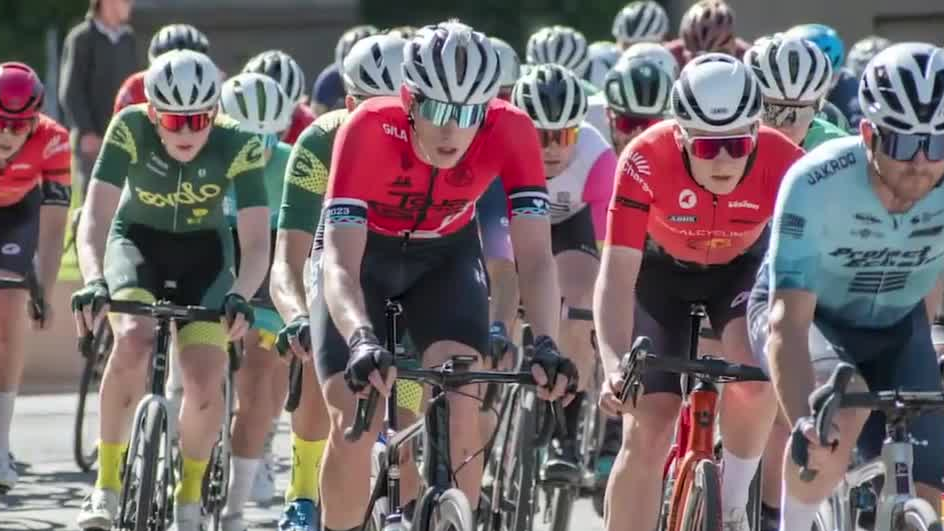
POLICY WIRE — Silver City, New Mexico — While the world’s cycling titans gear up for Europe’s storied Grand Tours, a different kind of proving ground — one steeped in high desert dust and quiet economic urgency — is about to commence in southwestern New Mexico. It’s not the Pyrenees, nor the Dolomites; it’s the Tour of the Gila, an event that, for five days each year, transforms Silver City into a crucible of endurance, an unlikely magnet for professional athletes, and a critical economic lifeline for a region perpetually navigating the vagaries of rural survival.
Beginning Wednesday, the race will unfurl its demanding stages across the unforgiving landscapes of Grant County, from the initial time trials carving through the high plains near Tyrone to the serpentine climbs that have broken many a hopeful contender. But behind the immediate spectacle of straining quads and aerodynamic helmets lies a more profound narrative: the discreet, yet consequential, injection of capital into an economy that doesn’t often find itself in the global spotlight. It’s a perennial battle, not just for the yellow jersey, but for sustained relevance.
“This event isn’t just about bikes; it’s an annual transfusion for our local economy, a visible reminder that even small towns can host world-class competition,” shot back Guadalupe Perez, Silver City’s Mayor pro-tem, her voice tinged with both pride and pragmatism. “We’re not Monaco, but we’ve got heart — and some punishing climbs that make those European routes look like gentle hills.” Her remarks underscore the deep-seated pride and acute awareness of the financial stakes involved. For a town where economic diversification is a constant pursuit, the peloton’s arrival feels less like a race and more like a pivotal annual harvest (if a slightly more grueling one than corn).
Still, orchestrating such an affair is no small feat. “It’s a logistical ballet, coordinating hundreds of athletes, support staff, and security across miles of challenging terrain,” explained Michael Marzolo, the Tour of the Gila Race Director, his hands often flying to emphasize points. “But it’s also a proving ground, a crucible for those aspiring to the Grand Tours. You don’t just win Gila; you survive it, and that attracts a specific caliber of talent.” Marzolo’s assessment highlights the event’s unique appeal, positioning it as a stepping stone, an arduous rite of passage for emerging cycling stars – many of whom face a brutal calculus of undrafted dreams in their quest for professional glory.
The professionals will kick off their grueling schedule with individual time trials, a solitary battle against the clock over a formidable 16-mile course starting near Tyrone. By Thursday, Silver City itself will become the epicenter for amateur races, a vibrant, if slightly less high-stakes, echo of the professional circuit. It’s a week-long immersion, really, a localized festival of two-wheeled grit that pumps direct revenue into hotels, restaurants, and local businesses that would otherwise see significantly less traffic during this shoulder season.
And it’s a model that, in miniature, reflects broader trends in sports tourism. While the eye-watering investments seen in global sporting spectacles — think the World Cup in Qatar or Formula 1 circuits financed by Gulf states — often dominate headlines, events like the Tour of the Gila demonstrate the enduring power of smaller, community-rooted competitions. Indeed, cycling tourism, a sector often overshadowed by its more celebrated counterparts, contributes upwards of $80 billion annually to the global economy, according to a recent industry analysis. This particular New Mexico iteration, though a fraction of that figure, punches well above its weight for its immediate surroundings.
📄 POLICY WIRE WHITEPAPER PUBLISHED: PAKISTAN'S NATIONAL SECURITY POLICY PRIORITIES
👉 READ BY CLICKING HEREThe region itself offers challenges beyond the race course. New Mexico, a state frequently contending with environmental extremes (especially arid conditions and the looming threat of perilous deluges as climate patterns shift), provides a stark backdrop. Cyclists here don’t just battle each other; they contend with altitude, unpredictable winds, and a sun that can be relentlessly unforgiving. It’s a stark contrast to the meticulously planned, often climate-controlled, venues favored by some of the wealthier global sports organizations, offering instead a raw, unvarnished experience.
Meanwhile, the demographic shifts and economic struggles common to rural America find a brief reprieve in the spectacle. It’s not unlike the enduring, often desperate, hope placed on sporting events in developing nations or regions like parts of South Asia, where a major cricket series or a new stadium can be seen as a beacon of progress, a short-term economic stimulant masking deeper structural issues. For Silver City, the Tour of the Gila is a tangible, recurring economic boost — perhaps not a panacea, but certainly a vital analgesic.
What This Means
At its core, the Tour of the Gila transcends mere athletic competition; it’s a potent case study in localized economic resilience and the subtle politics of regional development. For southwestern New Mexico, the race represents a reliable, albeit ephemeral, revenue stream that underpins dozens of small businesses, from diner owners to motel operators. The influx of hundreds of athletes, their support teams, and spectators translates directly into sales tax revenue and employment, providing a critical buffer against economic downturns that often hit rural communities hardest.
Politically, the continuous support for such an event, even amidst budget constraints, speaks to a recognition by local and state officials of its outsized impact. It’s a relatively low-cost investment with a high-visibility return, burnishing the state’s image beyond its more recognized cultural or artistic draws. the race’s persistent success, attracting top-tier domestic and some international talent, quietly positions Silver City as a legitimate, if niche, player in the global sports tourism arena. It’s a delicate balance, maintaining the authenticity that draws participants while expanding the infrastructure to capitalize further on its economic potential. Don’t underestimate the long-term ripple effects of such consistent exposure. It isn’t just about this week; it’s about building a legacy, piece by painstaking piece, in a landscape that demands nothing less than absolute commitment.